Why East Midlands is not on red alert this heatwave

 Helen
HelenAs June temperature records tumble and England swelters in a heatwave, the Met Office has issued hot weather warnings across swathes of the country.
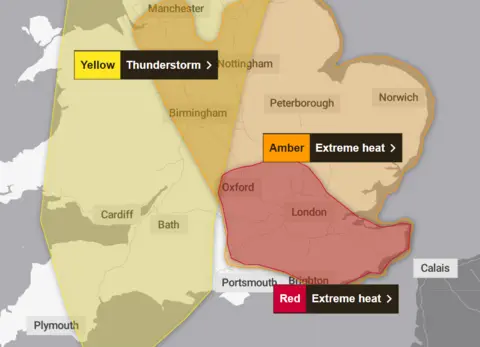
But while the South East has been put on red alert for extreme weather, up the road in the East Midlands most of us have been issued an amber warning.
Based on temperatures alone, the East Midlands' major cities Nottingham, Leicester and Derby, will see peak temperatures on a par with places in the red warning area.
So why has a line been drawn between the two regions?
 Met Office
BBC forecasts show highs of 33C (91F) on Friday in amber-coloured Nottingham, Leicester and Derby.
Meanwhile, in the red zone, Oxford is forecast 33C, Luton 33C, and London 35C (95F).
The Met Office told the BBC "peak daytime temperatures in the East Midlands are comparable with some locations further south".
However, it said the difference between amber and red extreme heat warnings cannot be determined with a thermometer alone but "a combination of severity and confidence of impacts".
 uWhoAndyR
A spokesperson for the national weather service explained: "Even relatively small differences in peak temperatures, overnight minima, humidity and duration can lead to meaningful differences, which is why neighbouring areas can fall into different warning categories."
The Met Office said on average, the daytime peaks in the red zone were trending a few degrees higher overall "particularly at the peak of the event".
It said while Nottinghamshire had just experienced its hottest night on record, warm nights had been "more persistent" in the south giving the areas less chance to recover from the heat.
Humidity levels too are higher in the South East, it added, "increasing heat stress".
Add to that the heat in the South East has been, if only slightly, more intense and longer lasting "which compounds impacts over time".
 scrappy
But regardless of the colour of the alert, residents are being urged not to take the weather lightly, and that while some of the worst is less likely, the East Midlands should still expect "significant impacts".
"Both Amber and Red warnings indicate a risk of widespread impacts, and people across all affected areas should continue to take the conditions seriously," a spokesperson said.
Listen to BBC Radio Leicester on Sounds and follow BBC Leicester on Facebook, on X, or on Instagram. Send your story ideas to eastmidsnews@bbc.co.uk or via WhatsApp on 0808 100 2210.
