Night triage scheme means frail patients can stay home

 BBC
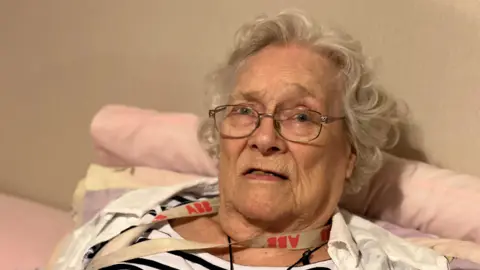
BBCHenrietta Shadforth, 87, had a fall at home during the early hours.
She got up out of bed to go to the toilet, tripped and fell.
"I hit my head on the side and I ended up at the wardrobe trying to get a hold of the door but instead I fell," she said.
Thanks to her lifeline button, worn as a pendant around her neck, the paramedics were called, arriving at her Warwick home within 30 minutes.
The grandmother, who likes to be known as Rita, was adamant she was not going to hospital and thanks to a new scheme jointly carried out by the ambulance service and hospital, she did not go.
"I don't go to the hospital," she said.
Even if I get somebody called out to me, I don't go to the hospital. I get somebody to come and sit with me. If I had the choice, I'd stay home."
The scheme, run by South Warwickshire University NHS Foundation Trust (SWFT) and the West Midlands Ambulance Service (WMAS) means patients like Henrietta can stay in their homes and be treated by a community team.
The service was trialled at the end of last year before being rolled out permanently in January. Its been used by 133 patients, with 98% being able to stay at home.
It is run by Consultant Connect and it gives paramedics immediate access to specialists through their frailty line.
Kevin Balchin has been a paramedic with WMAS for more than 30 years and attended Henrietta's emergency call. He said overall the scheme was in the best interest of the patient.
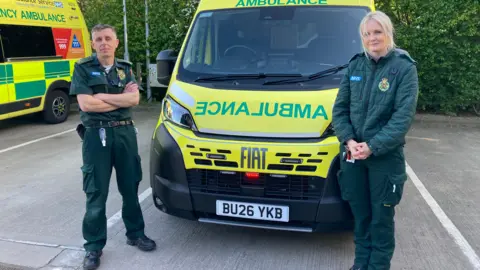
"When we have access to consultants at the hospital, they have an inside view of that patient, they can see past scans, past blood results, past notes and between us we can make a decision, with the patient's input as well of course, what's going to be best for them and safest for them," he said.
John Blair is the clinical director for geriatric medicine at Warwick Hospital. He virtually reviews the patients' care.
One of the reasons the service has been a success is down to the paramedics on the frontline, he said.
"Obviously some of our patients are very unwell and do need to come to the hospital. But for those who can remain at home, I think it gives them an opportunity to remain more active, to have their own routine and to, I think avoid some of the risks that hospitals bring.
"The service is about providing support to the West Midlands Ambulance Service crews, but the paramedics are the ones that are performing the assessments of the patients and making those decisions to leave patients at home safely. "
In July 2025 the government announced its 10-year plan for the NHS in England to treat millions of patients closer to home.
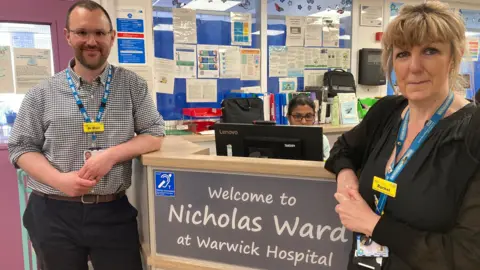
Rachel Williams, associate chief operating officer at SWFT, believes the Consultant Connect service aligns with that plan.
She said: "Before this service, frail elderly patients were brought to hospital and we know that can often lead to extra confusion, it can lead to muscle wastage and really the best thing for them is to be kept in their own home.
"The frailty service is all about really caring closer to home as in the NHS 10-year plan. It helps with the waits in our emergency department, it helps reduce any ambulance delays of offloading for the ambulances when they arrive overnight and it's shown that it's really the right thing for that frailty population and they're in hospital a lot less time."
The Consultant Connect service is now running day and night across the whole of Warwickshire and other NHS trusts across the West Midlands are also considering a similar service.
Follow BBC Coventry & Warwickshire on BBC Sounds, Facebook, X and Instagram.
