TV doctor backs teens' ultra-processed food project

 BBC
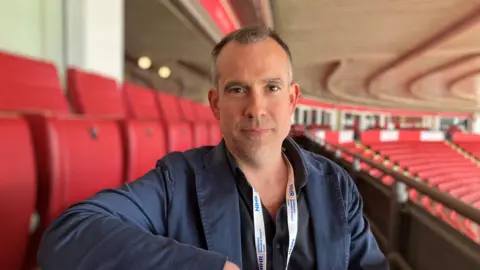
BBCA well-known TV doctor said he feels "hopeful" the UK could reduce its consumption of ultra-processed foods, after meeting teenagers involved in research into the products.
Chris van Tulleken is best known for TV shows like CBBC's Operation Ouch! and wrote best-selling book, Ultra-Processed People.
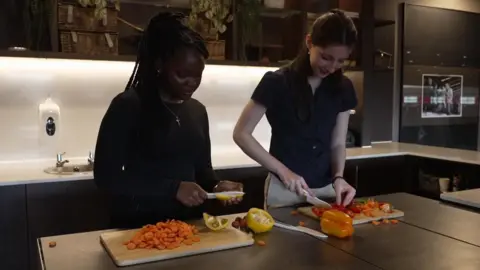
He met teenagers recruited by a project run by the University of Southampton and University Hospital Southampton. The 14 to 17 year-olds worked over 12 weeks to research and learn more about ultra-processed foods.
The conclusions they reached will help academics better understand how to get young people engaged and informed about making healthier diet choices.
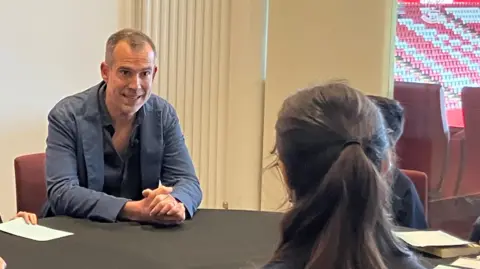
"LifeLab was set up originally to engage children and young people with the science behind health messages", said Professor Kath Woods-Townsend, LifeLab's project manager.
"They're genuine partners in what we're doing, not just tokenistic consultation experts, they're actually employees of the university", she added.
"On the way back from school, if you pass a corner-shop and you're hungry, the chances are you're going to go in and buy a chocolate bar rather than fresh fruit", said Meriel, one of the teenagers taking part.
"Ultra-processed food is a lot more convenient for most people, day to day", she added.
Fellow panel-member ChiChi admits she didn't know how many foods were ultra-processed before being involved with the project.
"It has made me want to eat healthier for myself and to inspire young people that, we can actually change how we see food", she said.
"It boils down to things with ingredients in them that are really only used in industrial context", said Chris van Tulleken.
"If your food has an emulsifier, a stabiliser, a colouring, a flavouring - even a natural flavouring - it's very likely to be ultra-processed".
"They almost always are high in fat, salt, sugar or energy, and they're engineered so they're typically very hard to stop eating", he added.
A 2024 study published by European Journal of Nutrition found that toddlers in the UK obtain almost half of their calories from ultra-processed foods, rising to 59% by the age of seven.
A recent report, the World Obesity Federation's ATLAS 2026, found that 3.8 million children between the ages of 5 and 19 years in the UK have a high BMI, meaning they are either overweight or obese. That's around twice as high as in France and Italy.
Chris van Tulleken was in Southampton to speak at the NIHR Southampton Biomedical Research Centre Open Day.
In his talk he expressed concern over the way many ultra-processed foods were packaged and marketed to target young people.
But after meeting with the teenagers on the LifeLab project he said he had hope that future generations would put pressure on politicians to bring in stricter regulations for how the products were sold and promoted.
"What needs to happen is young people saying, 'we demand change'", said Chris.
"When they say that it has such power".
"I come away from today feeling incredibly invigorated and I think we're going to see projects like LifeLab spread throughout the country."
