Teen 'did not get care she deserved' at hospital

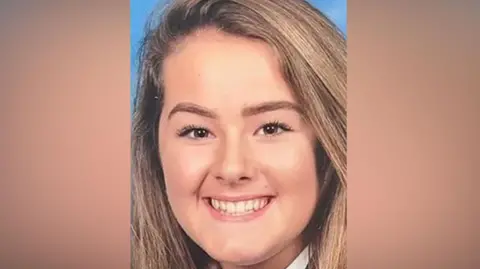 Family handout
This article contains details of suicide and self-harm
An 18-year-old girl who died while under the care of a much-criticised mental health service did not get the treatment she deserved, her inquest has heard.
Emily Moore, from Shildon, fatally injured herself in February 2020 while being detained by Tees, Esk and Wear Valleys NHS Foundation Trust (TEWV).
A jury heard Emily was one of three girls to die after being treated at West Lane Hospital in Middlesbrough, with her experiences adding to her trauma and potentially contributing towards her death.
A senior nurse brought into solve problems said issues identified by a review into Emily's death were already known about by bosses months before the teenager was even a patient.
Emily, who had been diagnosed with emerging emotionally unstable personality disorder (EUPD), died days after she turned 18 and was moved to TEWV's Lanchester Road Hospital near Durham, the inquest in Crook has heard.
Jurors have heard about the potential impact on her of her treatment at West Lane, where she was held from March to July 2019 and complained of being treated "like dirt".
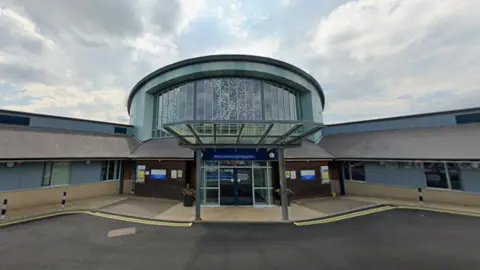 Google
The court heard an independent review found a number of failings with Emily's care at West Lane, including:
- Shortcomings in assessment and management of the risk she posed to herself
- A broad misunderstanding of when and how to restrain patients
- Gaps in psychology provision leading to an unavailability of treatments
- Substantial and frequent staff shortages
Alison McIntyre, a matron who was brought in to try and solve problems in November 2018, told jurors she immediately had concerns and all of the issues raised by the review were known about by managers and directors before Emily was even admitted.
Emily complained of staff not intervening to stop her self-harming, swearing at her and making comments, such as she "liked" to be ill, the inquest heard.
Asked by Bridget Dolan KC, counsel for the coroner Crispin Oliver, if there was a "fundamental truth" in Emily's complaints, McIntyre said "yes".
 Family Handout
An expert concluded if Emily's account was true, her experiences would "more than minimally have contributed" to her fatal actions in February 2020, Dolan said.
McIntyre said any young person experiencing such things would be traumatised and suffer a "profound" impact on their recovery.
"Do you accept Emily didn't get the care she was entitled to and deserved?" Dolan asked.
"Yes," McIntyre replied.
The inquest heard Emily's father David also raised concerns, some of which McIntyre said were "justified" and reflected the "cultural" issues already known about by management.
'Closed culture'
Jurors heard McIntyre was initially brought in to investigate a complaint of a patient being dragged across the floor by staff at the hospital's Westwood ward, a locked unit for the most challenging patients, jurors heard.
A review of CCTV footage found multiple other such incidents, described by another TEWV executive as "abhorrent", with 33 of the ward's 49 staff suspended for either inappropriately restraining patients or witnessing but not reporting such actions, the inquest heard.
She said Westwood was "in crisis" and she also saw regular bad restraint practice on the hospital's two other wards - Newberry, where Emily was housed and on four occasions restrained, and Evergreen, a specialist service for young people with eating disorders.
McIntyre said there was an issue with a "closed culture" but things were improving until May 2019, when 29 of the suspended staff returned and "destabilised" the progress.
About half of the returning staff still had the attitude they had done nothing wrong and their suspensions had been unnecessary and unfair, McIntyre said.
Although there were some "really committed, caring and compassionate staff", the unfair suspension narrative did "permeate" the workforce resulting in people becoming "fearful" about being criticised or suspended for their own actions, she said.
She said the issue was not so much staffing levels as the skill of staff, with issues from Westwood affecting the other wards.
'Ward was very chaotic'
Jurors also heard from Christina Clark, a manager of an adult ward at another psychiatric hospital who was parachuted in to take charge of the 14-bed Newberry Centre in February 2019, a month before Emily's admission.
She said she had been told there were problems on the ward but she "did not understand how bad it was" until she arrived.
As a result of the earlier suspensions of their colleagues, staff were "very fearful" of allegations being made against them by patients and feared being sacked, Clark said, adding she felt like an "outsider".
She said she was "concerned" about the number of incidents of patients being restrained, adding it was more frequent than in the ward for women she had come from and it was "distressing" the children.
Dolan said the independent review found Emily's care plan, which would have helped staff offer targeted treatment, was incomplete and "inadequate", which Clark agreed with.
Clark also said staff were "inconsistent" with their approach to Emily, who was an "intelligent young lady", which would have caused her harm.
She said the ward was "very chaotic" and challenging and "it almost felt like we were fighting fire on a daily basis".
"It felt unsafe," Clark said, adding: "When they closed it I felt relieved."
"I don't think there was anybody that walked away from West Lane hospital that wasn't affected by it," she said.
The inquest previously heard the hospital was ordered to be closed by the Care Quality Commission in August 2019.
In July 2019, Emily was moved to Ferndene in Prudhoe, a more secure unit run by Cumbria, Northumberland Tyne and Wear NHS Foundation Trust.
She was transferred to a ward for adults at Lanchester Road two days after turning 18 and died within a week, jurors have heard.
The inquest continues.
- If you are affected by any issues raised in this article, help can be found at BBC Action Line
