Killer's mental illness 'unmanaged and untreated'

 Nottinghamshire Police
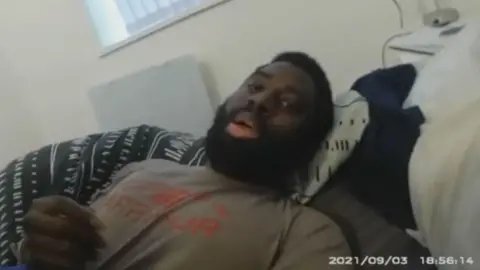
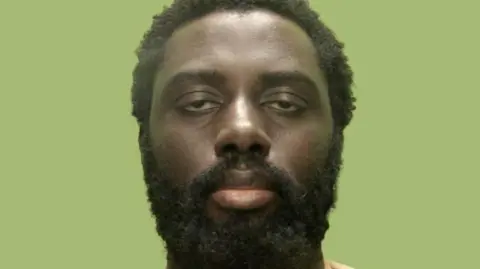
The paranoid schizophrenia of a man who killed three people in a spate of attacks was effectively "unmanaged and untreated" after he was discharged from mental health services, a public inquiry has heard.
Valdo Calocane was under the care of Nottinghamshire Healthcare NHS Foundation Trust for two years, during which time he was sectioned four times and warned he would kill somebody.
He was discharged nine months before he fatally stabbed three people and tried to kill three others, because healthcare workers "could not find him".
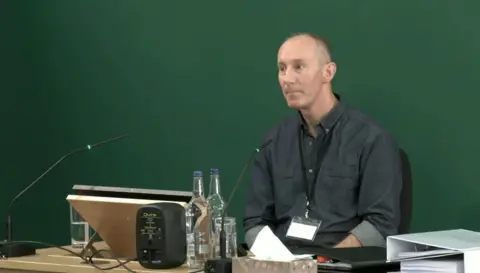
Dr Tim Baker, a GP at the practice where Calocane was a patient from 2017, said it was his view that the triple killer should not have been discharged.
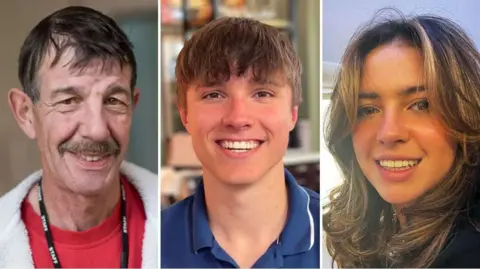
The Nottingham Inquiry is examining the events surrounding the killings of Barnaby Webber, Grace O'Malley-Kumar and Ian Coates on 13 June 2023 and the aftermath.
Giving evidence on Tuesday, Baker - a GP and partner at the University of Nottingham's Cripps Health Centre - said: "We put a lot of trust in our specialist colleagues, in all specialities, to do their job and ensure that when they discharge someone, it is safe and with clear instructions for us non-specialists to pick up the baton, which was not done here."
 The Nottingham Inquiry
Calocane, a former mechanical engineering student, was discharged by the trust's Early Intervention in Psychosis team in September 2022 after he failed to turn up for appointments and make contact with the team.
In his statement for the inquiry, Baker, who never had any interactions with Calocane, said he would expect a patient to be discharged from secondary care "only when and if it was considered safe to do so", and that discharges from secondary care were "specialist decisions based on careful review of diagnosis, risk and safety".
Inquiry team barrister Craig Carr asked: "Neither in the discharge letter or in any of the correspondence your practice received, is there any suggestion that the discharge was based on any assessment of safety, simply that he had disengaged?"
Baker responded: "That's correct."
Carr said: "Someone lacking in insight, non-concordant [with taking medication], known to be violent when not medicated - is it your view that that is the kind of patient who should not be discharged to primary care on the grounds of non-engagement?"
Baker replied: "Yes, that is my view."
 Supplied
Asked if the doctor's surgery, which the inquiry heard has 44,000 patients and 20 GPs, had a mechanism to allow for the potential that secondary care had made a wrong decision, Baker said: "In reality, general practice is very busy doing general practice."
The circumstances in which a practice would challenge a decision to discharge a patient to its care would be if it were known there was a "clear and present danger to the patient or others if that specialist care were to be withdrawn, outside the ability of primary care to manage", Baker's written statement said.
The practice did not consider challenging the decision because its records "held no concerns about" Calocane and it entrusted the trust to "make safe clinical decisions", it added.
Asked by Carr if, following Calocane's discharge, they considered he was under their care for his mental health, Baker said: "No, with his diagnosis, we would clearly see his physical health, we have a clear duty of care to offer that, but with a diagnosis such as paranoid schizophrenia, my view is that is an enduring serious mental illness that probably requires ongoing secondary care so I would never put him in the category of being stable."
Therefore, following his discharge, his mental health was "going to go unmanaged and untreated", Carr said, to which the doctor replied: "Yes."
 Nottinghamshire Police
The inquiry heard several text messages that were sent to Calocane by his GP went unanswered.
Like most patients, text message was Calocane's preferred method of communication, Baker said, but he admitted that trying to phone him would have been a "very good option".
The surgery's reflections on this are that it now uses multiple modes of communication to contact patients.
The inquiry continues.
Listen to BBC Radio Nottingham on Sounds and follow BBC Nottingham on Facebook, on X, or on Instagram. Send your story ideas to eastmidsnews@bbc.co.uk or via WhatsApp on 0808 100 2210.
