Leaving WW2 bombs buried not safe, warns bomb expert

 BBC
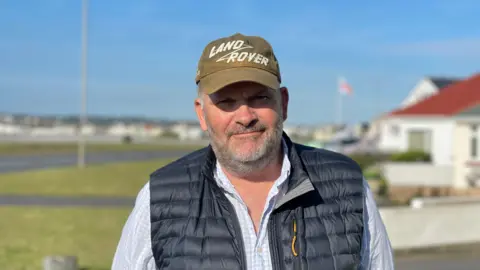
BBCA bomb disposal expert says a decision to leave four World War Two bombs buried under a Guernsey field poses an "unacceptable risk".
The British air-dropped bombs are located 26.2ft (8m) underground in the Route Isabelle and Le Foulon area, with their presence confirmed by a survey carried out last year.
The States said on Thursday a decision to leave the bombs "safely buried" presented "the least risk" and had been made following specialist analysis by the Ministry of Defence, Army and Nato.
Ben Remfrey said the decision needed to be revisited because there were "anomalies present". "We cannot be 100% sure those bombs are unarmed," he warned. The BBC has asked the States to further comment.
'Least risk'
President of the Home Affairs Committee Deputy Marc Leadbeater said public safety had been a priority.
"We want to reassure the community that this decision has been taken following careful consideration," he said.
"The expert analysis shows these devices are highly unlikely to be armed and leaving them undisturbed at depth is the option that presents the least risk to the community."
However, Remfrey, who was given an award by the Ukrainian military for his services during the conflict with Russia, said there was "strong evidence" to suggest one of the bombs, located furthest north, had detonated while underground during World War Two.
This had caused damage above ground and left a crater that was visible in 1945, Remfrey said.
"For us to be 100% sure that the bombs are unarmed, or armed, we have to excavate down and investigate that bomb number four, which records show actually detonated," he explained.
"The problem with having one bomb detonate is the others will be receptive to that ground shock and could well detonate."
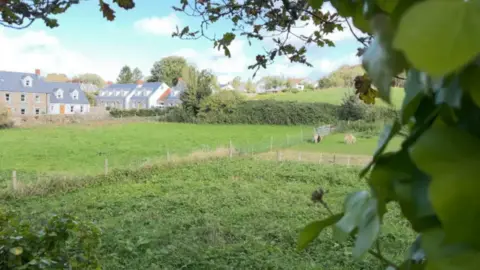
He continued: "Having 600-plus pounds of high explosives in close proximity to a residential property, even one, let alone 11, I'm sorry but that's an unacceptable risk."
He said the decision to leave the bombs in situ was based on a "desktop survey".
In a message directed to Leadbeater, Remfrey said the area was "not safe".
"I suggest that he and his department give the MoD un-redacted and full access to all the facts, including that parts of bomb number four was located after its detonation and there was a crater, because the MoD had no idea about that."
According to MoD reports, it was unlikely the bombs were armed before they were dropped.
The fact none of the four bombs detonated also reinforced this conclusion, the States added.
'Proportionate decision'
Leadbeater said there was a "lot of respect" for Remfrey's knowledge and effort.
"It's why we took the time to arrange a meeting between him and the senior officer from the Ministry of Defence who led the support it provided to us in reaching a conclusion.
"My understanding is they had a productive meeting and all Mr Remfrey's questions were answered.
"While Mr Remfrey undoubtedly has a lot of experience in this area, we have, I believe, demonstrated that we've taken this very seriously by engaging with absolute experts in the field via the MOD and the Explosive Ordnance Disposal Technical Information Centre (EODTIC) - a NATO specialist asset.
"I appreciate that at this point we are unlikely to gain Mr Remfrey's approval, and that's OK, but I'm satisfied we have sought the best advice and taken a proportionate decision based on that advice."
Follow BBC Guernsey on X and Facebook and Instagram. Send your story ideas to channel.islands@bbc.co.uk.
