A smoke-free island is within grasp - health boss

 BBC
BBCPublic health officials in Guernsey say the island achieving a smoke-free status is "within our grasp" after smoking rates fell to just over 9%.
Director of Public Health Dr Nicola Brink said smoking remained one of the leading causes of preventable illness and death. "10% of our deaths in people over 35 are caused by smoking," she said.
A smoke‑free population is usually defined as one where fewer than 5% smoke. It means smoking has become rare and is no longer a major public health problem.
Guernsey has a history of taking early action on tobacco control - in 2005, it was the first place in the British Isles to enforce an indoor smoking ban in public spaces, with the UK following in 2007.
In 1996, the States became the first government in the British Isles to ban tobacco advertising and, before that, Aurigny was the first airline in the world to prohibit smoking on its planes in 1977.
'Trying to give up'
Brink says there are "a lot of reasons for us wanting to achieve smoke-free status".
"There's certain groups that have far higher levels of smoking and we see for example the smoking rates in affordable housing is about 20% and you're seeing those health and social inequities coming through there," Brink continued.
"We've also got second-hand smoke and you have pregnant women, children, people with vulnerabilities who can be exposed to second-hand smoke in the community.
"One smoker said to me, 'I started smoking when I was a teenager and I spent my entire 30s and 40s trying to give up'.
"So people become addicted to a product and then spend a lot of their time trying to give up."
The Combined Substance Use Strategy for Guernsey and Alderney 2027–2032, published by Public Health in March, sets out plans to reduce smoking rates further - but warns progress is slowing and more action is needed.
Guernsey could follow the UK in adopting tougher anti‑smoking laws as part of its long‑term push to become a smoke‑free island.
New UK legislation aims to create a "smoke‑free generation" by banning anyone born after 1 January 2009 from legally buying cigarettes.
UK ministers will also have new powers to regulate tobacco, vaping and nicotine products, including flavours and packaging.
Dr Brink says Guernsey's Public Health has completed the necessary background work needed to bring a similar ban into place quickly.
"It'll depend on a lot of other political priorities, legislative priorities, and we need to be mindful of that.
"Actually achieving smoke-free status is within our grasp and I think with that final push we could get there."
A smoke‑free island could also have an impact on the environment, campaigners say.
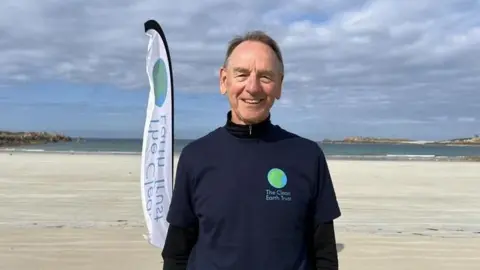
More than 7,000 cigarette butts were collected by volunteers on Guernsey's beaches in 2025.
Paul Bugden, policy officer for the Clean Earth Trust, said cigarette butts continued to be one of the items they found the most as litter.
The charity estimates the vast majority of butts found are dropped by local people.
"One thing we see happening a lot is people driving to car parks, parking facing the sea and having a lovely view in their cars, remaining in their cars, reading the paper, smoking a cigarette and then just throwing the butt into the car park," Bugden said.
Follow BBC Guernsey on X and Facebook and Instagram. Send your story ideas to channel.islands@bbc.co.uk.
