Boy's breech birth death avoidable - inquest

 Supplied
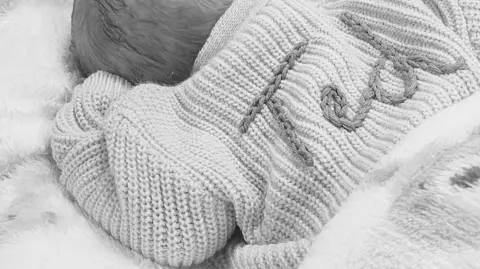
A baby boy would not have suffered the injury from which he later died had his mother been admitted to hospital rather than being discharged an hour earlier, a coroner has ruled.
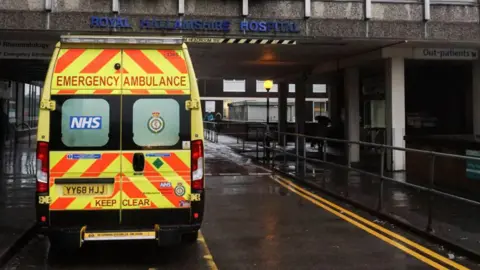
Ted Stewart died of a brain injury days after mum Stacey began giving birth to him in the breech position at home following being sent home from Sheffield's Royal Hallamshire Hospital on 11 December 2024.
An inquest into Ted's death has found he died of Hypoxic Ischemic Encephalopathy (HIE) after he became starved of oxygen during a feet-first birth at home.
Prof Chris Morley, from Sheffield Teaching Hospitals NHS Foundation Trust, said the trust was "so very sorry for what happened" and had since made changes.
The inquest heard that Stacey, from Chapeltown in Sheffield, had attended hospital with husband Dan after she had reported bleeding and pain while 38 weeks pregnant with her son.
She was examined by a junior obstetric doctor, who discovered that Ted might be in what is known as an oblique, or diagonal, position.
 Getty Images
According to the couple's solicitors, following the discovery of Ted's position, Stacey should have received an ultrasound scan which would have led to her being admitted to hospital and could have prevented Ted suffering a brain injury.
Instead, the couple were sent home from the hospital and told to return six days later for a planned C-section.
However, once home, Stacey experienced more bleeding as well as painful contractions, with her waters subsequently breaking and Ted's feet immediately becoming visible.
Paramedics were called and Ted was delivered unresponsive in an ambulance on the way to the hospital and had to be resuscitated before being taken to intensive care.
Stacey and Dan were told that he had suffered HIE - a type of brain injury caused by a lack of oxygen and reduced blood flow.
Despite treatment to limit the extent of brain injury caused, the couple were told Ted remained unresponsive and they agreed for him to be transferred to palliative care so he could be visited by family before his ventilator was turned off eight days later on 19 December.
'Appropriate support'
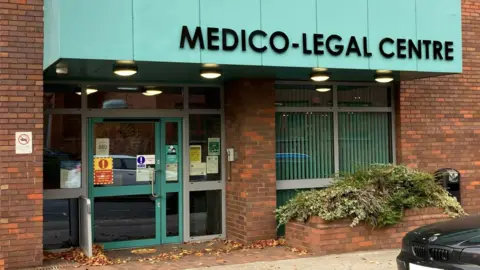
Reaching a narrative conclusion following this week's inquest at Sheffield's Medico-Legal Centre, Hannah Berry, assistant coroner for Sheffield and Barnsley, said in a written record of inquest: "Ted's mother was assessed by a junior doctor early in her obstetric training and she did not appreciate the significance of an oblique lie. There was no national or local guidance available to assist her
"She consulted with a senior colleague, but the possible oblique lie was not effectively conveyed, understood or acted upon and Ted's mother was discharged home."
Berry added: "Had his mother been admitted to hospital, she would have had the opportunity either to undergo an emergency caesarean section or, if vaginal delivery was unavoidable, to deliver in a hospital setting with appropriate obstetric and neonatal support and, on the balance of probabilities, Ted would not have sustained the injury from which he died."
The coroner said she was concerned the lack of specific national or local guidance on best practice when a baby was in an oblique position presented a risk of further deaths of babies in the future.
Berry said she would write to both the Royal College of Obstetricians and Gynaecologists and the National Institute for Health and Care Excellence (NICE) in the form of a Prevention of Future Deaths report.
 Oli Constable/BBC
According to their solicitors, the Stewarts had opted for an elective C-section for Ted's birth after enduring a traumatic birth with their first child, Ivy, who had been in breech position for much of the pregnancy.
They were aware of the dangers of babies being in the wrong position, and would have sought further investigations had they been informed of Ted's position, the solicitors added.
In a statement issued via Hudgells, Stacey and Dan said: "What we went through when Ted began being born at home, and became stuck, was absolutely horrendous.
"We were not aware of all the facts when we were sent home from hospital.
"Had we been informed of Ted's oblique position, we certainly would have insisted on an ultrasound scan and would have been very reluctant to leave.
"In many ways, it was their lack of concern which reassured us everything was OK."
The couple said "a lack of guidance, and also a simple lack of communication between midwives and doctors, the most basic of errors and oversights, cost Ted's life and forever changed our lives as a family".
"Ted's death was completely preventable. We feel so angry and incredibly let down," they added.
'Needless loss'
Prof Morley, chief nurse at Sheffield Teaching Hospitals NHS Foundation Trust, said: "We know that no apology will ever be enough to lessen the pain of Ted's death for his parents and family, but we are so very sorry for what happened in 2024 when he was born.
"We took what happened extremely seriously and made changes including refreshed and ongoing training for staff on the use of the Birmingham symptom-specific obstetric triage system.
"We also welcome the coroner highlighting to NICE and the Royal College of Obstetrics and Gynaecology the lack of national maternity guidance on babies in 'oblique' position."
Maria Repanos, the Stewarts' solicitor, said: "The needless loss of Ted has been utterly heartbreaking for Stacey, Dan and Ivy.
"This inquest has highlighted a lack of local and national guidance which could be placing many more babies at risk across the country.
"Such systemic shortcomings are entirely unacceptable and demand urgent and sustained action."
Listen to highlights from South Yorkshire on BBC Sounds, catch up with the latest episode of Look North
