What is the Lampard Inquiry and what could it change?

 Inquest
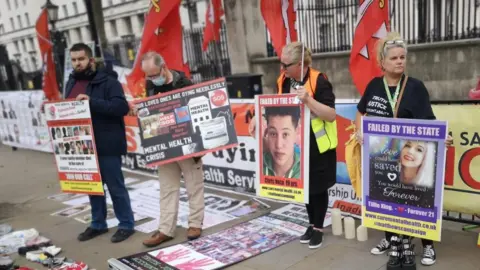
Mental health patients are among the most vulnerable in society, but services in England have been under huge strain for more than a decade, with sometimes fatal consequences. A public inquiry backed by the government is focusing on deaths in Essex as a starting point, but what is it and what does it hope to achieve?
Solicitors representing a growing number of families who have lost loved ones say the Lampard Inquiry is as important as those surrounding the Post Office and infected blood scandals.
The chairwoman of the inquiry says it is looking at significantly more than 2,000 deaths and the inquiry team says the alleged failings are "on a scale that is deeply shocking".
The failures reported in Essex over 24 years could be an indication of what is going on elsewhere. By examining those failures in detail, it is hoped mental healthcare will be improved across England.
What is the aim of the inquiry?
The Lampard Inquiry is the first public inquiry specifically looking into mental health deaths.
It aims to understand what happened to patients who died at child and adult inpatient units, under the care of the NHS in Essex, between 2000 and the end of 2023.
The inquiry is focusing on Essex Partnership University Foundation NHS Trust (EPUT) and North East London Foundation Trust (NELFT), along with organisations that existed previously.
It is not looking at deaths in the community unless they happened within three months of discharge from a mental health unit, the patient had been assessed and refused a bed, or they were on a waiting list for a bed.
What is an inquiry?
 Getty Images
Public inquiries are funded by the government and are led by an independent chairperson.
They can legally require witnesses to give evidence.
No-one is found guilty or innocent, but the inquiry publishes recommendations. The government can accept or ignore them.
The Department of Health and Social Care told the inquiry: "Every patient deserves to be treated in an environment where they receive high-quality care and are treated with dignity and respect."
Why is it called the Lampard Inquiry?
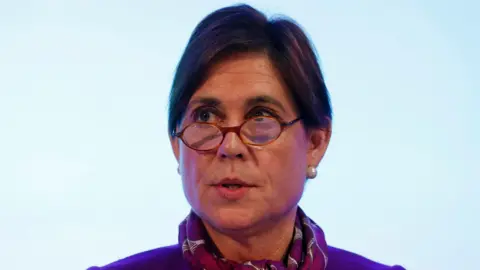
It is named after the chairwoman of the inquiry, Baroness Kate Lampard.
She is a former barrister who oversaw the NHS investigations into abuse by former television presenter Jimmy Savile.
Baroness Lampard is a member of the House of Lords. She is a crossbench peer, which means she is not affiliated to a political party.
She says the inquiry is of national significance and will make recommendations for "real change" in England.
Why is the focus on Essex?
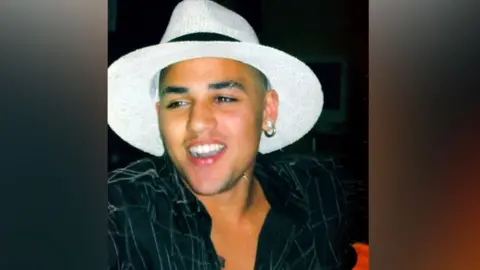
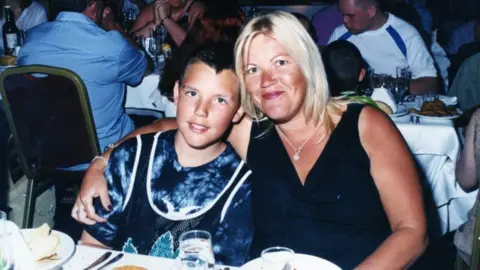
Calls for an inquiry were first made by the mothers of two 20-year-old men who died at the Linden Centre - a mental health unit in Chelmsford.
In 2008, Ben Morris, the son of Lisa Morris, was found dead after calling her to say he wanted to leave.
Four years later, in 2012, staff said they found Melanie Leahy's son Matthew unresponsive, and he was pronounced dead in hospital. He reported being raped days before he died.
Essex Police investigated and no arrests were made, but the Parliamentary and Health Service Ombudsman (PHSO), which followed up Melanie's complaints, found the mental health trust failed to follow its own rape allegation procedures.
Matthew's care plan was also falsified.
Since then, repeated failures have been raised.
The health watchdog, the Care Quality Commission (CQC), raised concerns about the safety of wards and staffing from 2014 to 2018. Recommendations were not acted on.
In 2017, Essex Police launched a corporate manslaughter investigation into the deaths of 25 patients at nine mental health units, but there were no charges.
Police said the cases did not meet the "evidential threshold".
In 2019, the PHSO published a report into the deaths of Leahy and Morris. It quoted a "systemic failure to tackle repeated and critical failings over an unacceptable period of time".
A year later, Melanie Leahy set up an online petition for an independent inquiry.
About 105,000 people signed it, forcing a debate in Parliament.
In 2021, former health minister Nadine Dorries said a robust independent inquiry would be held, but it would not have full legal powers to compel staff witnesses to give evidence.
That same year, the Health and Safety Executive fined EPUT £1.5m after the deaths of 11 patients. A High Court judge said there had been a "litany of failures".
In 2023, following an undercover report by Channel 4's Dispatches, the CQC rated two female wards "inadequate". It showed staff sleeping while they were supposed to be observing patients.
In the same year, the inquiry was given full legal powers at the request of the former chairwoman Dr Geraldine Strathdee, who stepped down for personal reasons.
More deaths were then included for investigation.
What are the concerns being investigated?
 Stuart Woodward/BBC
Similar to the Covid-19 Inquiry, the investigation has been divided into a number of themes, including:
- Resuscitation on inpatient wards and whether staff are adequately trained
- Physical and sexual safety, including allegations of abuse
- Whether mental health wards are safe, fit for purpose and support recovery
- The care of patients with autism, learning disabilities and other additional needs
- The use of Oxevision monitoring technology and its impact on privacy and dignity
- Medication and the balance between drug treatment and therapeutic care
- Incidents where patients abscond from secure mental health wards and what happens afterwards
- The use of restraint, including seclusion and chemical restraint
- Communication with families
- Staffing levels, training and the use of agency workers
- Leadership, culture and governance
Baroness Lampard has said she will use the inquiry's legal powers where necessary to obtain evidence, protect the identities of staff and refer matters to the police if required.
Priya Singh, from Hodge Jones & Allen, which is representing 126 families, said: "The deaths of patients in psychiatric institutions cannot continue in the UK.
"This is an enormous opportunity for mental healthcare in England. I'm hoping we can find out what's been going so badly wrong."
What do the NHS trusts say?
 Mid and South Essex ICB
In a statement to the inquiry, EPUT apologised to everyone failed by mental health services in Essex.
It said that "each death was a tragedy" and accepted that over at least a decade, action was not always taken to learn from deaths.
It acknowledged there had been serious reports made about sexual abuse of patients and of staff falling asleep.
EPUT admitted some wards had staffing levels below those authorised by the trust, and highlighted a national shortage of mental health nurses.
Trevor Smith, the CEO of EPUT, said: "We're really clear that there's more to do to ensure that the care we provide continues to improve and the recommendations of the Lampard Inquiry will be an important part of this."
NELFT, which provides child and adolescent mental health services in parts of Essex, told the inquiry it remained fully committed to supporting it in every way it could.
NHS England, which is responsible for some specialist services, said it recognised that there would be areas where its organisation could have done better.
How long will the inquiry take?
Baroness Lampard made her opening speech on 9 September 2024.
Eight evidence sessions have taken place so far, with almost 100 families recounting their experiences and barristers questioning the trusts and other participants.
Hearings have returned to Chelmsford Civic Centre after previous sessions were held in London.
Interim recommendations could be published this autumn if Baroness Lampard concludes that issues relating to resuscitation in mental health inpatient units, or the use of monitoring technology such as infrared cameras, might pose an "urgent risk to patient safety".
Closing submissions will take place in the autumn of 2027, with Baroness Lampard quoting "some delay" in receiving evidence from EPUT, as well as others.
Paul Scott, the former chief executive of EPUT, said the inquiry was likely to cost the NHS £30m.
The report and recommendations are unlikely to be published until mid-2028, more than seven years after the inquiry was first announced.
If you have been affected by any of the issues raised in this story, you can get help and support at BBC Action Line.
