Heart patient discharges himself to relieve A&E

 Reuters
A heart attack survivor who attended hospital after experiencing chest pains said he later discharged himself to reduce pressure on the emergency department.
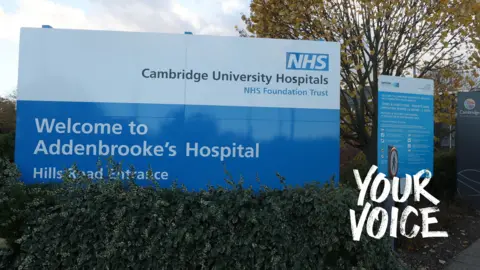
Chris Boulton, 67, from Impington, Cambridgeshire, said he was taken to A&E at Addenbrooke's Hospital in Cambridge by ambulance on Monday evening, and was still waiting to be seen eight hours later.
"I discharged myself because there would be one less patient – to take a tiny bit of strain off," Boulton said.
The Cambridge University Hospitals NHS Foundation Trust apologised for the long wait times during a critical incident at the hospital that was in place from Tuesday to Wednesday evening because of "exceptionally high demand".
Boulton, who contacted BBC Your Voice, had a heart attack last year and said he called NHS 111 on Monday because he was worried about the pain he was feeling.
He said the ambulance service carried out a heart scan and another was completed when he arrived at the hospital.
About eight hours later he had an X-ray, he said, which was when he decided to leave the hospital because he felt it looked similar to a scan he had after a major operation last year.
Lost confidence
Each hospital trust has its own discharge guidelines, but the NHS said patients can choose to discharge themselves at any time, even against medical advice.
"The pain had long gone. With the extreme busyness of the A&E, I was thinking about discharging anyway because I'd been waiting so long," Boulton said.
He said he asked a doctor for an update about waiting times and was told other patients had been waiting for up to 18 hours.
"But it's not his fault," Boulton, who works as a chimney sweep, said. "Yeah, he was stressed. Yes, he reacted badly. But that's also understandable."
Boulton said he would never want to waste NHS time or resources, "but given my cardiac history, if I get a nasty chest pain, it needs to be checked out".
He said he would go back if he experienced similar symptoms again, but that he had lost some confidence in the system.
"The help would arrive eventually, but you'd be well advised to take a camp bed because you are going to be there for a very long time before you finish getting the help you need," Boulton said.
He added he empathised with the A&E staff and that the hospital needed more funding from the government to recruit more clinicians.
Ambulance queues
At one point earlier this week, 127 patients were waiting in A&E - with some waiting up to 24 hours for admission - while ambulances were queuing outside the department, according to a staff email seen by the BBC.
During the critical incident, the Cambridge University Hospitals NHS Foundation Trust said its staff were prioritising patients with the most urgent clinical needs.
"We are grateful to our staff for their hard work and the understanding of our patients during this exceptional period of high demand," a spokesperson said.
"We are deeply sorry if any patient has experienced behaviour from any of our staff that has fallen below the standards patients should expect from us."
The trust urged anyone concerned about their care to contact its patient advice and liaison service.
The Department of Health and Social Care said improvements had been made to A&E performance, "but we know there is more to do".
The government announced new measures last year to make it easier for NHS employers in England to take on newly qualified nurses and midwives.
It followed warnings there were up to three times more graduates than vacancies in some areas of the health service.
Do you have a story suggestion for Cambridgeshire? Contact us below.
Follow Cambridgeshire news on BBC Sounds, Facebook, Instagram and X.
