This is what cold water shock feels like

 BBC
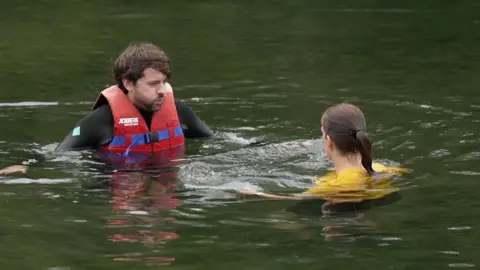
BBCAs I plunge into the water of the lake, the shock hits me almost immediately.
I am wearing a wetsuit and a life jacket, but still I am not prepared for the effect the cold water has on my body.
I feel my muscles tense as the chill takes my breath away.
It is easy to see how people can quickly get into trouble in open water. Fortunately, I am being supervised by experienced instructors.
I have come to a lake near Lincoln to find out about the dangers of entering open water and what to do to survive.
There were at least 15 water-related deaths in the recent hot weather, including a teenage boy who lost his life in a lake in the city.
In the wake of the tragedies, licensed instructor Steve Poulton has organised a series of free water safety classes at a former quarry in South Hykeham.
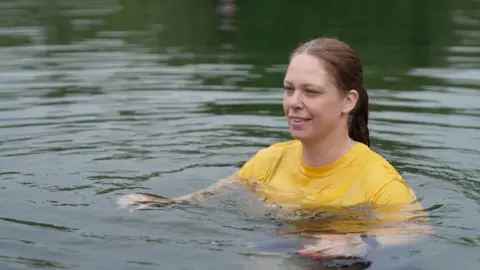
Now, I am in the water with his colleague Samantha Brackenbury. Even at the beginning of June, the cold is impossible to ignore.
My instinct is to take lots of quick, short breaths, but I am told this is a mistake.
Instead, Brackenbury tells me it is really important to "regulate" my breathing. She advises me to take "nice deep breaths".
I try to take her advice and I steadily start to acclimatise and begin to relax.
Remaining calm means you are less likely to breathe water in and panic. The RNLI recommends leaning back and floating.
After bobbing about for a while, despite feeling slightly warmer and calmer, I am more than happy to get out.
Even after being back in the warmth and getting dry, it takes me a while to recover from the impact of the sudden cold shock.
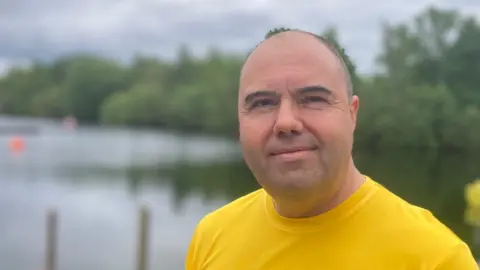
Poulton, who runs open-water swimming sessions in the former quarry, has organised five safety sessions.
He tells me he wants to "take a stand" to educate young people about the hazards of open water.
"Water safety is of paramount importance," he says. "Everybody should have an understanding of what they would do if they end up in the water.
"If just by delivering these free sessions we manage to save one life, that's good enough for us."
Poulton, whose company Activities Away regularly hosts water safety sessions, says ideally people should only go into water with lifeguards and safety equipment nearby.
However, it is important to "educate them on what to do if there was a problem", he adds.
Free sessions are due to be held on Sunday 7 June and Saturday 13 June. They will include classroom activities as well as sessions in the water with instructors.
'Really dangerous'
According to the Royal Life Saving Society (RLSS), leaping into a cold lake can be fatal.
Ashley Jones, head of water safety and education, previously told the BBC that even though the air warms up during a heatwave, the water does not.
"If you were to run, jump or dive in, the first response you get is a gasp. And that big, sharp intake of air is really dangerous if there's water there. So if you're in the water and you gasp, that can start the drowning process," Jones said.
"Our heart rate goes up and our breathing goes up. And that can make us panic, and if we panic and we're splashing around, that can combine to cause us to inhale and start the drowning process."
The RLSS says people who get into trouble or feel overwhelmed in the water should "float to live":
- Fight your instinct to thrash around.
- Turn on your back.
- Lean back.
- Get your breathing back under control.
- Now, think about getting out.
Listen to highlights fromLincolnshire on BBC Sounds, watch thelatest episode of Look North.
Download the BBC News app from the App Storefor iPhone and iPad orGoogle Play for Android devices
