Man's anger as brother left in Afghanistan after data breach

 BBC
BBCAlmost a year after one of the most serious data breaches in the British government's history was made public, thousands of Afghans whose details were exposed are still in Afghanistan, waiting to learn whether they will ever reach the safety they were promised.
When the Taliban seized control of Afghanistan in 2021, thousands of Afghans who had worked with or for the UK government were left at risk of reprisals.
Britain set up schemes to bring those thought to be the most in danger to safety.
But in 2022, there was a serious government data leak of people who had applied, exposing the very names it was meant to protect.
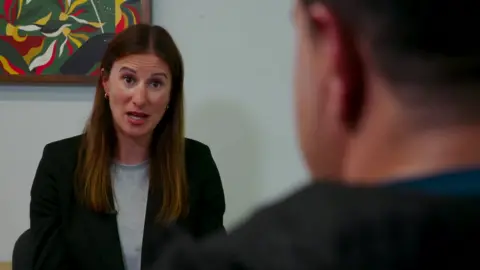
Among them was the brother of Farhad, an Afghan interpreter who worked for the UK government for three years.
Farhad, who asked us not to use his real name, now lives in north London. His brother's application to come to the UK has been rejected, and he is appealing.
"I feel betrayed because they promised us but did not stand by their words," Farhad said. "They broke their promise."
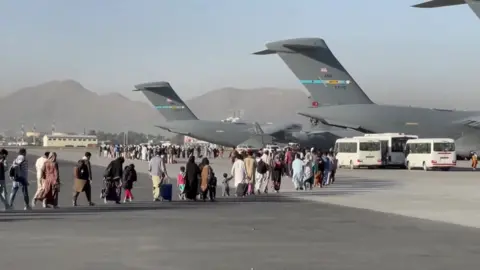
In February 2022, a UK defence official accidentally shared a spreadsheet containing the personal details of people who had applied to come to Britain to flee the Taliban.
It held the names, contact details and, in some cases, family information of those who believed their links to British forces could put them in danger.
About 18,700 of those listed had applied under the Afghan Relocations and Assistance Policy, the main scheme for Afghans who had worked with UK forces, and the full dataset ran to more than 33,000 entries once family members were included.
The government did not become aware of the breach until August 2023, when part of the data appeared online. The following month it obtained an unprecedented court order, called a super-injunction, which not only barred the breach from being reported but banned any mention of the order itself.
The aim, the government argued, was to stop the Taliban learning the list existed and using it to target those named. The order was granted "contra mundum", meaning it applied to everyone, and judges described it as being the first of its kind.
While it was in force, ministers quietly set up a secret relocation scheme, the Afghanistan Response Route, to bring affected Afghans to Britain. Parliament was not told, and journalists who had uncovered the leak could not report it.
The restrictions were lifted on 15 July 2025, and only then did the public, and many of those on the list, learn what had happened.
The Defence Secretary, John Healey, offered what he called a sincere apology on behalf of the British government and said he had been deeply concerned about the lack of transparency the order had created.
A cross-party inquiry by the Commons Defence Committee is now examining how the breach happened and how successive governments responded to it.
'I was threatened every day'
During his three years as an interpreter, Farhad said he was threatened daily and branded a traitor.
"I was threatened every day, threats I never imagined," he said. "Death threats, like we have a sharp knife and our sharp knife needs your neck."
His details, and his brother's, were among those exposed in the leak. In 2024, Farhad was brought to the UK, but his brother was not and his application was refused.
Farhad said he was assured that interpreters and their families would be a priority.
"I was promised, interpreters were promised, that interpreters and their families were their first priority, that they would take care of them, that it was their responsibility," he said.
"Once I received the refused decision for my brother, I was shocked."
The UK ran several routes for Afghans to reach safety, including the Afghan Relocations and Assistance Policy and the Afghan Citizens Resettlement Scheme. Both were closed to new applicants on 1 July 2025.
By 30 June 2025, about 35,700 people had been resettled across the three Afghan schemes, according to government figures, with thousands of applications still outstanding.
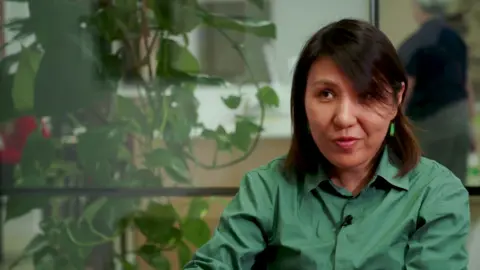
Critics say the wait for decisions on existing cases has been far too long. Among them is Shamim Sarabi, who came to the UK as a refugee from Afghanistan nearly 20 years ago and now helps others understand their legal rights.
"They have been expecting a very simple response to their application, and they are not receiving it," she said. "They are waiting not days or weeks or months, they are waiting years to get a response."
She said the latest decision to reduce support made urgent action more pressing.
"We want to request that the UK government takes immediate action to support these people, assessing their applications immediately, bringing them to safety as urgently as possible and reuniting them with their families," she added.
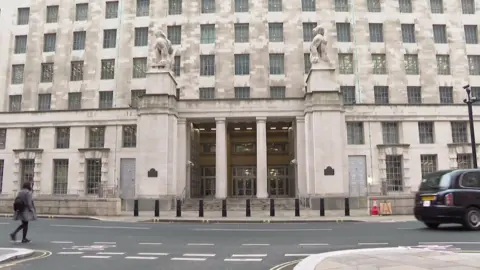
In a statement, a Ministry of Defence (MoD) spokesperson said: "The UK has operated exceptionally generous Afghan resettlement schemes, and, as the defence secretary told Parliament on 18 December 2024, our ambition remains to conclude it within this Parliament.
"Having seen increased evidence of successful self-moves, and after looking carefully at factors including the risks to this cohort and the value for money for the taxpayer, we have decided to end in-country assistance for movements out of Afghanistan.
"However, we want to reassure eligible Afghans that once they reach a safe third country, we maintain provision of our current support until 2028."
Under that change, set out in April 2026, eligible Afghans are now expected to make their own way to a third country before their cases can be processed, and the government has set a backstop of December 2028 for relocations to be completed.
For Farhad, the policy is measured in family rather than figures.
"For me, I see a life broken," he said.
Listen to the best of BBC Radio London on Sounds and follow BBC London on Facebook, X and Instagram. Send your story ideas to hello.bbclondon@bbc.co.uk
