Afghan inquiry chair denies BBC application to name senior officers

 BBC
BBCThe public inquiry examining Afghan war crimes allegations against the SAS has denied an application by the BBC to name two officers who held senior positions within special forces at the time of the alleged crimes.
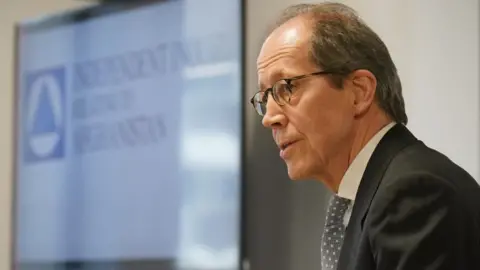
The chair of the Independent Inquiry relating to Afghanistan, Lord Justice Sir Charles Haddon-Cave, said in a ruling on Tuesday he was satisfied with a counter-argument made by the Ministry of Defence that naming the officers could damage national security.
Lord Justice Haddon-Cave added that he might reconsider anonymity orders in relation to some senior special forces officers, but not before all of the evidence had been heard.
He ruled in the BBC's favour on another part of its application, which sought to overturn the inquiry's ban on the media naming the Special Forces regiments referred to in inquiry evidence as the SAS and its sister regiment from the Royal Navy, the SBS.
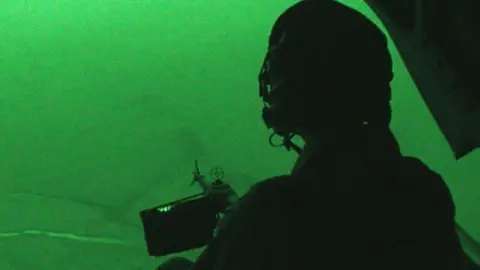
The Afghan inquiry is examining allegations that the SAS murdered unarmed civilians and detainees on night raids between 2010 and 2013 and falsified paperwork to cover up the killings.
The BBC argued that the two men played important roles in the matters under scrutiny by the inquiry.
In support of the BBC application, it was pointed out that the senior officers had command responsibility over the SAS squadrons alleged to have carried out war crimes and evidence shows they were made aware that suspected executions had taken place.
The inquiry chair's decision on Tuesday prevents the BBC from naming the senior officers who were the subject of its application, or publishing other identifying information about them when reporting on the inquiry's proceedings.
The BBC application set out evidence that the identities of the two officers were already in the public domain and there was widely available information online linking them to their senior roles.
The application pointed out that the inquiry itself had published such information about the senior officers, that the government had published information outlining the specific post and time period it was held by one of the senior officers, and that that officer had publicised that information himself online.
The application further argued that the inquiry's far-reaching anonymity orders inhibited the BBC's ability to publish independent, public-interest journalism.
BBC Panorama has been investigating allegations the SAS executed unarmed civilians, including children, for eight years. The public inquiry was established in 2022 in the wake of Panorama's revelations.
 PA Media
Countering this, lawyers for the senior officers submitted that the BBC's reporting did not serve the public interest. They argued that the BBC was not aware of the full facts, due to much of the inquiry's evidence being heard in closed-door hearings, and that its reports served to pre-empt the conclusions the inquiry may reach.
The BBC's application was supported by submissions from the bereaved Afghan families, which urged the inquiry to balance concern over national security with concern over the "institutional and cultural failure to subject UK Special Forces and its commanders to appropriate public scrutiny".
As well as accepting the argument that there was a risk to national security, the chair said in his response that the anonymity orders did not impair the inquiry's ability to produce "a reasonably coherent, comprehensive record" of what happened, nor the media's ability "to follow the record of evidence and the workings of the inquiry".
The decision by Lord Justice Haddon-Cave to grant a separate part of the BBC's applications means media outlets can now tell the public that the focus of the inquiry is the SAS, and can identify the UK's other Tier 1 special forces regiment, the SBS.
The restriction against naming the SAS was not generally being adhered to by the media and the inquiry had not taken formal action against any outlets for that apparent breach.
But the chair had continued to enforce the ban on naming the SBS, threatening reporters with contempt of court proceedings for doing so – a scenario that gave rise to potentially confusing coverage which identified one regiment but could only allude to the other.
Lord Justice Haddon-Cave said in his ruling on Tuesday that keeping the SAS/SBS restriction in place from this point on would "significantly inhibit the ability of the Inquiry to allay public concern", and that the inquiry would be undermined if it were "unable to name the very organisation which is the central focus of the inquiry's investigation, namely the SAS".
Tuesday's change in reporting restrictions also allows those covering the inquiry to refer to the existence of "squadrons" within the SAS, but prevents reporters from identifying individual squadrons accused of committing war crimes.
Get in touch
Do you have information about this story that you want to share?
Get in touch using the Signal messaging app, an end-to-end encrypted message service designed to protect your data.
WhatsApp / Signal: 0044 7815 653 458
Or by using SecureDrop, a highly anonymous and secure way of whistleblowing to the BBC which uses the TOR network.
SecureDrop: http://kt2bqe753wj6dgarak2ryj4d6a5tccrivbvod5ab3uxhug5fi624vsqd.onion/
Please note that the SecureDrop link will only work in a Tor browser. For information on keeping secure and anonymous, here's some advice on how to use SecureDrop.
