Masked men to morphine addiction: The original TV Little House on the Prairie was a true American horror story

 Getty Images
A Netflix spin on the classic children's books is about to launch. It remains to be seen how it compares to the 1970s adaptation – which is much darker and grimmer than most remember.
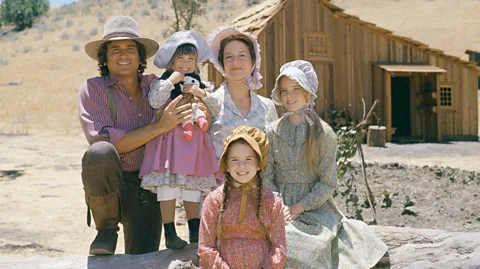
When it comes to TV credits sequences, few evoke as much nostalgia as that for Little House On The Prairie, the 1970s series about family life on the American frontier in the 19th Century. "This song reminds of the good old days...carefree and unburdened," says one fan, commenting under a video clip of the NBC series intro on YouTube that has currently been viewed 1.6 million times. Someone else notes: "They simply do not make television like this anymore. It is real, it is wholesome."
But the show's famous introduction gives a false impression of the show – as in fact it was much much darker than it is commonly remembered to be.
 Getty Images
Warning: This article contains details that some might find upsetting.
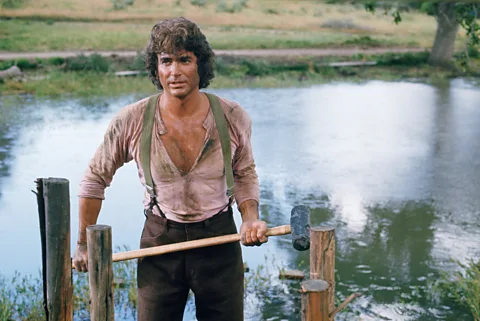
Based on the much-loved semi-autobiographical 1930s children's book series of the same name by Laura Ingalls Wilder, Little House on the Prairie ended up becoming a genuine TV phenomenon. Centring on the lives of the Ingalls family – father Charles, mother Caroline and their four daughters Mary, Laura, Carrie and Grace – in the frontier town of Walnut Grove in Minnesota in the 1870s, it ran for seven series, from 1973 to 1984, and pulled in an estimated 15 to 20 million viewers per episode in the US alone. It went on to be syndicated in more than 100 countries; and in 2025, Nielsen Media Research declared it "a top streaming legacy programme" based on how many viewers were still watching it.
Now, though, it faces competition from a new Netflix adaptation of the show, which premieres next week. The new version sticks quite faithfully to the family-friendly tone and spirit of Wilder's books. By contrast, the first TV adaptation was a much more horrifying affair. Alongside tales of schoolyard japes and pie-baking competitions came storylines involving child abuse, murder, drug addiction, suicide, mental health issues and cancer.
Robert J Thompson, professor of popular culture at New York's Syracuse University, points out that much of the show's darkness merely reflected the reality of 19th-Century life. "The things the show covered – its chronic dealing with pregnancy troubles, for example – reflected real issues. Pregnancy was dangerous in the 1870s, 1880s, and 1890s, especially in a frontier setting. The show dealt with malaria outbreaks, pregnancy issues, and the deaths of young children. It didn't pull many punches."
Its unexpected evolution
By the show's final seasons, however, its depiction of hard-hitting issues began to veer into actual horror-style storylines. One especially grim two-parter from the seventh series saw a 15-year-old girl being kidnapped by a masked man, and then, it is implied, sexually assaulted, resulting in her becoming pregnant. The episode, called Sylvia, shows her father punish her and she is shamed by other Walnut Grove residents; then her rapist returns and she dies in an accident trying to escape him. Dr Elizabeth Erwin, co-creator and editor of Horror Homeroom – a website which analyses works of horror through critical theory – recently wrote an article about this particular episode in which she argued that "[its] premise is something straight out of a horror movie" and that it "meshes together elements from a variety of horror sub-genres, most notably Giallo – a highly stylised Italian horror subgenre – and slasher".
 Getty Images
"I'm Gen X and I was talking to someone of my same age group about what scared her most on TV as a kid," Erwin tells the BBC. "And I was expecting her to say Friday the 13th or any of the '80s slasher films, and she said: 'Little House on the Prairie'. I said: 'Was it the Sylvia episode?' She said: 'Yes – that's exactly it'."
As Erwin points out, though, "Sylvia is not this weird, outlier episode that's a one-off". She describes the show as being part of the subgenre of "Frontier Gothic", which originated in the late 18th and early 19th Centuries and maps Gothic conventions on to stories of US expansion and frontier life. "The show also does body horror, in season two, where Caroline Ingalls gets her leg infected after a scratch, and takes a knife to it," she adds. "All the tropes are there, all the conventions are there."
Erwin also notes that the show reflects what cinema studies professor Barbara Creed in 1993 conceptualised as "the Monstrous Feminine", whereby on-screen female monsters or creatures are created to reflect societal fears around female bodies, sexuality and maternal traits. "You see this in My Ellen," Erwin explains, "a season four episode where a woman loses her daughter and then hallucinates that Laura [played by Melissa Gilbert] is her child and puts her in the basement."
The most upsetting episode ever
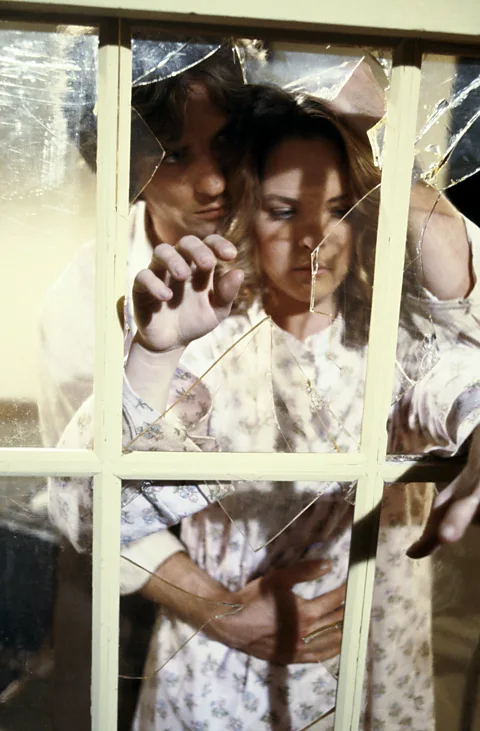
Another episode that is discussed regularly among fans for being utterly gruesome is season six's two-part May We Make Them Proud, which is set in the Harriet Oleson School for the Blind, where Mary Ingalls, who is herself blind, teaches. The episode sees a fire at the school resulting in the deaths of both Mary's colleague Alice and Mary's baby, Adam Jr.
"This is probably on most people's lists as the darkest episode of Little House," says Thompson. "It's a main character's baby, a blind school burns down, and Mary almost becomes catatonic from grief. But I don't remember it generating much controversy at the time. He continues: "If it aired today, people would probably slam it online as 'torture or emotional pornography'." Erwin agrees that it was indeed a deeply traumatising watch: "Alice is literally breaking the glass and then you see the charred bodies. I watched that as a child and that has stuck in my brain. It's never going away."
"Mary just went through trauma after trauma after trauma," she adds, "then she has a psychotic breakdown after [the loss of her baby]. It was a lot to put on the plate of kids just randomly tuning in. What most interests me about Little House in the Prairie is the spectatorship of it all. Because when you go to a horror movie, I purchase a ticket and I know I'm about to have that adrenaline rush, that fear. With this, you just randomly turned on the television and didn't know what to expect."
 Netflix
Thompson points out that whereas the books sanitised the perils of frontier life for younger readers – for example, not including the real-life tragedy of Laura Ingalls Wilder losing an unnamed baby boy just 27 days after he was born – the opposite was true for the TV show: the danger and threats would have been amplified to create more drama.
"I think some of our assumptions about Little House on the Prairie being sweet and wholesome come from judging it through the books," says Thompson, "which were written that way. So we go from the lived story, which naturally had dark sides, to the books, which cleaned much of it up, and then to the television show, which brought a lot of it back and added things that never existed in either the books or Laura Ingalls Wilder's life – like a morphine addiction storyline [for example] – for melodramatic voltage."
More like this:
The children's books naturally had very different target markets to a multi-generational TV drama, continues Thompson: "If you're making a network television series, it can't appeal only to girls between five and 15 years old. It has to appeal to everyone. So you're going to add some dramatic juice."
For all the show's darkness, however, that was always offset with a sentimental sweetness. The warmth of the familial relationships, and the lessons of the importance of looking out for one another – as taught to Laura and Mary by their almost beatific Pa, Charles (Michael Landon) – kept a legion of fans committed to the story long after the production wrapped in 1984.
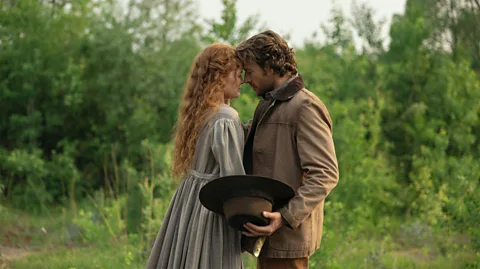
While the new series of Little House on the Prairie once again centres the heartwarming bond of the family, it steps away from the high melodrama of the previous show, making it far less horror-centric. Showrunner Rebecca Sonnenshine has also incorporated a Native American point of view, bringing in well-crafted Osage characters (developed alongside Osage professor of American literature and culture Robert Warrior) to make the story more historically correct.
Whether it will be received as well as the original 1970s series remains to be seen. Thompson, however, credits the original with taking big swings, even if it did take it to leftfield places: "It was willing to be more than just a kid's show. Occasionally it went over the top – and some episodes almost became a horror film. But for all its melodramatic qualities, it was a well-executed series."
The new Little House on the Prairie premieres on Netflix on 9 July. The original series can be streamed on Peacock in the US.
--
If you liked this story, sign up for The Essential List newsletter – a handpicked selection of features, videos and can't-miss news, delivered to your inbox twice a week.
