A rare baby sighting could reveal where life begins for world's largest sharks

 Jonathan Irish
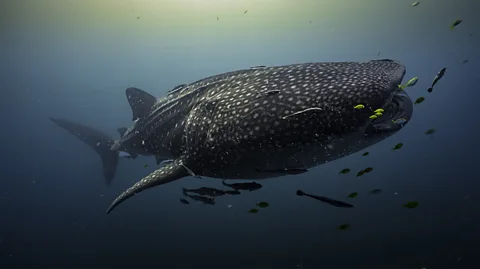
How can a shark the size of a bus remain hidden from human eyes? Where baby whale sharks come into the world is unknown – but a precious newborn is shedding light on the secrets of where life begins for these giant fish.
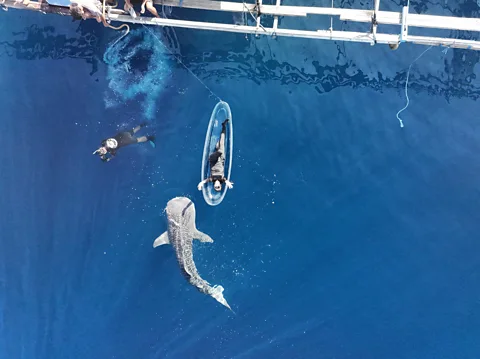
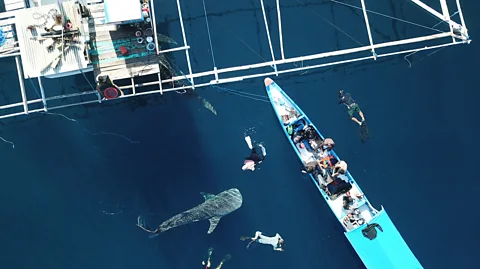
Saleh Bay on the Indonesian island of Sumbawa is a near-perfectly enclosed cove, fed by a narrow channel that draws cool and rich water from the deep ocean. For the island community, this nourishing tide means a bay filled with mackerel and squid that they catch from floating structures, named bagans.
Locals fish by night, shining spotlights down into the water to attract fish into baited nets beneath the bagans. But on 6 September 2024, they alerted local scientists that they were not alone on the water.
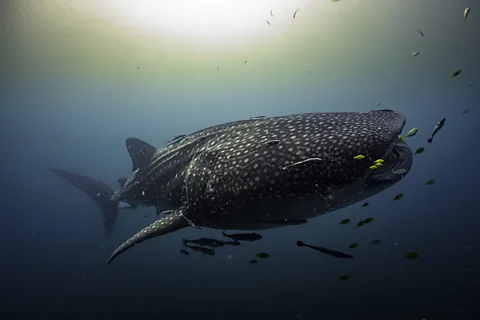
Just after 04:30, they captured on video a whale shark lolling in the net, wide-mouthed with a charcoal body, spot-marked with white flashes like the night sky.
Whale sharks are the world's largest species of fish. But this individual, about 5ft (1.5m) in length, was not breaking any records. Estimated to be just four months old, it was about one-tenth the length of a full-grown adult. For marine scientist Mochamad Iqbal Herwata Putra, its modest size made it all the more exciting: this was the first neonatal whale shark to be discovered in Indonesia, one of just a few dozen ever documented by science.
Despite their massive size and presence in warm waters across the planet, no one has ever seen a whale shark mate or give birth. But this baby whale shark's appearance is one of the best clues yet that the elusive birthplace is close at hand.
 Diaz Adiyoga/ Konservasi Indonesia
Weighing as much as six elephants, a fully grown whale shark is the planet's largest cold-blooded animal, or ectotherm. As solitary wanderers spending much of their life traversing the Earth's open oceans, whale sharks were little studied by science until the late 20th Century. But by the 1990s, they were found to accumulate in seasonal groupings – sometimes as many as a few hundred – in particular coastal locations, such as off the coast of Mexico's Yucatan Peninsula.
These regular gatherings allowed scientists to attach tracking tags to reveal their epic journeys, revealing how individuals can make globe-spanning migrations. One female swam a whopping 7,000km (5,000 miles). They have since become among the most intensively studied marine megafauna, says Ben D'Antonio, a research scientist at the Shark Research Foundation.
Enormous and enigmatic whale sharks carry "a sense of wonder", says D'Antonio. These giants have swum Earth's oceans for tens of millions of years. The newborn in Saleh Bay could yet roam the seas until the year 2150 – if we can find a way to manage the mounting threats it faces, including from climate change, fishing and shipping.
The discovery of a neonate gives us a "rare glimpse" into an early stage of life we almost never see, says Herwata Putra, a marine wildlife expert at the Jakarta-based nonprofit Konservasi Indonesia.
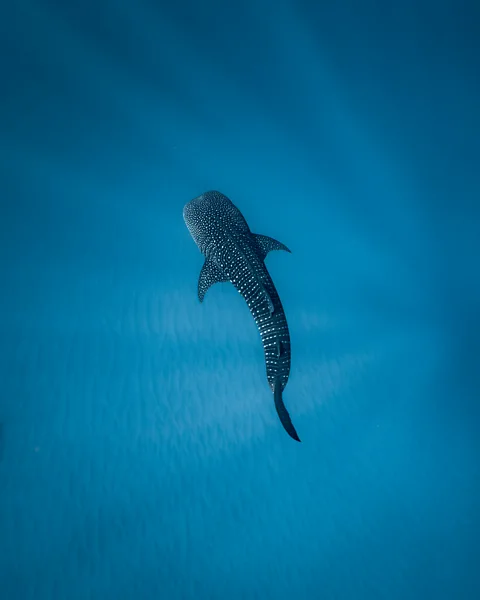
Whale sharks are attracted to Saleh Bay by the same abundant food that supports the bagan fishers. "There's a lot of krill because there's a mangrove ecosystem surrounding the bay," says Herwata Putra. For a juvenile whale shark, this is an ideal location to grow and gain weight with little effort, while also offering protection from predators like blue sharks that can easily eat a juvenile.
 Noemi Merz/ Ocean Image Bank
Herwata Putra suspects this sheltered cove could be a birthing ground and nursery area used in the first weeks of life. But we don't yet know if the whale shark began life here or – more likely – D'Antonio says "has come from somewhere and has chosen Saleh Bay".
One 'Megamamma' and other dotted clues
Finding a nursery ground is "a fundamental discovery", says D'Antonio, who applauds the grassroots collaboration that "amazing" Indonesian scientists like Herwata Putra have built with local fishers, many of whom previously feared or persecuted whale sharks. Such relationships and efforts to map important habitats could be vital to reversing the decline of whale sharks, he says.
Globally, whale shark populations have dropped by more than a half since the 1980s, and they are now classed as an endangered species. Today, across the planet, marine scientists are racing against time to find – and protect – such critical locations in the lifecycle of endangered whale sharks.
Our best clue in the search for a whale shark birth was found in 1995, in Taiwan, where marine scientists examined a 10m (33ft) specimen that had been harpooned by local fishers. This one female – dubbed "Megamamma" – revealed much of what we now know about whale shark reproduction.
Her two uteri contained 304 fertilised eggs and embryos, showing that whale sharks are ovoviviparous, meaning they hatch eggs inside their bodies and give birth to live, free-swimming pups. This was the largest number of young ever seen in any shark species.
 Abdy Hasan/ Konservasi Indonesia
A genetic analysis in 2010 confirmed all these offspring – at different stages of development – all belonged to one father – strong evidence that the mother had stored sperm and fertilised eggs over a period of time. Some remained in egg casings but 15 were large enough to survive, including two pups that were kept alive at aquariums in Japan and Taiwan.
Just 33 neonates have ever been recorded by science, and all have appeared across the tropics, from the Atlantic Ocean to the Arabian Sea, from Pakistan to the Galapagos. In a recent paper, Freya Womersley, research scientist at Marine Biological Association, has attempted to find a pattern by comparing these locations to low oxygen zones, known as permanent oxygen minimum zones (OMZs).
More like this:
Newborn whale sharks are found in these areas more often than would be expected by random chance, says Womersley. "So – the fact that these neonate sightings are so rare, but when they are seen, they tend to share oceanographic conditions – it does get you thinking, is this just a coincidence, or is there some kind of strategy at play?"
The paper explores the tantalising possibility that whale shark mothers select these areas to provide a sort of oceanic cloak – hiding their newborns where predators will not go.
While the open ocean may look to us to be a great indivisible mass of water, deep sea-dwellers like whale sharks negotiate varied ocean layers – from lively surface waters to entirely oxygen-deprived regions below, explains Womersely. These oxygen-poor areas are avoided by many open ocean predators such as blue sharks and marlin, making a possible refuge for newborn whale sharks – with the added bonus that plankton often get stuck on the edge of low oxygen layers, providing an early life buffet for pups.
Although many mysteries remain in the reproductive lives of whale sharks, we are getting closer to answers, says Womersley, who is preparing to travel to Mexico to attach camera-equipped tags that shed more light: "I think it's only a matter of time before someone finds the right shark, puts the right device on it, the stars align, and we get that incredible footage," she says. "I say 'a matter of time' – how long that is, I do not know."
 Jonathan Irish
In the 1980s and '90s, hundreds of whale sharks were slaughtered each year for meat and fins – including Megamama, which was harpooned as part of a legal catch in Taiwan. Despite the species being listed as vulnerable to extinction in 2000, whale sharks were hunted well into this century, and reports of illegal fishing continue.
Today, these giants face divergent threats along their journeys across global oceans. In Saleh Bay, whale sharks have faced persecution from fishing communities who feared their enormous size and saw them as competitors for their catch, says Herwata Putra. But "the culture is shifting", he adds. Whale sharks are now a top attraction in a multimillion-dollar ecotourism industry and the younger generation are fast developing snorkelling and sightseeing opportunities around the bagans.
Konservasi Indonesia aims to establish a marine protected area in the north of the bay, which would be the first reserve established in Indonesia specifically for the protection of whale sharks.
Recognising and protecting these key refuges can make an outsize difference, Herwata Putra says. Of the 25 whale sharks that have been tagged in Saleh Bay, most spend the majority of their time in and around the bay, only occasionally venturing out, before returning to feast on the year-round food supply.
"This area is like home for the whale sharks," says Herwata Putra. "If we can protect this critical habitat, we can help the recovery of the regional population."
--
For essential climate news and hopeful developments to your inbox, sign up to the Future Earth newsletter, while The Essential List delivers a handpicked selection of features and insights twice a week.
