'We couldn't believe our eyes': The 'real Indiana Jones' who found an ancient, lost city of the Incas

 Getty Images
In 1911, a US professor claimed he had discovered the ancient mountain stronghold of the last Incan king deep in the Peruvian Andes. Yet 53 years later, another explorer proved he was mistaken – and shortly afterwards, a BBC crew followed his trail.
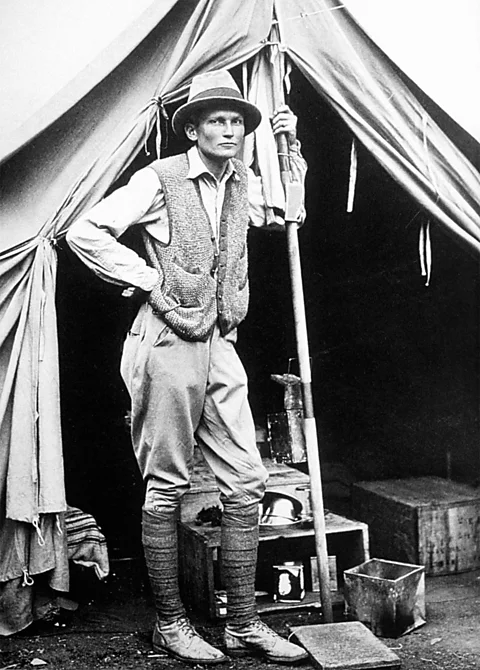
"No one now disputes that this was the site of ancient Vilcabamba." So wrote the Yale academic who brought the Peruvian ruins of Machu Picchu to global attention in 1911. Hiram Bingham III was recruited by locals to look for a lost Incan city fabled for its hidden treasures – and he firmly believed that's what he had found.
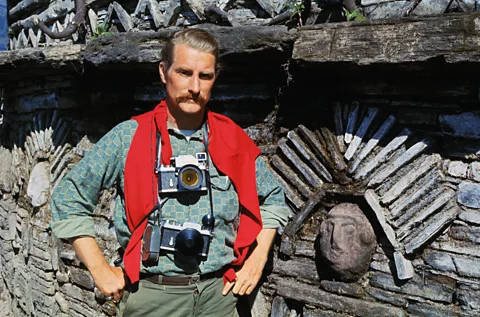
Yet 50 years later, Bingham's conviction was challenged by another US explorer nicknamed "the real Indiana Jones". In August 1964, Gene Savoy claimed to have found the same lost city – around 60km (37 miles) northwest of Machu Picchu. He believed his expedition had identified the mountain stronghold of the last Incan king at Espíritu Pampa (the "Plain of the Spirits" or Vilcabamba), a set of ruins in remote cloud forests, high above a tributary of the Amazon.
Just six weeks after Savoy's discovery, a BBC crew followed in his footsteps, travelling by rubber dinghy (and capsizing) on rapids, ascending steep canyon slopes with mules, and hacking through jungle to the site. "Scraps of information they'd picked up on the way made them doubt some of Savoy's claims," revealed the presenter. "But, having come so far, they had to get on and see for themselves."
The stakes were high. Perhaps they would find "the heart of an unknown city, where it seems likely the last Inca emperor gathered the remnants of his people".
By the early 20th Century, Vilcabamba (meaning "sacred plain" in Quechua, an ancient Indigenous language) had become a fabled city, as much rooted in legend as history. After failing to prevent the Spanish conquistadors seizing his capital of Cusco in 1536, the Incan king Manco led his vanquished people into the mountains beyond.
There, it was said, a few thousand of them built palaces and temples in Manco's capital in exile, where he had taken his golden treasures, his glittering idols, and the mummies of his ancestors.
According to the 16th-Century friar Martín de Murúa, who chronicled the Spanish conquest of Peru, "The Incas enjoyed scarcely less of the luxuries, greatness and splendour of Cusco in that distant or rather exiled land".
Beyond a place of exile, Vilcabama was also a centre for Incan resistance, where they planned guerilla warfare against the Spanish and sparked rebellions further afield. Yet in 1572, facing an invasion, the Incans set the city ablaze and fled.
The last Incan capital was swallowed up by the jungle – and its location remained a mystery for centuries.
In search of the fabled lost city
Bingham had been recruited by Peruvian landowners in 1909, to find out whether a place known as Choquequirao ("cradle of gold") was the fabled lost city. The 34-year-old, who later went on to become a US senator, was an assistant professor in Latin American history who happened to be travelling in the area. He was not an archaeologist, nor was he looking for Inca ruins.
But a local government official, Juan José Núñez, the prefect of Apurímac, refused to take no for an answer.
"Núñez insisted that as I was a doctor, a PhD, I must know all about archaeology and could tell him how valuable Choquequirao was as a site for buried treasure," wrote Bingham. "My protest that he was mistaken in his estimate of my archaeological knowledge was regarded by him merely as evidence of modesty."
Bingham went on to reveal: "I knew very little about the Incas." He relied instead on a book published by the British Royal Geographical Society, called Hints to Travellers, which contained suggestions as to what to do when confronted by an archaeological site.
 Alamy
AlamySceptical that there was any gold at Choquequirao, or that it was the famed lost city, Bingham was nevertheless inspired by his trip to lead a Yale expedition in 1911 to find the last Incan refuge. "There seemed to be an unknown region behind the ranges, which might contain great possibilities. Perhaps Manco's capital was hidden there," he said.
In fact, guides had taken Bingham to the site identified by Savoy 50 years later, 150 km (93 miles) northeast of Cusco. But plagued by bad weather, running short of food, and with his porters threatening to desert, he swiftly moved on, before claiming to have found the lost city at Machu Picchu.
Another daring explorer takes on the expedition
In 1964, Savoy – a 37-year-old explorer from Portland, Oregon – reached the area near Espíritu Pampa, together with Peruvian explorer Antonio Santander Cascelli. Locals initially refused to guide them to the site, fearing a tribal legend that the gods would kill those who revealed its location. After much persuasion, the Peruvians led Savoy and Santander to the moss-covered ruins of Vilcabamba.
"We couldn't believe our eyes," said Savoy. "Each day, it became more fantastic."
Savoy and Santander found ruins spread across three mountain plateaus, which included a palace, granite and limestone buildings and fountains – the first plateau alone was roughly four times the size of Machu Picchu. Their exploration of the area led Savoy to believe that "the site was a refuge used by the last Incas caught up in the throes of a final struggle against the new conquerors".
Yet after just a fortnight, their guides began to leave, fearful of the tribal superstitions. "Normally, they would be friendly and smiling," said Savoy. "But when we got them into those woods, they changed." They decided to leave and return later for further investigations.
Just six weeks after their expedition, a BBC crew made the same journey. "For 400 years few Europeans had been that way, let alone one with a movie camera," wrote Tony Morrison, the director of the film made for David Attenborough’s BBC Adventure series. "After a week of heavy walking and a long descent into dense, frequently rain-soaked montane-forest, we reached the ruins of the Inca settlement."
The jungle had protected the city for centuries, with those attempting to explore it having to hack at kapok trees, creepers, vines and ferns. According to one report, "Great trees had clamped their roots around the walls and over the terraces, and their branches were interlaced by vines as thick and strong as telephone cables."
"I hate the danged jungle," said Savoy – adding, however, "I would rather die out there than not explore."
Savoy and Santander's discovery did not prove that the ruins at Espíritu Pampa were the last Inca capital. But something that they found there was to lead to confirmation that it was Vilcabamba – roof tiles.
"These tiles are so far the strongest tangible evidence," said the BBC presenter in 1964. "They're Spanish in design but bear distinctive Inca influence in the colouring and markings."
And their significance was later recognised by John Hemming, director of the Royal Geographic Society in London from 1975 to 1996 and, Inca expert. He was able to match eyewitness accounts of Vilcabamba – including chronicles by the friar Martín de Murúa – to details of the site.
The discovery of the tiles was unusual, since the Incas normally used thatch. Yet in Murúa's description of the Incan capital in exile, there was an important clue: "The Incas had a palace on different levels, covered in roof tiles."
In History
In History is a series which uses the BBC's unique audio and video archive to explore historical events that still resonate today. Sign up to the accompanying weekly newsletter.
Savoy later said: "The city has been rumoured to exist for so long that it had almost passed from history to myth. Now we have turned it back to history." So it seems that in 1911, Bingham had walked within a few feet of the place he had been seeking – the final refuge of the Incan empire.
For Savoy, however, a mystery remained. "Only a small part of the Inca gold and jewels were ever recovered," he told Esquire in 1967, "and I have reason to believe that [they] threw the rest of it into lakes and caves rather than have it fall into the hands of the Spaniards. On previous expeditions I found lakes that weren't on any maps, and uncharted walled-up tunnels."
More like this:
The discovery of what seems to have been the last Inca city – even now, mostly buried in jungle, its stonework strangled by vines and tree roots guarding its doorways – has raised more questions than answers.
"The area is fascinating because it still hasn't been disturbed or looted," Javier Fonseca, an archaeologist with Peru's ministry of culture, told The Guardian in 2018. There have even been reports of another city, deeper in the forest.
"We know that the so-called 'lost Inca treasure' has not been found," said Savoy in 1967. "If this treasure exists… then we may speculate as to its whereabouts."
--
For more stories and never-before-published radio scripts to your inbox, sign up to the In History newsletter, while The Essential List delivers a handpicked selection of features and insights twice a week.
