'One of the greatest unsolved mysteries in British history': The earl who vanished after murdering his children's nanny

 Getty Images
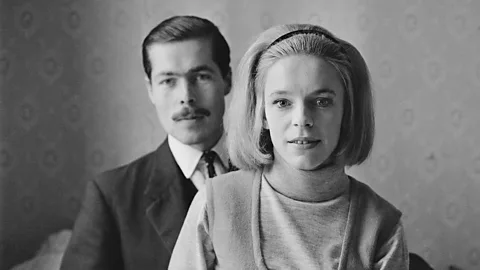
Lord Lucan was found guilty of killing Sandra Rivett on 19 June 1975 – but by then he had already disappeared. His wife was interviewed by the BBC in 1980.
The Lord Lucan affair is a bizarre and horrific one, but on the face of it, there seems to be little doubt about the sequence of events. During the night of 7 November 1974, it appears, the British aristocrat Lord Lucan hid in the dark in the basement kitchen of his house in Belgravia, London. Planning to murder his estranged wife, instead he bludgeoned to death their 29-year-old nanny Sandra Rivett in a case of mistaken identity, before then attacking Lady Lucan.
She managed to escape and raise the alarm, and in the meantime, Lord Lucan fled, presumed by many to have jumped into the sea near Newhaven and drowned. He has never been found, although there have since been reported sightings of him across the globe, on every continent except Antarctica.
According to evidence – and the fact that the earl went on the run – the case appears to be damning. On 19 June 1975, at Rivett's inquest, a coroner's court took just 31 minutes to find Lord Lucan guilty of murder. Yet dig a little deeper, and there are more questions than answers.
Why would someone who was apparently squeamish about blood choose such a brutal and violent method? How could he have mistaken Rivett for his wife during a prolonged attack? And why did Lady Lucan take so long before running to a nearby pub and shouting "he's murdered the nanny, help me"? It all adds up to one of the greatest unsolved crime mysteries in British history.
Both Lord and Lady Lucan's stories about what happened that night are "questionable", according to the historian Alex von Tunzelmann, presenter of The Lucan Obsession podcast. "It feels like there's almost nothing solid at the centre of it that you can go on, and it's then very open to people's theories… It's one of those mysteries that is unsolved, and I think, is probably unsolvable."
It also reveals much about the British attitude to class. Richard John Bingham, the seventh Earl of Lucan, married Veronica, a former model and secretary, in 1963. He was an Eton-educated professional gambler, who despite his "Lucky" nickname had run up debts and was facing bankruptcy at the time of the murder. When he disappeared, there were suggestions that he had been helped by wealthy friends, dubbed "the Clermont Set" after the casino they frequented in Berkeley Square. One of the more outlandish theories about Lucan's fate claimed that he shot himself, asking that his body be fed to the lions in the private zoo of his friend, the Clermont Club owner John Aspinall.
A marriage gone horribly wrong
The public obsession with the case is sustained by ambiguities. "The facts are just enough to make a narrative while leaving hugely tantalising areas of doubt," suggests the historian Rosemary Hill. If there were a murder trial today, the verdict "wouldn't necessarily be a done deal", argues Von Tunzelmann.
One of the reasons the case captured the public imagination was that it revealed in graphic detail a marriage gone horribly wrong. "This was a hugely dysfunctional relationship, it was really messy, whatever was going on," says Von Tunzelmann. The couple had separated by January 1973, with Lord Lucan moving out of the family home into a nearby flat. He fought a bitter but unsuccessful battle for custody of their three children, which together with his impending bankruptcy suggested a motive for the murder.
There is another side to the story, though. Veronica had suffered from mental-health problems throughout her life, and a few years after her husband's disappearance, their children were removed from her care. "My husband is still alive, and I have no reason to believe otherwise, since his body has not been found," Lady Lucan told the BBC's Newsnight in a remarkable 1980 interview. On the events of November 1974, she said: "For me, it was just a brief incident I've forgotten. I've recovered from it. It was just a marital thing." She remained estranged from her children until her death in 2017.
In History
In History is a series which uses the BBC's unique audio and video archive to explore historical events that still resonate today. Sign up to the accompanying weekly newsletter.
Today, argues Von Tunzelmann, "there might be a bit more of a challenge to her story. I'm not suggesting she did anything – just that perhaps she wasn't telling the full truth herself." But the journalist and author James Fox wrote in a letter to the London Review of Books that Lady Lucan "described in great detail to me how she got out of this murderous attack by her husband… She never wavered or embellished it down the years. One detail was so extraordinary it can't have been invented. When he lunged at her throat, she managed to croak: 'Don't you dare touch my pearls.'"
More like this:
Speculation over the events on the night of Rivett's murder is matched by theories over what happened to Lucan in the days afterwards. His last confirmed sighting early the following morning was at the house of friends in Sussex, the Maxwell-Scotts. While there, he wrote letters in which he insisted on his innocence, claiming that it had been a "traumatic night of unbelievable coincidence".
In the letters, he told friends that he had happened to walk past his former home and spotted an intruder, so he'd run inside to help his wife. Arguing that Lady Lucan would accuse him of the attack, he said he had decided to "lie doggo for a while". His borrowed Ford Corsair was discovered, abandoned, at Newhaven on the south coast three days later. Blood matching that of Rivett and Lady Lucan was found on the upholstery, and a lead pipe of the same kind as the murder weapon was hidden in the boot.
Protected by his wealthy friends?
Some believed that Lucan's circle of wealthy friends had closed ranks to protect him. Sussex police detective Derek Wilkinson told the BBC: "I feel that someone else brought the car down and left it here. I think it was a red herring." With suggestions that the Clermont Set might have shielded Lord Lucan, an image emerged in the press of what the Daily Express described as a "tightly knit circle" with a "masonic-style bond".
Aspinall reinforced that impression in interviews, telling the BBC in 1994 that "I would have done for him what he asked", and that if Lucan had requested asylum, "he would had got it". In 2012, someone claiming to be a former personal assistant of Aspinall's told BBC News that she had booked flights to Africa for Lucan's two eldest children sometime between 1979 and 1981, so that their father could see them without their knowledge. "He would observe them and see them, which is what he wanted to do, just see how they were growing up and look at them from a distance. It was quite clear that he wouldn't meet them or speak to them or make himself known to them."
According to Tatler, "depending on who you listen to, the auspicious earl was efficiently whisked out of the country by one of the Clermont Set… and is, to this day, to be found 'merrily swanning around colonial fleshpots'." This view supports an almost caricatured impression of Lord Lucan, one of a privileged fugitive earl whose great-great-grandfather ordered the Charge of the Light Brigade, and who had spent his time driving powerboats, racing bobsleighs and buying racehorses.
At the heart of the mystery, but often overlooked in the myths that surround an obsession The Times described as a "national game of Cluedo", is the victim herself.
"Sandra Rivett is deprived of a voice entirely in this case," says Von Tunzelmann. "A lot of the time she's just referred to as the nanny, people don't even mention her by name, and they're all focused on this incredibly dysfunctional aristocratic marriage. But it's very hard for a historian or a journalist to counteract that, because we don't have anything in her own voice. We can't hear from Sandra and what she would have said about that or made of it. We don't have her side of the story at all."
--
For more stories and never-before-published radio scripts to your inbox, sign up to the In History newsletter, while The Essential List delivers a handpicked selection of features and insights twice a week.
