The sites fighting to be removed from the Unesco World Heritage List

 Getty Images
It recognises places of "outstanding universal value" and can catapult lesser-known sites to global fame. So why are some places pleading to be removed from the list?
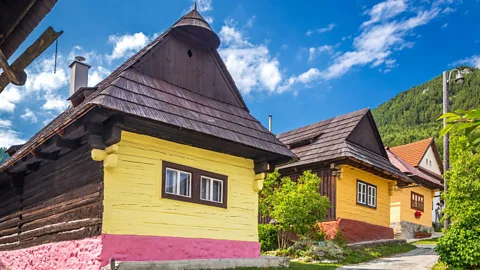
Set in the mountains of central Slovakia, the tiny village of Vlkolínec is a picture-perfect medieval hamlet with more houses than people. Its roughly 20 full-time residents live in 45 fairytale-like cottages painted in bright colours clustered around an 18th-Century bell tower.
Because of Vlkolínec's distinctive architecture, this remarkably intact settlement was added by the United Nations as a World Heritage site in 1993. Since then, more than 100,000 visitors have descended on the community every year. Recently, some locals have argued that the designation and associated tourism has created more issues than they're worth and want to have the village delisted.
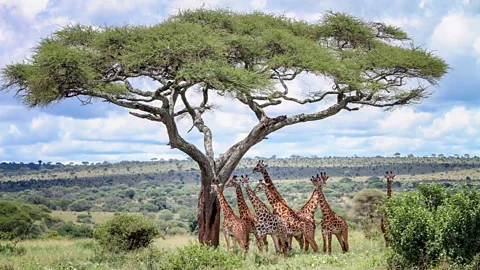
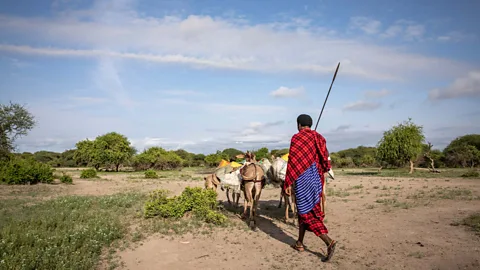
Roughly 7,000km away in Tanzania, the Maasai International Solidarity Alliance has also called for removing the wildlife-rich Ngorongoro Conservation Area from the World Heritage List. The area is home to pastoralist communities and some of Africa's most iconic safari experiences, but locals argue that conservation policies tied to its internationally protected status have led to residents being displaced from ancestral grazing lands.
These disputes are highlighting a growing debate about what happens when the interests of local communities collide with efforts to preserve places deemed important to humanity.
 Getty Images
Unesco's power
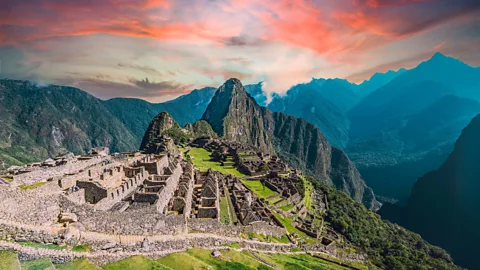
The ever-expanding World Heritage List is overseen by Unesco, an international United Nations committee that identifies and protects places it deems to have "outstanding cultural or natural importance to humanity". Since it inscribed its first 12 sites in 1978, its list has grown to 1,248 sites across 170 countries. These range from famous landmarks such as Machu Picchu and the Great Wall of China to lesser-known places such as Romania's Wooden Churches of Maramureș and the ancient Moroccan oasis settlements of Ait-Ben-Haddou.
The World Heritage List emerged from a post-World War Two push to protect culturally and environmentally significant places threatened by conflict, industrialisation and modern development.
Because Unesco designation can unlock international conservation funding, it is one of the world's most influential tools for heritage protection. Supporters point to examples such as the Belize Barrier Reef Reserve System, which was removed from Unesco's "In Danger" list in 2018 after stronger environmental protections were introduced; and Angkor Wat, where decades of restoration and conservation work helped save a site badly damaged by war and looting.
"The credo of Unesco is about shared heritage, conserving it, celebrating it and recognising it as an accomplishment of humankind," says John H Stubbs, a preservation scholar and former vice president at the World Monuments Fund.
But since the World Heritage List's early days, the rise of social media has increasingly made Unesco status something that may help to preserve a site while simultaneously changing the communities who live nearby through tourism.
 Alamy
AlamyGreg Richards, a researcher who studies cultural tourism and overtourism, compares the Unesco designation to star ratings in guidebooks that point tourists to "must-see" places. He also notes that more visitors is one of the most predictable results of being added to the list.
"I think the consensus among the leading experts in the world is that there is a whole range of possible things that can result from getting a Unesco listing, but one that will definitely happen is increased visitation."
Preservation and 'museumification'
Historically, Unesco preservation efforts were primarily focused on protecting physical structures: monuments, archaeological sites and architecturally significant buildings. But many modern heritage destinations now overlap with communities where residents still live and work.
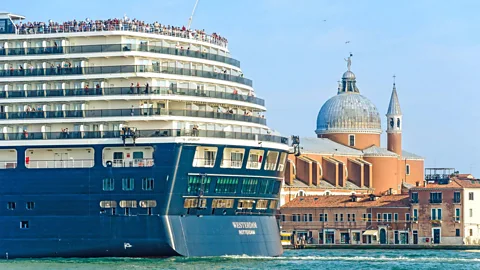
Venice, Italy, which became a Unesco World Heritage site in 1987, has seen such increased tourism that the city has become one of Europe's most overtouristed places – and more residents are leaving as a result. In Lijiang, China, a city known for its Old Town and Naxi Indigenous culture, tourism increased after its 1997 designation, transforming parts of the centre into areas filled with guesthouses and souvenir shops that some researchers and residents say have diluted local life. In Marrakesh, Morocco, more tourism and foreign investment in the Unesco-listed medina have sparked debates about rising property prices and gentrification.
 Getty Images
Researchers sometimes describe the process as "museumification": the gradual transformation of living communities into places increasingly oriented around visitors rather than residents. While many historic communities were already grappling with housing shortages and economic change long before Unesco recognition, in some cases – as with Venice – tourism merely accelerates existing trends.
The debate grows even more tangled as ideas about authenticity and preservation evolve.
"This is one of the big debates in heritage conservation," Richards says. "Authenticity is a very dangerous word because it can be interpreted in all sorts of different ways." He explains that what one group sees as authentic preservation, another might see as artificial reconstruction.
More like this:
Unesco sites are not prohibited from modernising, but developments are expected to preserve what the organisation calls a site's "outstanding universal value" – the defining qualities that earned it designation in the first place. In practice, that can create tensions between preservation and contemporary needs, particularly in communities that still require updated housing and infrastructure.
Richards also says that social media has greatly accelerated the pace at which tourism pressure builds. Before platforms like TikTok and Instagram, travellers mostly used guidebooks or official tourism information. "Now, increasingly, you're following other tourists," he says.
 Getty Images
Unesco's new tourism approach
Representatives say Unesco is becoming more aware that World Heritage Sites are prone to overtourism.
"We certainly recognise that tourism has changed dramatically over the last 10 to 15 years," says Peter DeBrine, a Unesco sustainable tourism specialist. He adds that Unesco now asks sites to create visitor-management plans to prepare for tourism growth and find ways to reduce crowding and pressure on sensitive areas.
"We're not trying to discourage tourism at all, but just help that tourism to support conservation and the heritage," he says. "World Heritage Sites are there for everybody. They're for all humanity. We do want people to visit them, to experience them."
The shift reflects a broader evolution in Unesco's approach. In Unesco's early World Heritage guidance documents, tourism was mentioned only briefly and largely in the context of its potential impacts on conservation, according to DeBrine.
 Getty Images
Today, Unesco increasingly views tourism as both a challenge and an opportunity – one that can be a force for conservation and local economies when carefully managed.
But the concerns emerging from Vlkolínec and Ngorongoro fall outside the World Heritage system's scope. While Unesco can evaluate and respond to threats to a site's conservation, its role is less clear when the grievance comes not from damage to the site itself, but from the people living within it.
When asked if Unesco can step in when local residents feel that tourism or preservation policies are hurting their lives, DeBrine said, "We don't really have a mechanism for that."
Despite the calls from Vlkolínec and Ngorongoro's Maasai advocacy group to reconsider their World Heritage status, neither site is expected to be discussed by the World Heritage Committee at its upcoming session.
Unesco can currently evaluate whether a landscape, monument or ecosystem is being adequately protected. It can list sites as "in danger" due to factors like armed conflict, climate change and uncontrolled development. It can also demand conservation measures, or – in rare cases – remove a designation altogether. But it can't list sites as "in danger" due to the tourism it helped create.
 Getty Images
How to lose World Heritage status
To date, Unesco has only removed three sites from the World Heritage List, and in each case, the issue centered on conservation. In 2007, the Arabian Oryx Sanctuary became the first site to be removed after Oman sharply reduced the protected area amid plans for oil exploration. In 2009, Dresden Elbe Valley lost its status following the construction of a bridge, which Unesco argued fundamentally altered the landscape. And in 2021, Liverpool Maritime Mercantile City was delisted after disputes over waterfront redevelopment.
Interestingly, losing Unesco recognition has not always resulted in dramatic tourism declines. Liverpool continued attracting visitors tied to its music, sports and cultural identity after losing World Heritage status, while Dresden also remained a major tourism destination after its delisting.
Despite residents in Vlkolínec and Ngorongoro advocating to be removed from the list, Stubbs argues that this is unlikely to result in any meaningful change.
"I think it's great that [these calls for delisting are] making a point about the problems of overtourism," he says. "But in terms of the actual solution that will benefit the locals, as well as the monument, the answer is going to come from smart conservation planning that takes into account everything from economics to location to local people."
More than half a century after Unesco set out to preserve its first sites, the debates suggest that saving a place is not the same as saving a community – and that the latter may prove far more difficult.
--
If you liked this story, sign up for The Essential List newsletter – a handpicked selection of features, videos and can't-miss news, delivered to your inbox twice a week.
