New cancer treatment praised by first recipient

 Royal United Hospitals Bath NHS Foundation Trust.
The first person to be given new high-precision radiography treatment for prostate cancer at the Royal United Hospital (RUH) has said it was "the NHS at its best".
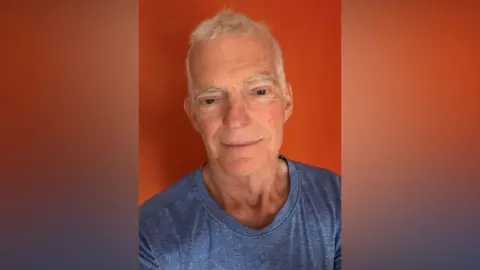
Derek Chase, 73, a retired GP from Calne, Wiltshire, is the first patient to receive Stereotactic ablative radiotherapy (SABR) at the Bath hospital - a treatment that cuts the number of sessions from 20 to five.
The treatment, which is already offered to some lung and brain cancer patients, will now be available to thousands of men across the country with low and intermediate-risk prostate cancer.
Chase said the five doses over two weeks were "so much more convenient, not just for patients but their loved ones too".
The NHS estimates that around 17,500 men are diagnosed with low or intermediate-risk prostate cancer in England every year and could be offered SABR radiotherapy.
This makes up nearly a third of the 55,000 diagnosed annually with the most common form of cancer among men.
The treatment uses advanced imaging to deliver radiation to the prostate with pinpoint accuracy, minimising damage to surrounding healthy tissue - and therefore reducing side effects.
NHS England said in June it expected all 48 radiotherapy centres around the country to start offering the treatment "within weeks".
Chase, who finished his treatment in June, said it was more convenient and "wrapped up in a personal care approach".
"I did get some side effects, including profound fatigue, but I'm feeling good now and looking forward to the future," he said.
"I've got follow-up appointments to come at the RUH, where they'll keep an eye on me, and I'm feeling positive."
Sian Smith, consultant radiographer at the RUH, said: "This approach allows us to provide the same high standard of clinical care over a much shorter course, thereby reducing the number of hospital visits for our patients and their loved ones."
She said it could also free up more appointment slots and reduce waiting times for other patients.
"Not everyone is eligible for this treatment, but if you think you may be, just contact your treatment team," Smith said.
Trials are already under way to see if the treatment can be used on high-risk prostate cancer patients.
Follow BBC Wiltshire on Facebook, X and Instagram. Send your story ideas to us on email or via WhatsApp on 0800 313 4630.
