Tactical voting and targeted ads - what I learned while undercover online for the election

 Getty Images
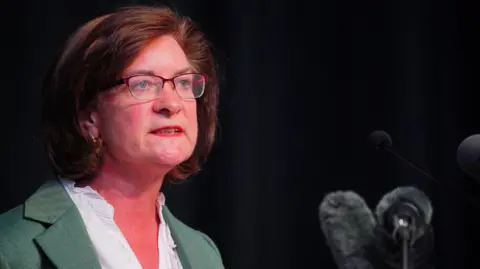
After dramatically losing her seat in Welsh Labour's worst-ever Senedd election result, Eluned Morgan gave a concession speech mentioning – of all things – social media.
The former first minister said it had "changed the way we do our politics" and now "sets the political narrative".
One message, she said, cut through to voters: "If you want to stop Reform, then vote Plaid."
It was far from the only factor she cited as contributing to her party's electoral collapse but, as it warranted a mention, it's worth asking: What role did social media play in the election, and how much of it was down to that message from Plaid Cymru?
 PA Media
I've been covering social media throughout the campaign, through the undercover voters project.
Over the past few weeks, I've dived into the world of AI-generated rage-bait and found parties were spending huge sums to show up on your Facebook feed.
Who are the undercover voters?
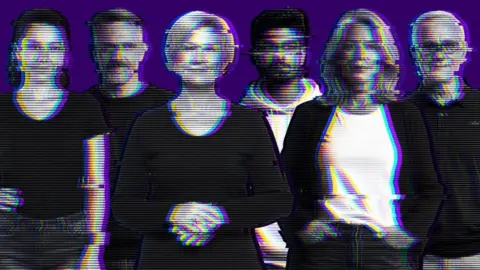
Lauren, Paul, Claire, Rohan, Siân and David are completely fictional people whose profiles have been drawn up with the help of the National Centre for Social Research (a concept which was originally created by social media investigations correspondent Marianna Spring).
They were designed to reflect six completely different types of person in Wales, so that I could create fleshed-out social media accounts for them and find out what they would be seeing on Facebook, Instagram, X, TikTok and Snapchat throughout the Senedd election campaign.
I haven't posted anything or added any friends, just engaged with whatever popped up.
This method wasn't scientific or completely watertight, but it gave a general idea about the types of content that popped up online throughout the campaign.
Parties spending thousands
Posts from Plaid Cymru depicting the campaign as a two-horse race, or saying only they could prevent a Reform government, made it on to the feeds of four of my six fictional voters – and several of them saw the claim repeated by individuals and media outlets.
Of course, Plaid weren't the only party to claim they were an alternative to Reform, and this wasn't the only thing they talked about, but it's clear that this message reached people.
Throughout the campaign we saw the parties fighting it out to organically secure a spot on people's social media feeds by grabbing attention and speak directly to voters.
But they also run adverts – and all but one of my undercover voters saw some of these.
Midway through the campaign Welsh Labour had spent by far the most on social media advertising, with Plaid Cymru in second (this is just on Facebook and Instagram, as their parent company Meta gives us enough detail to compare).
In the final 30 days of the campaign, from 8 April to 7 May, most parties' spending spiked.
Here are the totals for that period:
- Labour: £92,076
- Reform UK: £77,594
- Plaid Cymru: £53,699
- Green Party: £46,471
- Conservatives: £45,647
- Liberal Democrats: £7,406
Plaid Cymru ran a lot of adverts about policies and candidates but as time went on that message about "stopping Reform" took over – especially on election day.
A Plaid Cymru spokesperson said the party was proud of its "strategic investment in digital campaigning", both paid and organic, which it claimed contributed to "increased engagement from younger voters" and the record Senedd election turnout.
But Labour spent money on this too; as well as generic adverts featuring Eluned Morgan, the party ran a page called Senedd Election Explained, which published adverts in several constituencies claiming it was "Labour or Reform for the last seat" in that area.
The Greens and Lib Dems did similar, often running adverts claiming they were best-placed to beat Reform in particular constituencies.
Reform, who had spent relatively little at the end of April, jumped up the leaderboard in the final weeks, sharing a mix of generic "get Starmer out" messaging and adverts on specific Welsh issues, including the 20mph speed limit policy.
They were also no stranger to mentions of tactical voting; one post said not to "waste your vote" on the Conservatives.
Despite a new voting system designed to produce more proportional results, it was clear many parties still encouraged tactical voting still in their messaging.
The spending figures cited above include pages run by parties, leaders, candidates and local branches – but only adverts targeted at people in Wales.
They also only count pages that have spent more than £100 in that 30-day period, so the actual number for many parties will be a bit higher.
 PA Media
As well as adverts, a lot of political content made its way onto the fictional voters' Facebook feeds via local community groups.
But they were a bit of a postcode lottery, with some groups banning political discussion and others exploding into quite brutal arguments between different parties' supporters.
Another thing that struck me on Facebook and elsewhere was how much content came from anonymous accounts without a real name or face – posting things exclusively about Wales and Welsh politics.
Many of these were very much political, and I found examples on Facebook and X of some sharing misinformation and misleading claims.
Others were more like news aggregators – posting, or reposting, legitimate news stories without any clear political bias. Some of these appear to be monetised, offering subscription options.
It's difficult to know the impact they might be having.
One potential issue is that you can't find out who runs them or what they're trying to achieve; even if you don't like your local newspaper you can usually find out who the editor is or who owns it.
On the other hand, these aggregators are bringing news stories to audiences who might not be getting them elsewhere – some of the undercover voters wouldn't otherwise be seeing much about politics.
The AI genie might not go back in the bottle
Every time voters go to the polls anywhere in the world, we see academics, journalists and pundits asking the same thing: Was this the AI election?
From what I saw over the last few weeks it feels like every election might now be one.
Anyone can now create a pretty convincing graphic which looks official, possibly even like it came from a party, or use AI to create a meme or a bit of satire.
I saw several of these, including some containing misleading information.
I also found several examples of so-called rage-bait – videos appearing to depict real people talking, often shouting, about their complaints about life in the UK.
But these people were AI-generated and the page was run from Sri Lanka and the USA.
It looks like they might be part of a wider phenomenon of overseas fakers targeting UK audiences with disruptive content.
Although the fake videos didn't reference the Senedd, many of the things they talked about – tax, immigration and transport among them – came up in the campaign, and I saw from the comments that real people in the UK were falling for the fakes.
If my six fictional voters were real, each of them would have had a very different experience of social media in the build-up to the election.
Some would have seen lots of content about the candidates, parties and policies while others would have only learned about it through big, viral moments and headline-making opinion polls.
We all live in our own bubbles online, so maybe I shouldn't be surprised – but as these platforms play an increasing role in our engagement with politics it's something I'll remember.
