Eluned Morgan: The first minister who couldn't defy gravity

 Getty Images
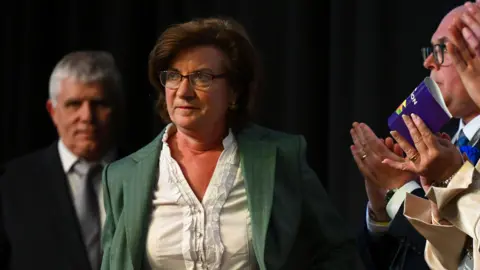
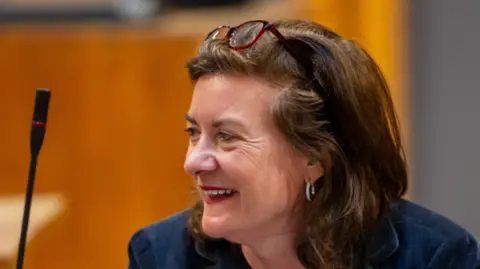
Eluned Morgan made history on Friday, becoming the first leader of a government in the UK to lose her seat while in office, as her administration, and Labour, were emphatically rejected by voters.
She resigned as Welsh Labour leader within minutes of her defeat in Ceredigion Penfro.
There was a crisis when she began her stint as Wales' first female first minister in the summer of 2024, but even the deepest pessimist would surely not have predicted the electoral disaster that engulfed the party on Friday,
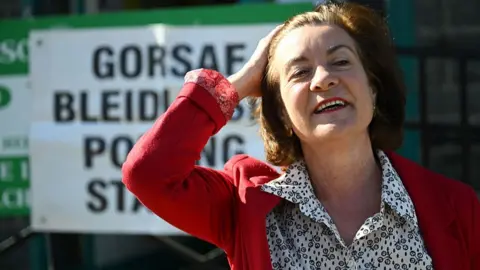
She took over as first minister in a blaze of colour.
 Getty Images
Declaring "grey suits are out", she set out to heal deep wounds inside the Cardiff Bay Labour group after months of damaging infighting.
But in a resignation speech on Friday she accepted Labour had suffered a "catastrophic" loss.
The party, she said, would need to "take a really hard look at itself".
She said: "We need to go back to being the party of the working class. We need the Labour government nationally to change course.
"We need the wealth of this nation to be more equally distributed away from the south-east."
Being first minister, and the first woman lead Wales had, she said, been the privilege of her life.
When her predecessor, Vaughan Gething, departed, Labour's Senedd members were bitterly divided. Gething lasted just 139 days in the job.
Morgan's immediate task was to get Welsh Labour back on the road, with just 19 months to go until a Senedd election that was always likely to be tough.
Retaining power after what would have been 27 uninterrupted years in government already looked a formidable challenge.
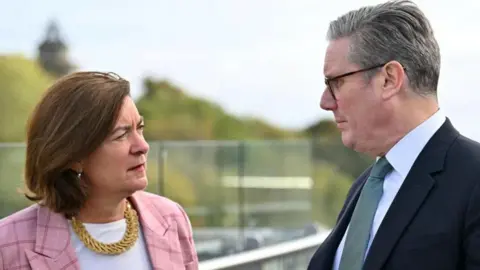
The return of Labour to Downing Street under Sir Keir Starmer might, some hoped, provide a boost.
As it turned out, Labour governing at both ends of the M4 proved a mixed blessing.
Morgan was able to point, during the final weeks of the Senedd election campaign, to benefits from a UK Labour government: promised funding for new railway stations, backing for a new nuclear power station on Anglesey and other investment commitments.
But these were outweighed by a rapidly souring political climate.
Controversial early decisions by Starmer and his team, the difficult inheritance left by the Conservatives, global instability and the prime minister's struggle to communicate effectively combined to make Labour an unpopular brand with startling speed.
UK Labour's standing had became a drag on Welsh Labour.
 Reuters
Morgan launched her leadership with a summer "listening tour" of Wales, explicitly contrasting herself with a party that had turned inward during the Gething months.
The exercise culminated in a promise to focus relentlessly on voters' priorities.
Hospital waiting lists and potholes were high on the agenda.
Many potholes were filled, and extra funding was found to focus on meeting three key pre‑election NHS waiting‑time targets.
Despite significant progress, the targets were ultimately missed.
Even had they been met, it is doubtful the political impact would have been decisive.
By the time the election came around, the political gravity Welsh Labour had defied for more than a quarter of a century became impossible to resist.
The party, and its sixth first minister, came crashing back to earth.
Morgan was, in many ways, born to politics.
Raised in Ely in Cardiff, she grew up in a household steeped in Labour culture.
Her father, the Reverend Bob Morgan, was leader of South Glamorgan County Council and a familiar presence in the South Wales Echo through a regular newspaper column. Her mother, Elaine, was also a councillor.
Future first ministers Rhodri Morgan and Mark Drakeford were regular visitors to the vicarage.
 Reuters
Eluned Morgan became secretary of her local Labour branch as a teenager.
Educated at Ysgol Glantaf, she won a scholarship to Atlantic College in the Vale of Glamorgan before studying at the University of Hull.
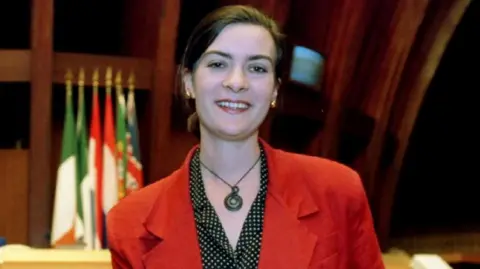
After working in television, she entered frontline politics early, becoming the youngest-ever member of the European Parliament when elected at the age of 27 in 1994.
She stood down as an MEP in 2009 and moved into the energy sector with SSE, before returning to politics with a peerage in 2011. As Baroness Morgan of Ely, she served as a shadow Wales minister in the House of Lords.
In 2016 she was elected to what was then the Welsh Assembly, representing the Mid and West Wales region.
Two years later, outgoing first minister Carwyn Jones nominated her to stand in the Labour leadership contest. She finished third, behind Mark Drakeford and Vaughan Gething. Drakeford later brought her into government, appointing her health minister.
It was already the toughest job in Welsh politics. Morgan inherited Covid backlogs, soaring waiting lists, industrial action, and the contentious decision to return Betsi Cadwaladr health board to special measures.
There was some personal embarrassment in 2022 when she was banned from driving for repeated speeding offences.
 Senedd Cymru
In Labour's 2024 leadership contest, she backed Gething over Jeremy Miles.
When Gething's leadership imploded months later, Morgan emerged as a figure capable of stabilising the party.
Unaligned to either internal faction, she steadied the ship and impressed with combative performances in First Minister's Questions.
But the wider forces at work - a tired party, simultaneous Labour government in Westminster, and almost three decades in power to defend - proved too much.
The election campaign saw some traditional supporters who might have stuck with Labour spooked by the prospect of a Reform victory, fears exploited highly effectively by Plaid Cymru.
Eluned Morgan exits office with Welsh Labour badly diminished and facing the unfamiliar reality of opposition as a much smaller team in an enlarged Senedd chamber, dwarfed by big Plaid Cymru and Reform groups.
A leadership election beckons, and, perhaps, a chance to do some deep thinking about the party's purpose and direction.
Arguably, the former health secretary was handed a hospital pass.
As sixth first minister, she would argue she did what she could in limited time and difficult circumstances.
