Thousands of teenagers prepare for Ten Tors 2026

 Plymouth College
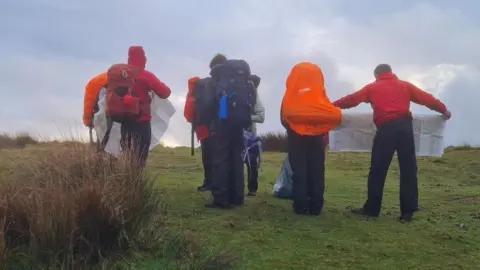
Through storms, snow, rain and sunshine, thousands of teenagers have been training over several months in the lead up to the Ten Tors Challenge 2026.
Ten Tors director Col Jim Bird said many people hold the event "close to their heart" and stressed the importance of training months in advance.
Running from 8 May to 10 May, the event on Dartmoor in Devon tests the navigational skills and resilience of 14 to 19-year-olds.
Col Bird, who has only been in the role for a couple of months, said the weather on the moor was one of the biggest challenges, making it an "arduous event".
Plymouth College student Max, 14, is preparing for the 45-mile route and said the biggest challenge was building up to the distance.
He completed the 35-mile route last year for a "bit of fun" with his friends and said he learnt key skills he had not forgotten.
He said this year's training was "a lot more difficult".
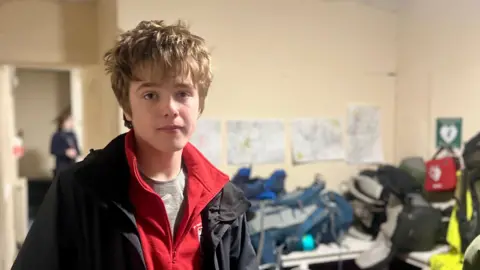
"The weather has been cold and wet, and damp, which is not fun when you're camping," he said.
To keep morale up during training, he said his team made jokes.
"They're my best friends from school so it's easy to talk to them and mess about while walking at the same time," he explained.
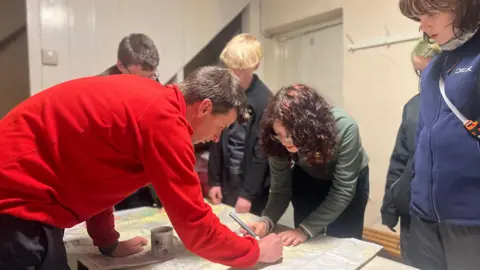
The Plymouth College teams use a bunkhouse in Princetown for their Dartmoor training.
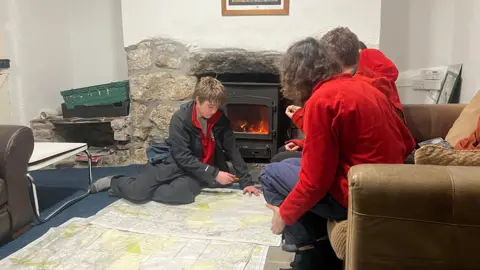
In teams of six, the teens will navigate routes of either 35, 45 or 55 miles, depending on their age, over the northern half of Dartmoor, visiting 10 nominated tors - also known as checkpoints - in less than two days.
Organisers said its Jubilee Challenge, first introduced in 1996, was closer to Okehampton camp and designed for young people aged between 14 and 21 with a range of challenging conditions, who complete one of the several routes suited to their ability.
The Granite Challenge, formerly known as the Jubilee Challenge Plus, is aimed at young adults with special educational needs and disability (SEND) who are capable of an overnight stay but may find the Ten Tors Challenge too inaccessible due to their respective SEND.
Organisers said it provided an "appropriately arduous challenge across difficult terrain and in very changeable weather over at least 18km (11.1m), including an overnight camp".
Four hundred and forty teams will arrive at Okehampton camp on the Friday to pitch tents, make their final checks and prepare themselves for the adventure.

First-timer Britta is training for the 35-mile challenge and said she felt nervous and excited because she had "never done anything like this before".
She said: "At first it was really difficult and now I've got used to it so I've got a bit faster."
Talking about one of the training sessions, she added: "When it was really rainy and I didn't have a bag cover and my bag got really wet and our tents got really wet.
"Walking up all the big tors with the really wet and heavy stuff is really tiring.
"It's really difficult but it's really fun."
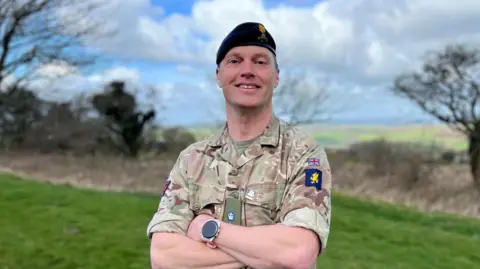
Ten Tors organiser Lieutenant Col Tim Gilbert, who has been involved in the event for about seven years, said the challenge was all about teamwork and rising to the challenge.
He said it also offered a "really good lesson and experience" for the young participants as they do it on their own, on the moor and push themselves hour after hour.
"You can't develop that in the classroom or anywhere else," Gilbert said.
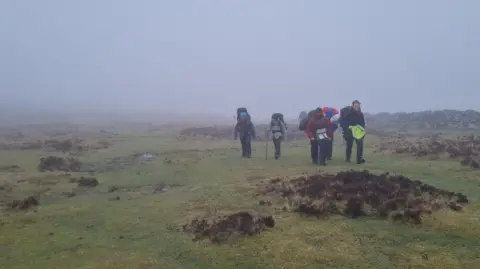
He said teams needed to be prepared for whatever the weather was going to be, which is unpredictable on Dartmoor.
 Plymouth College
Gilbert said: "I've been out here in August and I've seen sleet, so we do need them to be ready for that bad weather, that heavy rain, maybe even a snow flurry or the heat so by training in the winter they would have experienced some of that so they'll be used to the worst of it for definite.
"I think preparation is the main thing.
"If you turn up and your kit isn't in good order, then you're going to have a really difficult weekend and it's going to affect your chances of finishing.
"If you go through your kit and make sure it's all packed properly, you've got the right items, the right food and you're not bringing anything unnecessary, because that'll add weight and slow you down, then you'll be in the right position to do well at Ten Tors and enjoy it as well."
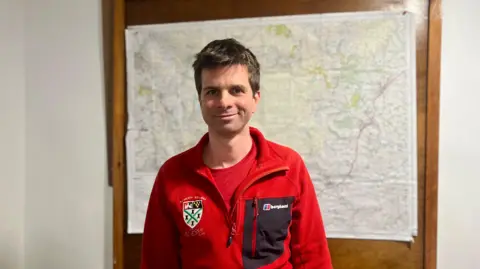
Head of outdoor education at the college, Olly Rees, who has been training groups for 13 years, said the training involved "a lot of days on Dartmoor" as well as a coast path walk, which all teams are required to do ahead of any Ten Tors Challenge.
Rees said it was "pretty cool" seeing what new participants achieve through the training from not being able to read a map to navigating around a route and looking after themselves for a day and a half.
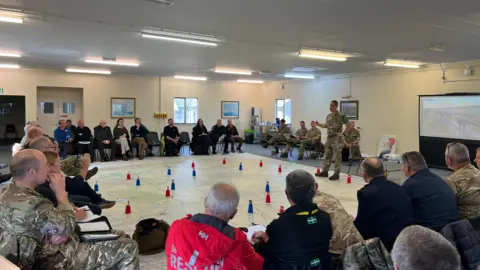
Col Bird said organising the event started as soon as last year's finished.
"There's a team that's permanently assigned to Ten Tors planning who are liaising with all the agencies and various organisations that support the event, and there are a lot," he explained.
"It takes a lot of time to set the conditions for success.
"We will start planning for Ten Tors 2027 no sooner than we've presented the medals this year."
St Ives Academy leader Thomas Studd said six students, two girls and four boys, had been training for the Jubilee Challenge
It was Studd's first time leading a Ten Tors Challenge team in 2025 and the reason for coming back was because it was one of the "most incredible things" he had done in his 20 years of teaching.
"I just thought it was a fantastic event, the scale of it was impressive," he said.
"It's wonderful to see a small group of children and see them realise what they can do, how they can cope with difficult times, manage blistering feet, cold weather, cooking in the cold and making it something they want to do again."
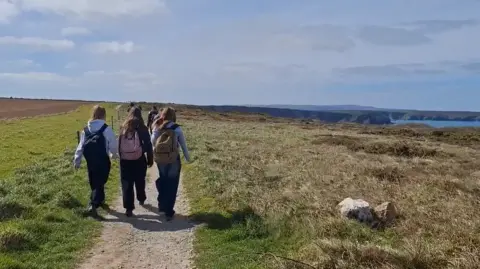
He said this year's group had all different "skills, interests, energy levels and personalities".
He said a four and a half hour coastal training in west Cornwall in March went well, but there was still room for improvement.
"I thought the boys would have just charged on ahead to show how heroic they were but they didn't," Studd said.
"They paused, stopped at all the right times and listened at all the right times to relay information up and down the line.
"They all worked well... we have a good group."
He hopes to run both a Jubilee Challenge and Ten Tors Challenge group next year.
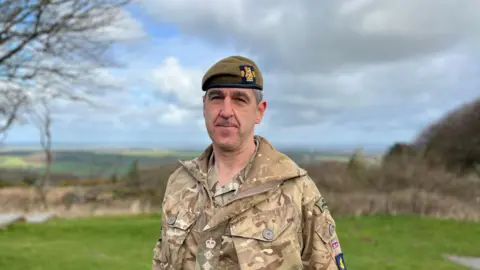
Col Bird added: "Good luck with the last parts of your training and kit preparation and the very best of luck for the day."
