Club cancels water activities due to E. coli spike

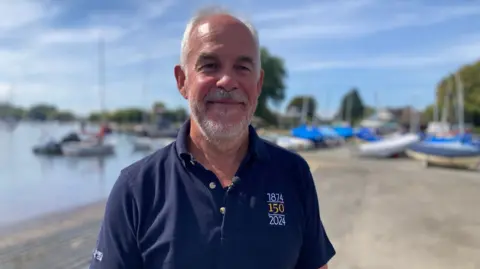 BBC
BBCA club has cancelled its junior water activities this week after high levels of E. coli were recorded at a harbour.
Samples taken by Christchurch Harbour and Marine Society (CHAMS) found what it said were "alarmingly" high levels of e-coli in the River Stour.
As a result, Christchurch Sailing Club has cancelled its junior week, which it said had been a "heart-breaking decision".
The Environment Agency (EA) said it was "out taking samples and checking the performance of Wessex Water assets" and was considering multiple sources of pollution, including agricultural and private sewage sources. Wessex Water said the reported pollution incident did not relate to its assets.
Christchurch Harbour is not designated bathing water, which means the Environment Agency does not routinely monitor it for E. coli because "its presence has no direct impact on the river's ecology".
CHAMS volunteers have been monitoring E. coli levels in the River Stour just before it runs into the harbour for the past year, and last week saw a big spike in levels.
E. coli is measured in CFU's per 100ml, and on Wednesday 19 August CHAMS measured 370,000. This dropped to 6,783 on Saturday.
CHAMS chair Martin Stewart said he wrote an email to all clubs and anyone involved in harbour activity to warn them of the spike, an email he said he "never wanted to write".

Graham Smith of Christchurch Sailing Club told BBC Radio Solent on Wednesday: "The timing is really bad, we have a junior week starting actually today, rigging the boats.
"So last night when we got the latest reading, which was almost tenfold the 1,000 limit, we had to make some really tough decisions.
"We've had to call off the water activities for the junior week, which means we have 53 youngsters, which were all excited about participating in junior week, not being able to do the water part of that directly as a result of the harbour conditions."
Christchurch Sailing Club said the Spinnaker Sailing Club near Ringwood had come to its rescue by offering three days on the water for the juniors.
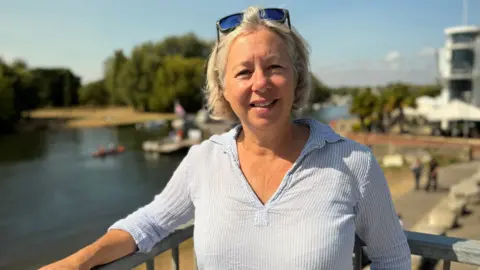
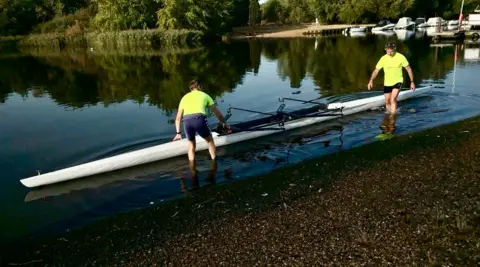
Christchurch Rowing Club is staying on the water, but taking extra precautions.
Abi McMullen said this included washing hands and feet after rowing.
"It's about good hygiene protocols, water bottles with closed caps so you're not drinking from something that could have been immersed in water," she said.
"Also to report if they've been unwell, because that's a really important aspect."
A public meeting already scheduled by the council next week is expected to be well attended.
An EA spokesperson said: "We are grateful to Christchurch Harbour and Marine Society for reporting this incident and we welcome the role citizen science monitoring can play in improving water quality.
"Please report any signs of pollution to our incident hotline 0800 80 70 60."
A Wessex Water spokesperson said: "There have been no recent storm overflow operations at or upstream of that location and all our sewerage assets are operating as normal.
"Christchurch Harbour is a catchment serving a largely rural area where water quality can be influenced by wildlife, agricultural run-off and numerous other factors.
"Environment Agency data does not identify discharges from water industry assets as the reason for the harbour not achieving a higher ecological status."
