Thatching at 'danger point' due to straw shortage

 BBC
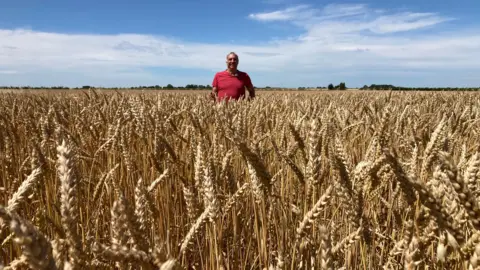
BBCA grower has warned the thatching industry is at "danger point" of dying without more young people entering the industry.
Thatching straw is a specific crop for the thatching of roofs, that requires particular skills to grow and cultivate.
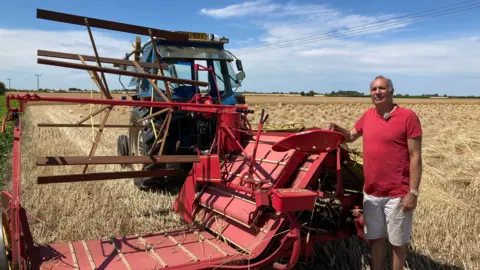
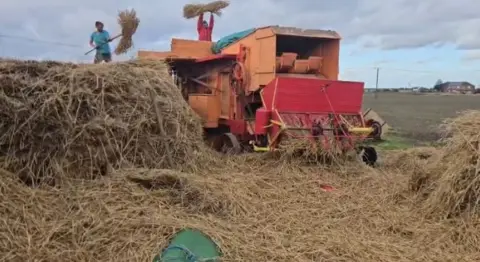
Robin Kurzaj, from Billinghay, Lincolnshire, said factors such as climate change, maintenance of old machinery and labour intensive harvesting meant finding new people to learn a trade "that comes with huge risks", was getting harder.
"I get phone calls every week, basically crying out for thatching straw," he added.
Kurzaj, who learnt about thatching and the growing of thatching straw in the 1970s through his father, Joe, said he wanted to see more people getting involved, including through apprenticeship schemes.
"People are retiring, people don't want to do it, and the government doesn't want to help in any way, so it's just a fighting battle really to get the material.
"It's the material, not the thatchers, we are short on.
"It's dying a big death now. It is really getting to a danger point where the thatch will go," he said.
Kurzaj said three other growers he had spoken to this week had already lost their crops this year due to the weather.
 Robin Kurzaj
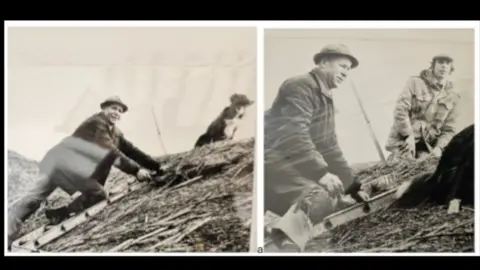
Speaking about how he became involved, Kurzaj said: "Dad used to thatch in Poland years ago before he was a prisoner of war. Then he came over here and started doing farm dairy work and then broke into thatching again.
"He probably started around the early 50s, then I joined him around '74 and then I packed up around about '84 and moved on."
He has since returned to growing, and said it had taken him three and a half years to get to this point - "to get all the kit together and get everything right".
"You can't just pick stuff up and start. It's a massive thing," he added.
Kurzaj is not the first person to warn about the problems facing the centuries-old industry.
In April, thatchers and farmers in Suffolk and Cambridgeshire came together to try to resolve supply issues.
Richard Negus, a hedgelayer and conservationist from Finningham in Suffolk, became aware of the issue from master thatcher Chris Dobson, from Sawtry in Cambridgeshire, and helped him meet local farmers.
Dobson said having local thatch farmers would make "a huge difference" and help safeguard the industry.
 Robin Kurzaj
Historic England said it supported the continued use of authentic thatching materials and traditional techniques on listed buildings.
However, a spokesperson said: "We understand that periodic shortages of thatching straw can make sourcing traditional material extremely challenging, and we have been engaging closely with the sector on these issues over recent years."
Guidance, available on Historic England's website, recognises the need for flexibility in times of severe material shortage and sets out a number of conservation issues to consider when planning repairs or changes of material.
Listen to highlights fromLincolnshire on BBC Sounds, watch thelatest episode of Look North.
Download the BBC News app from the App Storefor iPhone and iPad orGoogle Play for Android devices
