Thatchers and farmers tackling straw supply issues

 Getty Images
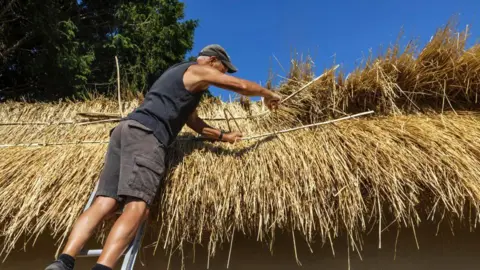
Thatchers and farmers have come together to help tackle unpredictable straw supplies.
Poor harvests over the past few years due to changing weather patterns have impacted the craft, causing some within the heritage trade to leave altogether.
Richard Negus, a hedgelayer and conservationist from Finningham in Suffolk, became aware of the issue from master thatcher Chris Dobson and helped him meet local farmers so they could understand the issues they each faced.
Dobson, from Sawtry in Cambridgeshire, said having local thatch farmers would make "a huge difference" and help safeguard the industry.
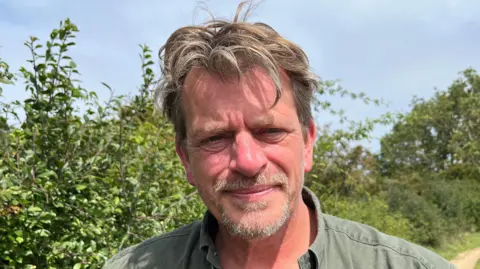
"I live in and around one of the best wheat-growing farm clusters in the country, and that's the High Suffolk Farm Cluster," Negus told BBC Radio 4's Farming Today programme.
"Why are they not growing thatching straw?
"Chris has a need, and I thought, let's try and get some of the best wheat growers, some chaps who really know about the science of growing wheat, and Chris, who is a master thatcher, together and see where the similarities and differences are, so hopefully we can meet in the middle and reach a happy conclusion."
Negus said the meeting had gone well and the High Suffolk Farm Cluster was now looking at approaching grain buyers and running trials to find how best to grow and harvest straw that would benefit both farmers and thatchers.
 Jamie Niblock/BBC
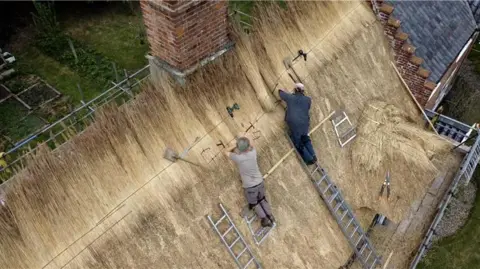
According to Historic England, thatchers are in demand with there being about 40,000 thatched properties in England, many of which are found in Suffolk and parts of the East of England.
But challenges such as poor harvests, reliance on out-of-date machinery and uncertain seasonal labour have left the industry in a "vulnerable situation".
It added that climate change and escalating rural land values are also having an effect on the industry.
 Chris Dodson
Dobson said thatchers were "crying out for good quality, long straw".
"My son works for me [with] two other chaps, they're all under 30, and I want them to have security," he said.
"If we can take that pressure away, it will make my life a lot easier, but it will encourage thatching throughout the country and give it a really good, long-term footing."
For thatchers, "it is about the length" when it comes to straw, Dobson said.
When working on roofs, they want on average a straw length of between 1m (3.2m) and 1.2m (3.9ft).
Asked where he buys his straw from, Dobson said: "We have some which comes from Bedfordshire, it's only about 20 miles from home, but we've got some from Lincolnshire, some from Wiltshire.
"But the vast majority of thatch and straw in this country is grown in Somerset and Devon."
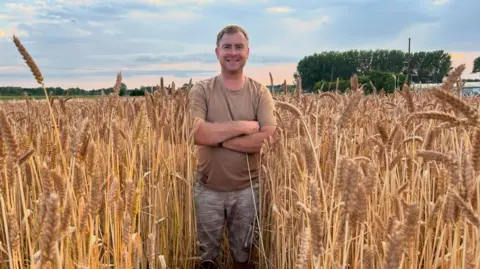
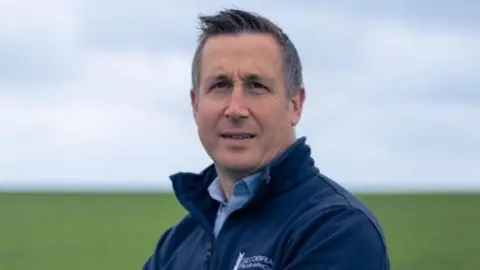 Tom Barker
Tom Barker works for plant breeding company SECOBRA, which has a UK office based in Norfolk.
He believed modern science and modern agronomy could help provide solutions to issues such as supply, which "we may not have been able to do in the past".
"I'm looking at Chris like my customer in the same way that I would look at him like a flour miller," he said.
"He needs a product. What is it that we have in plant science and plant breeding that we can utilise to help him?
"The steps that you would then talk to farmers about would be planting a little bit later to make the rooting as good as possible, and then also you want the tillering, so the branching out of the plant, to be as stiff as possible.
"Then when you come to harvest the straw, you'd have really good, clean, hardwearing straw that then Chris can use."
Do you have a story suggestion for Suffolk? Contact us below.
Follow Suffolk news on BBC Sounds, Facebook, Instagram and X.
