Dark past of city's Green Quarter and the brave people who lived there

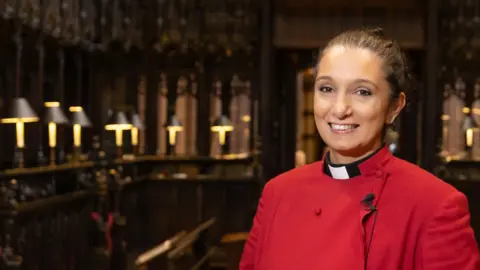
 Canon Grace Thomas
It was described as "hell upon earth" and the "worst Victorian slum outside of London".
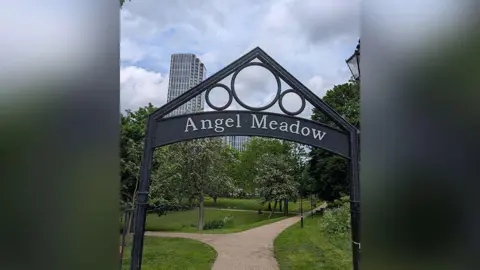
Located just north east of Manchester city centre, Angel Meadow had formerly been an affluent, relatively rural area, until the Industrial Revolution hastily saw it transformed into a crime and disease-ridden slum.
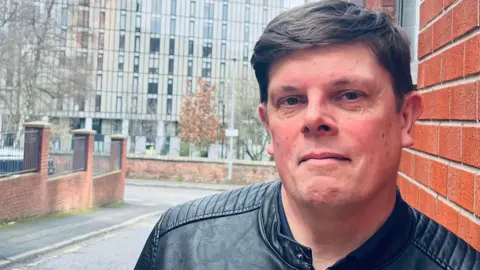
Historian Dr Dean Kirby said people living in Angel Meadow, including some of his ancestors, "helped change the world and made Manchester what it is" but endured "horrific conditions", with half of the children living there dying before the age of five.
Now, the area's chequered past has inspired a new project looking at how it shaped the city's heritage led by Manchester Cathedral and more specifically Canon Grace Thomas who discovered more about its significant history on a parish walk.
 Manchester Cathedral
Kirby, who wrote Angel Meadow: Victorian Britain's Most Savage Slum, said his ancestors, including his great, great, great grandfather, William Kirby, came to the area from Ireland to work and "make a new life for themselves".
William was a fishmonger, and like many residents in Angel Meadow, was living underground in a cellar with his family which was not designed for humans to inhabit.
He said life was a struggle and people had to endure "tough living conditions" with high mortality rates. It was dangerous place to live too, as crime was rife.
The 51-year-old said Angel Meadow was full of cramped lodging houses with one - an old factory - having 600 beds.
In 1845 in his book, The Condition of the Working Class in England, author Friedrich Engels, called Angel Meadow "hell upon Earth".
He described the "filth, ruin, and uninhabitableness, the defiance of all considerations of cleanliness, ventilation, and health which characterise the construction of this single district, containing at least 20,000-30,000 inhabitants" which was in "the first manufacturing city of the world".
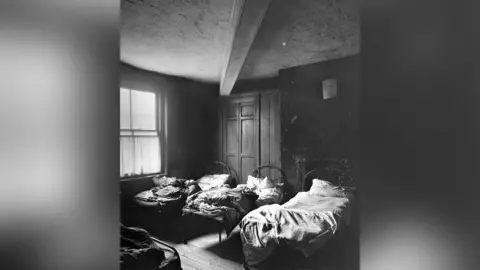 Image courtesy of Manchester Libraries
Thomas did not know much about Angel Meadow passed and in fact said there felt a sense of beauty and peace about the park of the same name - which is within Manchester Cathedral parish grounds - during her walk with parishioners.
However, when she spotted gravestones and delved further she discovered the dark history of the place now known as the Green Quarter.
She read Kirby's book and said the stories of poverty, deprivation and some of the land being a pauper burial ground with about 40,000 people buried there - alongside Manchester being at the epicentre of the Industrial Revolution - "really struck a chord with me".
Thomas said she wanted to honour the precious lives of those who are buried there and also connect people who live in the area today - in the new-builds and flats - with the area's history.
It has led to Project Angel which officially launches at Manchester Cathedral later.
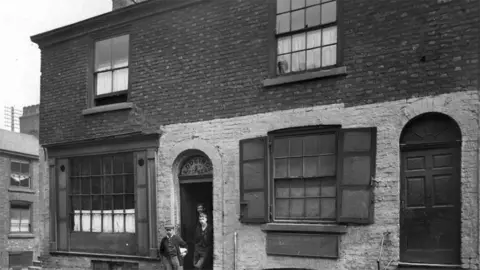 Image courtesy of Manchester Libraries
Tom Branfoot, Manchester Cathedral's writer in residence, has been conducting workshops to engage people in stories of the past and today of Angel Meadow.
He will be presenting contributions from the Writing Angel Meadow sessions and a collaborative poem Ghost Meadow written with a group of 17 local poets.
Thomas said: "The Industrial Revolution started just a stone's throw away from the cathedral and it changed the world.
"We are where we are now because of all the development that happened through that hugely innovative and pioneering time but that also came with a cost.
"So we have these dual stories. We have stories of innovation, of developments, of huge mills and factories, and we have stories of the workers and the people living nearby who often did the most work in those mills and often paid the cost of that.
 Family photograph
Kirby is a guest speaker at the event.
He said: "It is important to remember what they went through and the struggles they had," he said.
"They were strong, brave people who built the Manchester that we enjoy today.
"These were Mancunians. We should be proud of them to survive what they went through and how they built the city for us."
Listen to the best of BBC Radio Manchester on Sounds and follow BBC Manchester on Facebook, X, and Instagram. You can also send story ideas via Whatsapp to 0808 100 2230.
