Impact of new youth hubs 'incredible'

 BBC
BBCNew youth hubs designed to help young people find work and training have had a "huge impact" in their first six months, Cornwall Council has said.
Three centres - in Camborne, St Austell and Liskeard - have been set up to support 16 to 24-year-olds currently not in education, employment, or training (NEETs.)
The hubs provide dedicated mentoring and advice to help young people access job opportunities, work placements, and improve their skills.
The council said the year-long pilot scheme was already surpassing its targets - and it hoped more could be opened in future.
Charlotte Allen-Squire, 22, was referred to the youth hub in St Austell in February after being out of work for 18 months.
She said: "It's been quite tough. You have to be quite resilient because every rejection, every ghosting of an application, does knock you back a bit.
"I found it quite useful to come in and speak to different people and find out about things that I had no idea existed in the county."
She added she had since had some training to add some new skills to her CV and was glad she had reached out for support.
"I find it really hard. I'm quite proud, but it's not a crime to ask for help because someone might have the answers you've not thought of and you just think: 'That's exactly what I need.'"

Wouter Le Roux, 20, said he felt "stuck" searching for a job for two years but was now doing an engineering course with a local employer.
He said: "The youth hub has given me the motivation to look for what I want to do. I'm going after every opportunity that comes up and I'm hoping to find something that will give me that passion.
"Even if I don't have a job yet, I have got a lot more qualifications, a lot more experience."
He added trying to find a job had been like "fumbling around in the dark" and reaching out for advice
"You don't know where you can look for qualifications, you don't know what people are offering work experience. You just hope that one application gets you a job and that's about it," he said.
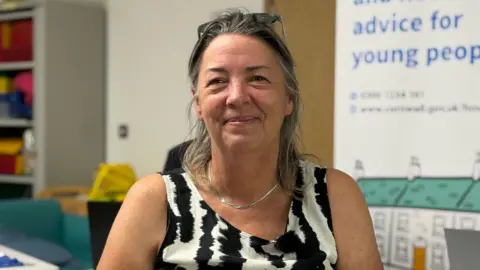
Jane Cornelius, manager of the council's youth hubs, said there were currently about 13,000 16 to 24-year-olds classed as NEETs in Cornwall - with transport, housing, and mental health all providing barriers to opportunities.
She said: "Our mentors work really closely with the job coaches and we have the opportunity to spend a good hour maybe once a week, once a fortnight, with a young person."
The council said its hubs had already helped 22 people into employment, 72 had been referred to extra training or skills development, and 13 to engage with further or higher education.
Cornelius said their aim was to get 30% of the young people they saw into work and 30% into further education.
"When you think of the social value of that, the fact that, not only are they coming off benefits but they are returning money into the economy, it's massive."
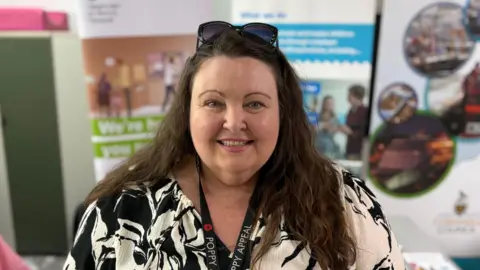
The council said the hubs were a joint-initiative funded via the Department for Work and Pensions (DWP).
Fay Fleming-Horner, from the DWP, said reducing the number of NEETs nationally was a main "focus point".
She said: "The benefit of these hubs is a more relaxed type of approach. It's a relatively new concept, so we're still trialling how this is working."
Fleming-Horner said tailoring the support to each individual was a more effective way of helping young people.
"So, if that means finding ways to help them with their confidence, getting them some work experience, or getting them some extra training, then that's what we try and do. So far, the results have been incredible," she said.
Follow BBC Cornwall on X, Facebook and Instagram. Send your story ideas to spotlight@bbc.co.uk.
