Bars and hotels 'cannot afford to take on staff'

 BBC
BBCCatering businesses say they are struggling to provide new jobs for young people due to rising costs on all sides.
Owners of bars and hotels say increases in National Insurance contributions and the minimum wage combined with an increase in general costs such as energy bills mean they cannot afford to take on new staff.
People in the hospitality industry in Devon were responding to a government report concerned about the fact there are nearly one million people aged 16-24 not in education or training (NEET).
But young people about to graduate from an award-winning catering college in Exeter are hopeful and ambitious for their futures. Labour's Jayne Kirkham, MP for Truro and Falmouth, said there was a whole host of reasons for the problems but the government was "taking action now".
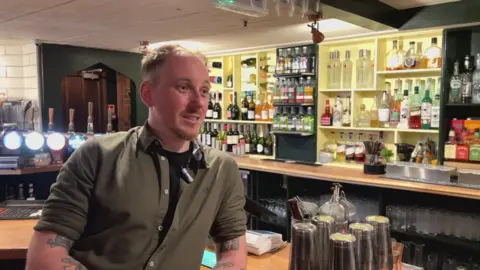
Josh Bate set up Oriels, a bar, restaurant and entertainment venue on Exeter High Street, about six months ago with two friends.
He said business was going well but the challenges the company was facing made it difficult to hire the number of staff he would like to have.
He said: "The cost of operating has increased extensively, certainly since we opened and in my experience over the last five or 10 years.
"Between business rates increases, VAT, National Insurance contributions, energy bills, the list goes on.
"We want to take on more people, we'd love to have more staff - to train them, develop them and lead them into a career in the hospitality industry, but we're unable to do so due to cost factors."
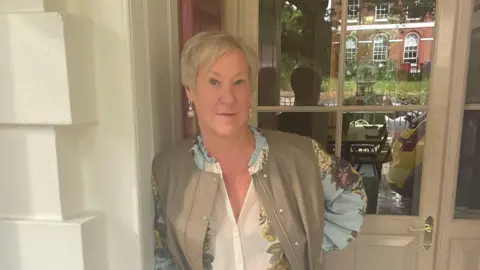 Deborah Clark
Deborah Clark, owner of the boutique Southernhay House Hotel in Exeter, said there had been a "storm of revenue-reaping from business by government".
She said this was having a "predictable and tragic impact on employment in the very sectors where it most directly benefits those looking for a chance to get into employment".
Giles Fuchs, owner of the Burgh Island hotel, made famous as a writing retreat for the crime writer Agatha Christie, said he was taking on far fewer new staff.
He said the business community realised the implications of increases to National Insurance contributions and the minimum wage when they were introduced.
He said: "We knew it would mean less jobs, we knew it would impact the younger, people leaving schools and universities, we all knew that - the question is, did the government?"
The report into the numbers of young people not in education or training said the issue should be treated "as an urgent national crisis".
It said there was a "deeper problem" of "youth detachment from the labour market" with the country "at risk of a lost generation".
The report, by former Health Secretary Alan Milburn, said entry-level roles have "become less plentiful and more demanding" and said across the country there was "neither a system nor a plan to increase youth participation".
The BBC contacted the Treasury regarding the claims made by business owners about the impact of government policies but it is yet to receive a response.
Kirkham said the government was investing £2.5bn into training, education and encouraging employers to take on apprentices.
"National Insurances contributions are not paid on anyone under the age of 21 and the government is helping with apprenticeships, so that support is there for employers to take on young people," she added.

One of the findings of the Milburn report was that the education system in the UK "produces qualifications but does not guarantee transitions".
That is not the case at the Michael Caines Academy at Exeter College where students gain not only qualifications but also practical experience of making and serving high quality food and drink to paying customers.
The college also builds relationships with hospitality businesses throughout the South West and helps students to gain work experience and move seamlessly into work when they complete their course.

Marize Sabapathy, who is just about to finish a level three professional cookery diploma, said getting early experience of working in a kitchen had taught her a lot.
She said: "I started off as quite a timid, shy person and being in a kitchen, especially in a male-dominated industry, is terrifying.
"But as soon as you get in your own comfort space it's a lot easier to get on with it."
Fellow student Joanna Currey said she had started working in a part-time job washing dishes.
She said: "You get roped in to do little jobs and then you start building your confidence up."
Both students have jobs lined up for when they complete their course this summer.
Ian Biggar, a tutor at the academy, said there were still fantastic opportunities for young people going into hospitality.
He said: "We have some students who have been NEET for a number of years who would come and join us.
"Because we're not sat in a classroom talking about cooking, we're cooking, and we're not talking about serving customers, we're serving customers, they love it.
"We have students who are very nervous, very timid, very quiet and then through their time with us they flourish into confident young people."
Follow BBC Devon on X, Facebook and Instagram. Send your story ideas to spotlight@bbc.co.uk.
