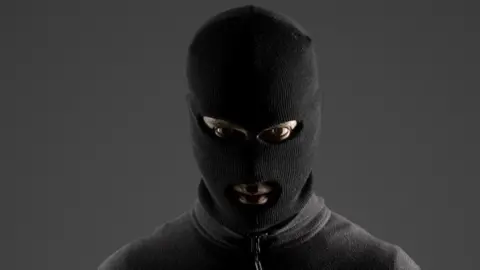
Face coverings set to be banned across borough

 Getty Images
A ban on face coverings is set to be introduced in and around Stafford as part of efforts to crack down on anti-social behaviour.
The measure would come into force when the borough council's updated public spaces protection order (PSPO) replaces the current one towards the end of 2026.
A council report said it was in response to an "emerging issue of youth adults" wearing coverings and causing harassment, alarm or distress.
People wearing face coverings for genuine religious purposes or health reasons would be exempt, the report added.
The new PSPO was approved by the borough council on Thursday and will be the subject of a consultation exercise before it is implemented in December, when the authority's existing PSPO expires.
Those in breach of the order would have to pay a fixed penalty notice (FPN) of up to £100.
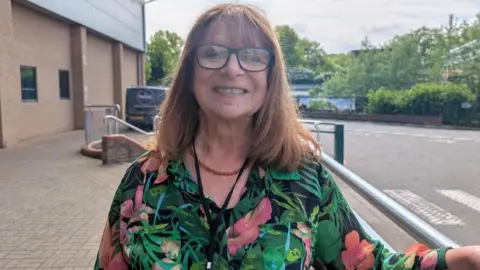
Councillor Jill Hood, cabinet member for community, said during the meeting: "I'm sure we've all seen the young people who appear to have black face coverings - used to intimidate or enable antisocial behaviour.
"This will not be permitted. This supports public safety and reassurance in all restricted public areas, particularly busy town centre locations.
"Fear of crime can be just as intimidating as an actual crime occurring."
The updated PSPO also includes measures to tackle unauthorised access into buildings or onto rooftops and loitering that is likely to cause anti-social behaviour.
Meanwhile, the current restrictions on amplified busking would be eased so it is only prohibited in areas where it causes or is likely to cause nuisance, harassment, alarm or distress.
Hood said she was "very keen" for the change to be made because busking in town centres added to the atmosphere on the high street.
"For a few months we've lost that – visitors used to come to the busking areas and they're now asking when they will be back. We can tell them it's very soon," she added.
This news was gathered by the Local Democracy Reporting Service which covers councils and other public service organisations.
Follow BBC Stoke & Staffordshire on BBC Sounds, Facebook, X and Instagram.
