How a town is encouraging young people away from smartphones

 BBC
BBCA market town is encouraging young people away from their smartphones. But how is Solihull in the West Midlands going about it and why?
The government has already introduced a legal ban on the devices in schools in England and a social media ban for under 16s is due to come into force next year.
But the 'In Real Life' (IRL) campaign launched in Solihull has already made similar steps, encouraging organisations to sign up to be smartphone free environments.
With the slogan "Smartphones can wait, childhood can't" it aims to highlight the activities young people can get involved in, to tempt them away from their screens.

The campaign has been driven by Solihull's schools who wanted to create something that reached beyond the school gates.
Since February, it has been compulsory for Year 7 and 8 pupils at Alderbrook School to lock away their devices at the start of the day. This was implemented after a voluntary scheme started last year.
Headteacher Tom Beveridge said they knew young people were using their phones late into the evening.
"The more that we can do, not just in schools, but with all agencies that work with young people in our community, the bigger impact we can have in a positive way."
He said they were trying to change the social norm around young people and their devices.
"Just like things like smoking, the norm has changed over time, the same will happen with children's use of smartphones and social media, and that's what this campaign is all about."
It is thought to be the first time a community has come together in this way with schools, businesses, charities and the local authority backing the scheme.
Project lead Katie Washbourne said it was "a positive movement to support families to make sure that tech was used in a balanced way."
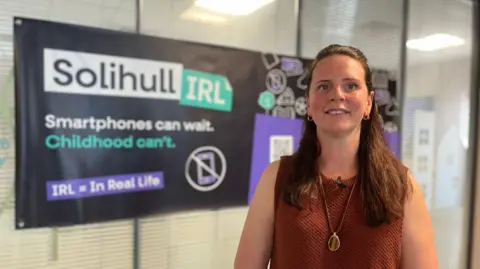
Washbourne is also founder of the not-for-profit mental health service, Ordinary Magic, and said more than half the young people referred to them had poor mental health because of what they had experienced online, from bullying to social media pressure.
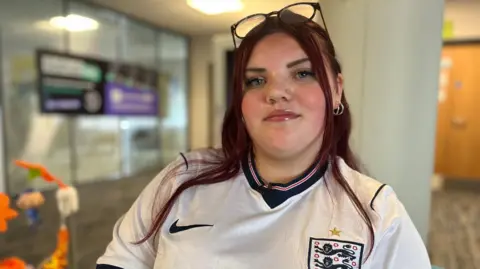
Supporting the movement is 14-year-old Trinity who said she spent seven to eight hours a day on her phone.
"It does impact you because you lose your social interactions with people."
She said she had had bad experiences online and believed spending less time on her device would boost hers and others self esteem.
Elsie, 14, said she spent on average four to five hours on social media every day checking notifications and scrolling on TikTok.
She said she thought the campaign was positive because it would "bring people together and get people to spend more time together, instead of on their phones".

Among businesses signing up to the campaign is board game cafe, Game Guru, at the town's Touchwood shopping centre.
It has a smartphone locker in the shop and offers families 10% off food and drinks if they lock their devices away.
Manager Melika Latif said: "We try to create an environment for kids to come in and not just be on their phones because it can affect their mental health".
Customer Baldan Devecioglu said "having the option of spaces that are phone free can be a great way for people to connect".
The 26-year-old, originally from Switzerland but now living in Solihull, said young people were used to having communities online so it was good to have spaces that encouraged friends to meet up in person.
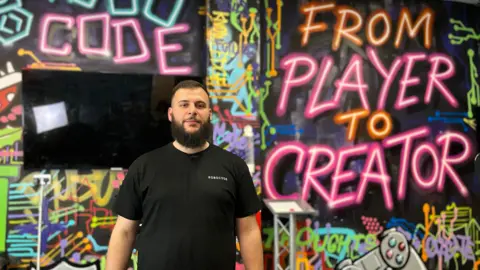
Another company supporting the initiative is Robocode in nearby Shirley, which provides hands-on robotics, coding & game development courses.
It aims to turn children from being passive users of technology to creators.
Managing director Khaled Ayad said it was a common misconception that young people were tech savvy.
"They may be digital natives but their usage goes as far as double tapping, scrolling, liking videos and commenting, it doesn't translate to real digital literacy."
He said many 18-24 year olds did not have the digital skills required for the workplace.
At their learning centre they equip children as young as six with real-world tech skills from building robots to creating video games and learning GCSE Computer Science.
Ayad said by "widening their horizons" it helps them move on from 'over-consumption of technology and doom scrolling'.
He also supports parents who are worried about their child's screen time, among them Michelle Thompson.
She said her 11-year-old son now "thinks deeper about what he's doing and where he gets his knowledge from".
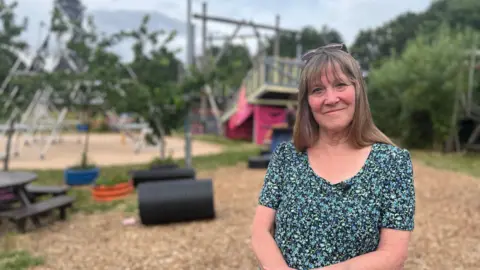
At Meriden Adventure Playground, in Chelmsley Wood, they are passionate about getting young people of all ages to play.
The charity, which is staffed by a team of volunteers, has a zip wire, towers, platforms, ropes, swings and areas where they can build their own stuff
"Play is the thing that enables children to grow, to become resilient, to mature to become people who can relate to others and navigate things in the world", said chair Alison Wood.
She feels young people's freedom and independence has been taken away under the guise of protection and there needs to be more places for them to express themselves.
"If we take away their phones and we don't have alternatives, that's going to be a problem."
