What happens when pupils cut back on social media?

 BBC/Carla Fowler
Pupils taking part in the initial stages of a study examining the effects of reduced social media use have urged the government to rethink a complete ban and suggested time limits instead.
Prime Minister Sir Keir Starmer has said under-16s would be barred from social media by spring 2027, describing it as the best way to keep them safe online.
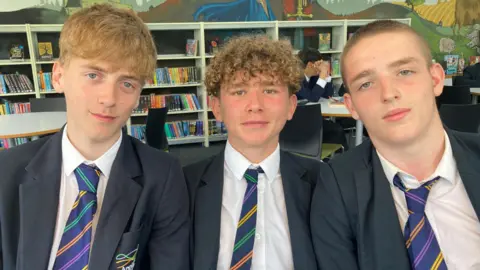
Pupils at Appleton Academy in Wyke, Bradford, said they had seen benefits from spending more time offline, but fear a ban could negatively impact friendships and revision.
Prof Lisa Henderson from the University of York said the ban "sends a clear message to children on the harms" of social media, but that it was not "a silver bullet".
The ban would apply to platforms including Snapchat, TikTok, YouTube, Instagram, Facebook and X, the government said.
Ahead of the announcement, hundreds of schoolchildren have been taking part in the feasibility testing phase of a study to examine whether or not limiting social media use could improve the mental health of teenagers.
About 4,000 children aged 12 to 15 are due to take part in the IRL (In Real Life) trial later this year and more than 200 pupils at Appleton Academy are involved in the initial research.
Each participant is given a "daily budget" of time to use certain apps, as well as being barred from social media between 21:00 and 07:00.
 University of York
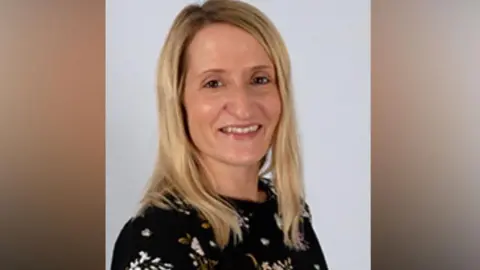
Catherine Blay assistant head of Year 8 said students had been anxious about the restrictions but once they adapted things had improved.
Students reported better sleep, improved focus in lessons, and fewer social conflicts, she said, adding: "There's also been a massive change in mood as well."
Blay supports a full social media ban, arguing it would protect young people from exposure to inappropriate content and help keep children "at the age they should be".
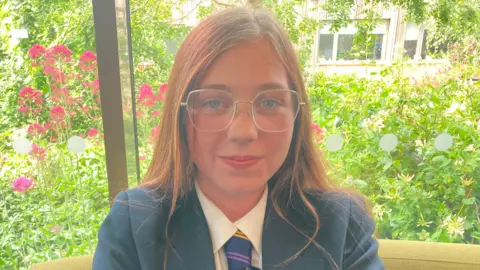
One pupil, Lexi, said she had been using social media apps about six hours a day, but now feels better, using them less and spending her time with family and friends instead.
"I just feel happier. I feel like because I'm not looking at the screen all the time, I feel like it's lifted my mood," she said.
The 14-year-old does not think an outright ban would make a difference to her, and said she would be happy to completely give up social media.
Star, 14, said staying offline had also made him feel healthier and happier.
"I feel like it's given me more energy and made my brain think faster," he said.
A complete ban would "disarm me", he said, as he uses social media to stay in touch with friends.
"I think there should be a limit to the amount that you use it, but I don't think they should completely ban it," he said.
 BBC/Carla Fowler
Oliver, 15, said reducing his social media usage had allowed him to focus on other hobbies instead.
"I barely go on my phone now, I've slept a lot better, I've not been just scrolling on my phone for ages, and I've actually got loads of things done," he said.
He thinks instead of a ban, there should be a time limit.
"The younger they are, the less time they can have," he said.
"Because when you're trying to study online, or you need to ask your friends for help if it's banned, you'll be a bit stuck to actually get good marks on your mocks and doing better in life really."
Bailey, 15, said he feared teenagers would find a way around a ban.
"I do see the benefits that it could have on a lot of people, but people might not agree with it and they might need to come to some sort of compromise like a time limit rather than just being banned permanently," he said.
 BBC/Carla Fowler
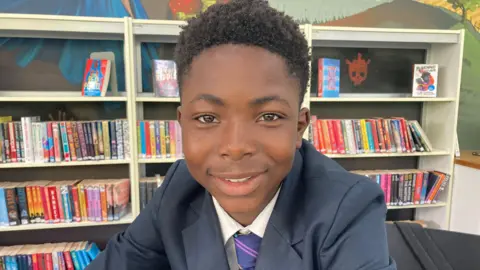
Declan said he had "mixed opinions" about reducing social media usage.
On the one hand, he has been spending more time outdoors, on the other hand, he said he had found it difficult to stay in touch with people and to revise, because he often uses TikTok and YouTube videos to learn.
He fears a ban could impact people's friendships.
"Quite a lot of people now have long-distance friendships," he said.
"I do racing with people all around the country and I won't actually be able to speak to them unless I'm racing which is every other weekend."
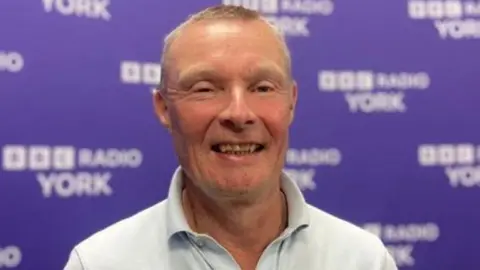
Henderson, head of the University of York's psychology department, is overseeing a trial on smartphones and social media restriction for teenagers, which she said the ban would make "very difficult to implement".
She said as a scientist, she was "very much on the fence" about the ban, but as a parent of three, it was "music to my ears".
"On the one hand it means there's more control for parents, on the other it questions children's rights - and what about the lost generation of kids that have been exposed to social media all these years?
"We must not forget about them, these kids are meant to change the way they exist overnight."
Former York headteacher and trustee of mental health charity York Mind, David Ellis said it was "a welcome decision" which he believes would benefit millions of young people and their families.
"My only reservations are the potential for unintended consequences of the decision," said Ellis.
"We know from history that when something is banned something else tends to pop up in its place."
Listen to highlights from West Yorkshire on BBC Sounds, catch up with the latest episode of Look North.
