Conservationists celebrate 'rarest seabird' rise

 Nicholas Rodd
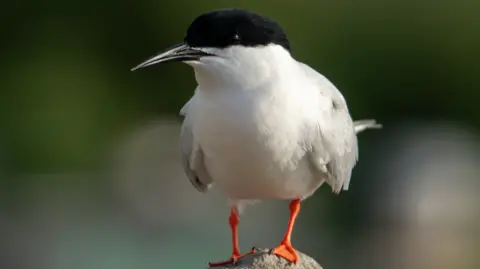
A record number of rare seabirds have nested on a dedicated offshore wildlife sanctuary, conservationists have said.
The RSPB said 155 pairs of roseate terns nested on Coquet Island, a mile off Amble in Northumberland, in the latest breeding season, the highest number in more than 50 years.
The charity also said the number of fledglings this year was "looking positive", with about 150 already counted and more expected in coming weeks.
RSPB reserve manager Sarah Dalrymple said: "When you're talking about England's rarest breeding seabird, every pair really matters."
She called the figures "incredibly special" and "a real cause for celebration".
 RSPB
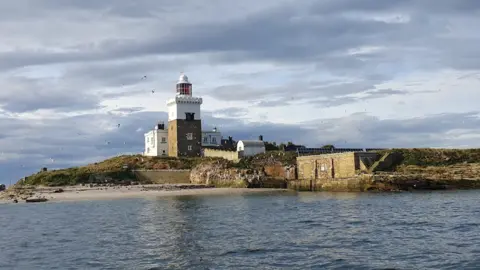
RSPBProtected under UK and international law, Coquet Island is managed by a small team of RSPB wardens and volunteers, but closed to the public.
The island is home to around 45,000 breeding seabirds, including the UK's only breeding colony of roseate terns, the RSPB said.
There were previously 154 pairs of the birds in 2022, but the population then dropped due to an outbreak of bird flu on the island.
The highest number was reached in 1967 when there were 230 pairs on the island, with 355 across the whole of England in 1970.
But by 1985, the number crashed to 34 pairs due to factors including human disturbance, a loss of suitable nesting sites and food shortages from unsustainable fishing, the RSPB said.
 Nicholas Rodd
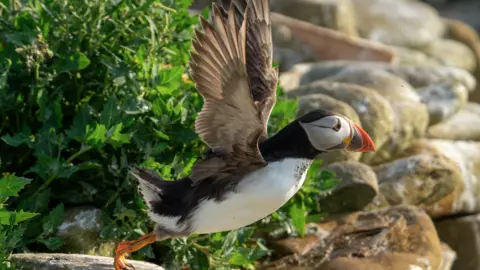
The charity also said puffins were continuing to fare well on the island, with 27,170 pairs recorded in breeding burrows - a 45% increase on last year's count.
However, the charity warned the challenges facing the seabirds had not disappeared.
It said some other species of birds on the island, such as sandwich terns, eiders, and fulmars had decreased.
That was due to the same problems facing roseate terns in the 1980s as well as diseases, being killed by predators and the changing climate, it said.
 Ellen Bielinski
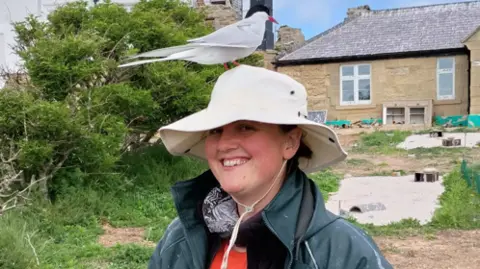
RSPB warden Rebekah Goodwill lives on the island during the summer months and helps to coordinate counting the birds with the charity's volunteers.
She said they actually counted nests, rather than the birds themselves, to get accurate figures.
She said life away from the mainland, despite being the only permanent inhabitant alongside reserve manager Dalrymple, was "noisy".
"In the height of the the season, we've got thousands of birds all around us and outside our bedroom windows, but it's one of those sounds you really enjoy hearing," she said.
She said the increasing roseate tern population was "rewarding" and hoped it could one day lead to the seabirds breeding in other parts of the UK.
"To see them bounce back so well has been just great, it's been such a success story for the island," she said.
