Bluebells are blooming in ancient woodlands - where's the best place to see them?

 William James Dowd
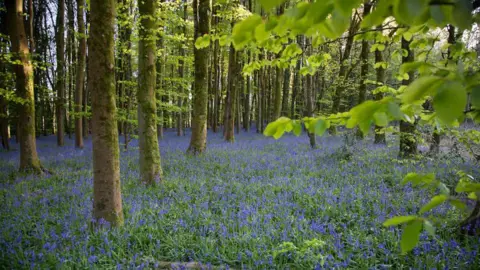
Bluebell meadows are wrapped up in folklore, with ancient tales of fairies and pixies playing in them at twilight.
The mystique is increased by the fact there are only a few weeks a year where woodlands are carpeted in them.
Five forests in Wales - in Monmouthshire, Powys, Carmarthenshire and Neath Port Talbot - are among the best places to see bluebells this spring, according to The Times.
They bloom between late March and early May, before beginning to fade.
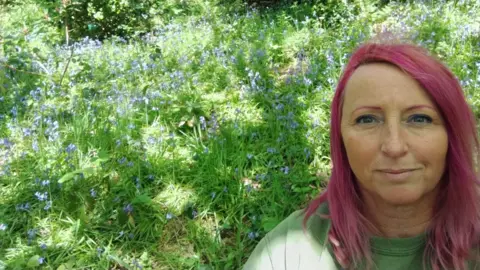
"An ancient woodland is anything that is 400 years or older, so when you see bluebell woods, they've been there for a long, long time," horticulturist Ayshea Cunniffe-Thomas told BBC Radio Wales Breakfast.
The flower is native to western Europe - with the UK's woodlands home to almost 50% of the global population of native bluebells.
 Helen Absalom
They thrive in these ancient forests and with sun, according to Cunniffe-Thomas, a horticulture supervisor at the National Botanic Garden of Wales in Carmarthenshire.
However, she added it is illegal to "pick them, dig them up or destroy them in any way".
Bluebells are protected in the UK under the Wildlife and Countryside Act, 1981.
Cunniffe-Thomas explained that this means it is illegal to "pick them, dig them up or destroy them in any way".
Even by simply disturbing them, it can take years for the plant to recover, according to the Woodland Trust.
It added it's extremely important to keep to paths on woodland walks so bluebell colonies are not damaged.
 Ayshea Cunniffe-Thomas
As an illustration of their importance to communities, an investigation was launched in 2022 after a popular bluebell wood was destroyed by contractors.
It happened in Llanbradach, Caerphilly county, with community councillor Beci Newton describing how five generations of her family had enjoyed the bloom.
Another resident Gwyneth Walby described how the wood was "like another world", which she first visited as a child.
Where are the best places for bluebells?
On The Times list, Wentwood and Priory Grove in Monmouthshire were mentioned, alongside Graig Fawr in Neath Port Talbot, Coed Cefn near Crickhowell in Powys, and Green Castle Woods in Carmarthenshire.
Wentwood Forest is the largest area of ancient woodland in Wales, at 873.15 acres, and was once a hunting preserve for Chepstow Castle.
It is now home to more than 70 species of bird and 23 species of butterfly, according to the Woodland Trust.
Priory Grove spans 78.01 acres on a prominent ridge within the Wye Valley Area of Outstanding Natural Beauty.
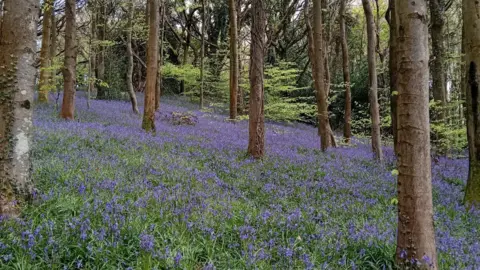
Coed Cefn in Crickhowell is an ancient woodland of 27.45 acres - Helen Absalom, an artist from Abergavenny said the bluebells there this year are the best she has ever seen.
Green Castle Woods is made up of two ancient oak woods, a more recently planted woodland, and also a waterfall.
Graig Fawr is home to six sites of archaeological interest, including a World War II radar station and a monk's bathhouse from the 14th century.
Its 126.98 acres offer a "spectacular bluebell display" in spring, according to the Woodland Trust.
