Second home tax turned woman's 'dream into nightmare' but others back rules

 BBC
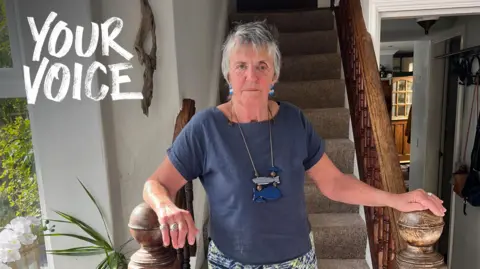
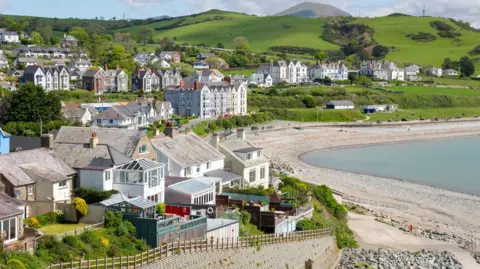
BBCHaving lived beside the sea for 18 years, Sally Howdle says she understands the problems second homes can create in small coastal communities.
After moving to Criccieth, Gwynedd, she realised a dream by opening a B&B.
But after turning two floors into apartments, she said this turned into a "nightmare" after both were classed as second homes.
Councils around Wales can add a premium of up to 300% on council tax bills for an extra home not used as a holiday let for at least 182 days of the year - leaving Sally with a hefty bill.
The policies were introduced to address the housing shortage, which Mared Llywelyn from the Hawl i Fyw Adra (Right to Live at Home) campaign said was as urgent as ever.
Sally moved to her three-storey property in Criccieth in 2008 to set up a B&B, before deciding 10 years ago that - as she became older - it would be better to convert two floors into self-catering holiday apartments.
A change in the rules on second homes introduced in 2023 means that, unless they are occupied for at least 182 days a year, the apartments are now classified as second homes.
In Gwynedd, which has almost 5,000 second homes, the second home council tax premium is set at 150%.
Sally contacted BBC Your Voice to explain her despair at how the policy has been applied.
 Getty Images
"It was my dream, that's what I'd always wanted to do, and I'd eventually managed to do it," she explained.
"And now it's being taken away from me, now it has all fallen flat on its face, it's turned into a bit of a nightmare."
Having hoped to slow down and enjoy retirement in Criccieth, Sally said she now faced a choice of putting her property up for sale or removing the kitchens she installed to create the apartments.
"I've either got to pack up and sell up or rip all of these out so that I can stay here," she added.
"It's going to cost me a few thousands to make it inoperable as self-catering."
If she were to sell, Sally said she did not believe the house would be affordable to local first-time buyers and said she believed the policies on second homes risked turning tourists away.
"I can't see it's going to solve any problems at all, all it's going to do is make the community poorer," she said.
'It's not anti-tourism'
The rules were introduced as a way of addressing concerns that second homes are pricing out people from the areas they grew up in, as well as threatening Welsh-speaking culture.
The local authority Cyngor Gwynedd, which last year lost a legal battle over changes to planning rules on second homes, said previously that it was "taking action to increase the provision of affordable homes, to mitigate the impact of large numbers of second homes and short-term holiday lets".
It said the number of second homes had risen in recent years, while the number of properties classified as holiday lets had fallen since the rule changes.
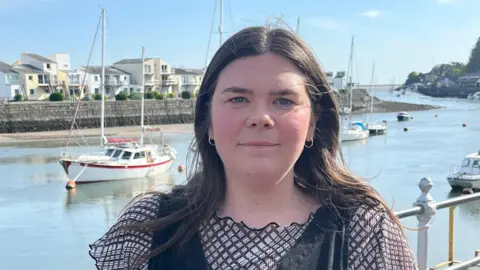
"It's not anti-tourism, it's not anti-anything," said Mared from the Hawl i Fyw Adra campaign, who is also a member of Plaid Cymru.
"It's about striking a balance between healthy communities and healthy tourism.
"I understand people have Airbnbs and second homes, and they make business through those houses, but too many suck life out of these communities.
"You have to let these places breathe and protect the people who live there as well.
"The measures are there to protect our language and our community, especially in rural areas."
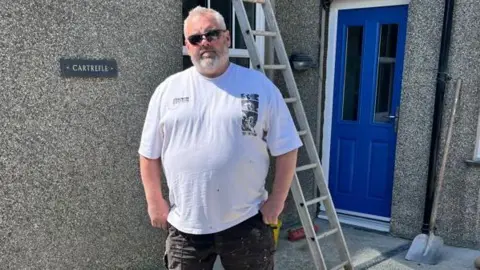
Jason Owen is a builder from Nebo, in Gwynedd, who is familiar with both sides of the argument.
Having worked on many holiday homes, he said he saw the benefits they could bring to the local economy but also witnessed property prices becoming unaffordable for local people.
He contacted the BBC to offer a different solution, suggesting second homes could be limited to new, designated areas.
"We could look at developing land outside the village boundaries," he said.
"Especially for these people to come and to have an estate [of houses] there.
"People that come here would be safe in investing in Wales, not penalised for it and not charged premium council tax, and that releases these properties for locals to buy."
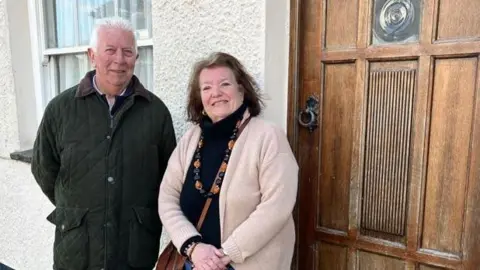
While they don't have a vote in the upcoming Senedd election on 7 May, Jean and Stephen from Warwickshire contacted the BBC because of the situation they face with the property they own in Aberdyfi, Gwynedd.
Having been in Stephen's family for more than 50 years, they are now considering selling the two-bedroom house because of the change in council tax and letting laws.
"It's very disappointing," said Jean.
"We've been so happy here for years, it's quite a sting in the tail.
"There's 18 of us in our immediate family and we've all used this cottage and just regarded it as a home from home."
The couple said they were torn over the question of selling the property which they said was visited all year round.
"If we sold this, it is highly unlikely that a local person would come and buy it," Stephen argued.
"It'll be someone even wealthier than we are."
What do Wales' political parties say?
The issue of second homes is one on which the main parties standing in the Senedd election differ.
Welsh Labour says it has taken bold action on second homes in government to help local people, while the Welsh Liberal Democrats say owners must pay their fair share but more flexibility is needed.
Wales Green Party want second homes to be taxed on a land value system instead.
Plaid Cymru says it would review the current system to see what further action is needed.
Both the Welsh Conservatives and Reform would scrap the rule that holiday lets must be used for at least 182 days of the year.

