The reef where beach huts stay in the family

 BBC
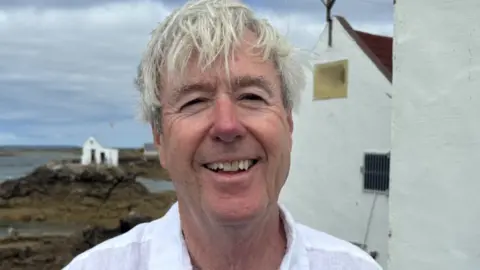
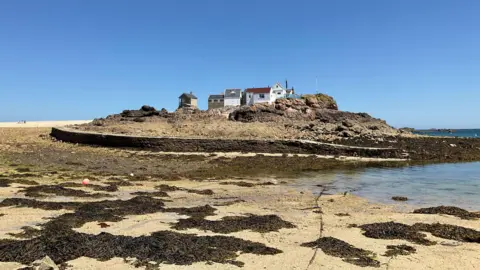
BBCFor almost 60 years, a man and his family have been returning to the same tiny hut on Les Écréhous - a group of remote islands and reefs lies six miles (10km) off Jersey and eight miles (13km) from France.
There are no roads, no shops, no permanent residents.
Instead, a cluster of small fishermen's huts sits among one of the largest intertidal zones in Europe, surrounded twice a day by tides that can rise and fall by about 40ft (12m).
Those who do visit describe why they keep going back.
Richard Miles' grandmother bought a hut for £500 in the 1950s, when it had only just been built.
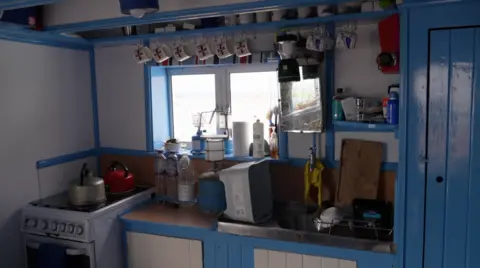
Today it remains in the family - just as many of the huts on the offshore reef have for generations.
"They're never sold [these days]," Miles said. "They're passed down through the same families, which is fantastic."
Miles described his grandmother as an explorer and said he was surprised she managed to buy the hut.
He said: "When she heard it was coming up for sale, she turned to another hut-owner for advice and said: 'Shall I offer £500?'
"He thought she'd never get it for that because he wanted to buy it - but the vendor accepted her offer."
That was in 1956 but the reef's history stretches back much further.
Écréhous is a Norse word.
Écré is derived from Esker, which means skerry - in modern-day language an islet surrounded by rocks.
Hou can be used to describe an island but it was also used to describe an ancient burial, or mound, as in Hougue Bie in Jersey, Miles said.
He added nearby archaeological discoveries by La Société Jersiaise had included finding the remains of a medieval chapel and what was believed to be a Viking burial of a girl.
Miles said she was buried on Maîtr'Île, the largest of the islets.
"She was actually beneath the medieval chapel, but her burial was out of alignment with the floor, so they think the chapel was actually built over her grave without them realising," he said.
Les Écréhous lies in the waters between Jersey and France, with France challenging sovereignty of the reef in 1950.
Miles has been visiting since he was a child and said coming back is "a bit like reviving your childhood".
He said: "It's a place of paradise. It's a place where you hear the birds sing, the fish are out, the lobsters are underneath the rocks, and it's quite a unique place."
Some of his happiest memories were simple ones, he added: catching shrimp in rock pools, searching for lobsters and spending evenings watching the sunset.
"The community, they're wonderful people. We play cards at night and watch the sun go down," he continued.
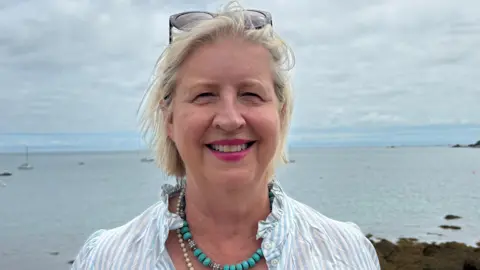
Connétable Karen Shenton-Stone's parish of St Martin administers Les Écréhous.
Hut-owners pay parish rates and parish officials travel out by boat each year to meet residents and talk about any issues needing to be addressed.
She said: "We have a very good relationship with the owners.
"We're very protective of the Écréhous and we feel really honoured to have it in our parish."
Although nobody lives on them permanently, many people spend weeks at a time there during the summer.
"When the tide's in, it's a very tiny area, it's very close-knit. I think they must all get on very, very well to be staying there together," Shenton-Stone said.
The parish also sees the residents as important custodians.
Shenton-Stone said: "They are very vigilant, so they will report anything that might be slightly off or something slightly unusual. It's very good to have a group of people like that.
"On the whole, it's very quiet, but we have great respect for the people who stay there and the hut-owners."

The reef is protected under the Ramsar Convention, recognising it as wetland of international importance for wildlife.
Andrew Mitchell chairs the local Ramsar advisory group, and owns a hut on Les Écréhous.
He said the reefs had shaped more than just childhood memories.
He said: "Going to a place like that as a youngster gave me my first taste of real wilderness.
"Sitting up at night looking at shooting stars, feeling the wind beating down on the rocks and calm days when you could walk and swim in beautiful clear rock pools - that inspired me to go on and become a conservationist."
He went on to study zoology and work around the world, but said one place still stood above the rest.
"I still come back to the Écréhous and think it's the best place anywhere," he said.
"I'd still hope it was a very special place where anyone in Jersey could go there and, just for a moment, experience real wilderness and let it get into their hearts."
Follow BBC Jersey on X and Facebook. Send your story ideas to channel.islands@bbc.co.uk.
