Researchers receive £1m to develop heart disease drug

 Getty Images
The University of Aberdeen has received funding of a little over £1m to continue developing a drug to help tackle heart disease.
The drug called Trodusquemine, proved effective when tested on mice in 2017, when it was shown to "melt away" fat in the arteries and reduce "bad cholesterol".
Aberdeen researchers hope the research can help people living with severe atherosclerosis - the most common cause of heart attacks and strokes.
The funding from the British Heart Foundation (BHF) has been awarded as part of a five-year programme and will allow data to be obtained to take the drug to the stage of human clinical trials.
The additional pre-clinical research will build up on the studies done in the past decade.
In 2017 the drug was tested on mice and in 2023 on humans, when 30 healthy volunteers and 30 with artery diseases took part in the research.
The tests have shown that "bad cholesterol" levels can be reduced by targeting the enzyme which promotes the build-up of fatty plaques in arteries.
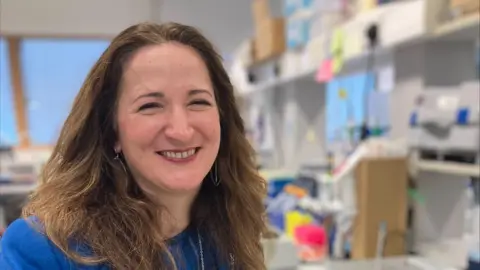
Prof Mirela Delibegovic from the University of Aberdeen said: "It's early‑stage work, but if the results are encouraging, it could eventually open the door to a new type of cholesterol‑lowering treatment for people who currently have limited options."
She said the drug could provide a "new opportunity" for treatment of patients with atherosclerosis that do not respond to statins.
As part of the project the University of Aberdeen will collaborate with the UK universities of Liverpool, Leeds, Dundee, as well as European universities in Copenhagen in Denmark, Nantes in France, and Leiden in the Netherlands.
Prof Delibegovic said they planned to work together to look at mechanisms of how the new drug treatment may be working and impacting people living with severe cardiovascular disease.
