Racing past informs working-class writer's debut

 Rob Irish
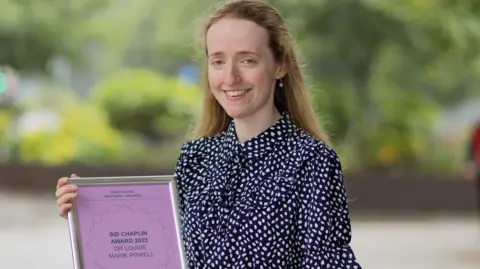
A woman who grew up around independent greyhound racing has written a novel to reconstruct the "lost" working-class community.
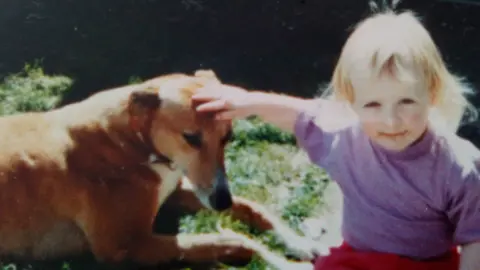
Commonly referred to as flapping, Dr Louise Powell, from Middlesbrough, said she was at the tracks from being a baby and they were a massive part of her family's life.
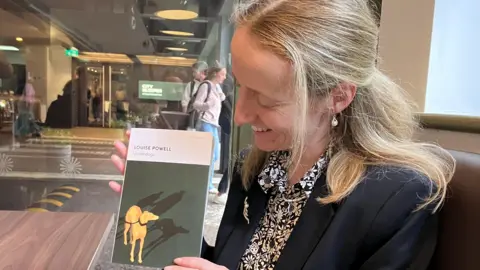
Based on the track at Easington, County Durham, Underdogs follows 10-year-old George and his dad Reg as they turn to flapping in an attempt to put food on the table after the mines closed.
The novel took the 34-year-old more than six years to write because she was also caring for her dad after he was diagnosed with cancer.
The first 6,000 words of Underdogs won her the Sid Chaplin award for working-class writers.
She said the first thing she had to do was learn to write a novel before finding the right way to tell the story, especially as so many of her own experiences informed it.
The novel, which is set in 1998, is written entirely in an East Durham dialect, which Powell said was a priority to her to capture the setting beyond the physical descriptions.
 Anne-Marie Powell
"Growing up, I was bullied at primary school really badly and I really felt I didn't belong there because my family were on benefits," she said.
"But at the flapping track, there were a lot of kids and families who were in our position.
"The mines had shut down, there was lot of unemployment, jobs lost, redundancies and so a lot of them were also in receipt of benefits or they were going through similar struggles to my family.
"So I really got a sense of belonging in the community."
Flapping tracks were often set up by former miners, Powell said.
"It was almost like an alternative economy.
"People would be trying to land a gamble near Christmas or they'd be trying to win a big handicap near Christmas because that would get presents for the kids and put turkey on the table."
Flapping operated outside of greyhound racing's governing bodies, however, the Welfare of Racing Greyhounds Regulations were introduced in 2010 which are regulated by local authorities.
Licensed greyhound racing has since been outlawed in Scotland and Wales due to pressure from animal welfare groups, which said there were significant welfare issues surrounding the sport.
It remains legal in England.
 Anna-Marie Fitzgerald
Powell said there were many reasons for writing in the local dialect, but one of the central reasons was to try and preserve a "lost world".
Easington, the track that the novel is based off, is now a housing estate.
"It was really important to me to do it that way because it's about a lost world, we don't have flapping tracks anymore," Powell said.
"I was really trying to reconstruct that world, not just how it looked.
"I feel like it's such an important part of our identity as well and the identity of County Durham, and we should be proud of that."
Powell said she was championed by northern writing charity New North Writing throughout the process and its support was especially welcome when her dad became unwell.
"There were lots of times when I said to them I don't think I'm cut out for this, I don't think I'm a novelist, I just think this is too big for me," she said.
"They were great, they were just like, be patient with yourself and we know that you've got it in you, we know you've got it to become a novelist."
