Tourist chiefs continue 'be kind' influencer drive

 Getty Images
A scheme seeing social media influencers paid to encourage visitors to respect the outdoors is being brought back this summer.
The Lake District National Park Authority (LDNPA) spent £6,000 last year enlisting two content producers for a pilot project to "educate more people about how to visit responsibly".
Eight items reached 1.8 million social media users across Instagram, TikTok and YouTube, according to the organisation.
Now with a £10,000 budget, this year's campaign to "be Lake District kind" comes as the area once again faces pressures caused by inconsiderate parking, illegal camping, fly-tipping and littering.
The LDNPA said it remained keen for everyone visiting to "leave no trace" as espoused by the Countryside Code, and that using influencers would enable that message to spread "far and wide" by reaching more people than would otherwise be the case.
A spokesperson said the campaign aimed to "share responsible visiting messages with new audiences, particularly those who are inspired to visit after first seeing the national park on social media".
It will work alongside "in-person engagement and education," they added.
Funding for the scheme has come from the Cumbria Strategic Visitor Management Group, a partnership including the LDNPA, councils and landowners such as the National Trust.
The LDNPA said the money would pay for "a range of work... to share messaging around responsible camping and the impact of wildfires".
 Wasdale Action Group/A Wasdale Lad
Cameron Occleston, who posts on platforms including Instagram and X as CamIsExploring, was one of the influencers the LDNPA worked with last year.
He will continue his involvement having been announced as the organisation's first brand ambassador.
About 18 million people visit the Lake District each year, but residents and businesses say they face a host of problems.
They include tents being set up along lakeshores with fires and barbecues scorching the earth and equipment and litter often being left behind.
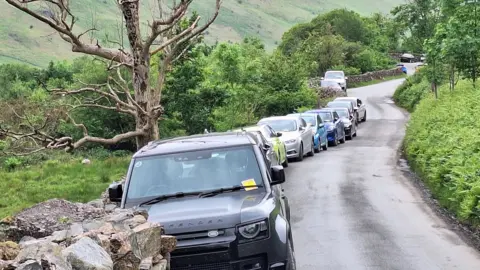
Narrow county roads are also frequently blocked by lines of parked cars with emergency services warning they may be unable to get past when needed.
Follow BBC Cumbria on X, Facebook, Nextdoor and Instagram and listen to Radio Cumbria on BBC Sounds.
