New liveable neighbourhood will have roadblocks

 BBC
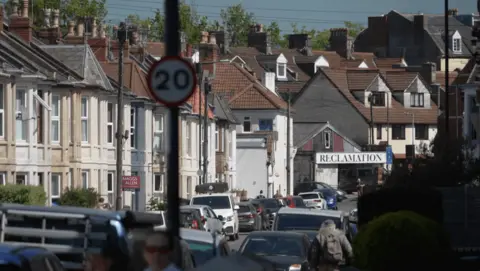
BBCA project to reduce traffic in several city neighbourhoods will include some roadblocks, despite opposition from residents.
Bristol City Council have confirmed some roadblocks will still be used when the South Bristol Liveable Neighbourhood, a scheme to help improve air quality, is re-designed.
It comes after residents marched to city hall in February, some displaying placards saying "no to road blocks", concerned about access for emergency services and the elderly.
Green Party councillor Ed Plowden, the chair of Bristol council's transport committee, said the revised plans would be published in June and would include a reduction in how many zones some areas were divided into.
Plowden also admitted some of the proposals "were maybe a little bit over-engineered".
The liveable neighbourhood scheme includes the Bedminster, Southville and Windmill Hill areas of the city.
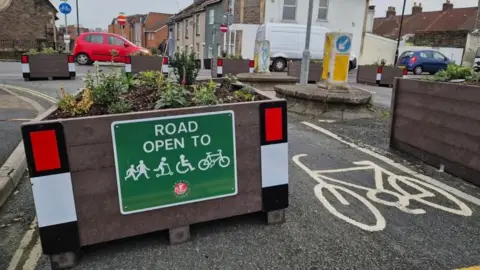
Under the previous plans, the Southville area was to be divided into four 'zones', with traffic controls, including bollards and planters, used to prevent people from outside the area from cutting through residential streets.
The roadblocks would then force those driving between the zones, onto boundary roads.
"We're still committed to a liveable neighbourhood in Southville, but it's going to have less modal filters," said Plowden.
"We will still be putting in some modal filters or roadblocks, but many fewer," he added.
 Alex Seabrook
While Labour councillors have "cautiously welcomed" the plans, councillor Tom Renhard, who sits on the transport committee, said the proposed plans for Southville were "not clear".
"I'd urge them to provide clarity as soon as possible."
"I can't tell you exactly what's going to happen at the moment because we've got to go back to the drawing board," said Plowden.
"We've got to take on board the feedback we've had, and we've got to make sure that we design a scheme that still works," he added.
About £2m is being spent on designing the scheme, but a consultation revealed in some neighbourhoods more than 70% of residents were against the proposals.
If the transport committee votes in favour of the business case in the autumn, it will then be put to the metro mayor Helen Godwin, who decides whether to allocate government funding for the work to go ahead.
Defending the cost, Plowden said: "It does seem like a large amount of money, but the benefit will still be far, far higher than the cost."
Plowden also said there was "too much car-dependency" in Bristol.
"We're trying to look to the future, we're trying to get people to travel around more easily," he added.
Follow BBC Bristol on Facebook, X and Instagram. Send your story ideas to us on email or via WhatsApp on 0800 313 4630.
