Charity shops are closing amid 'terrifying' costs

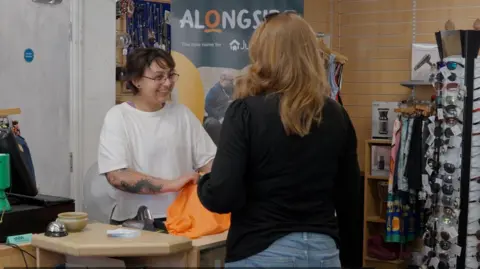 Alongside
Charity shops are facing closures as soaring wage bills, higher energy costs and evolving shopping habits put growing pressure on the high street.
Gemma Turner, from homelessness charity Alongside, described the situation as "absolutely terrifying", saying rising costs could directly affect the support charities are able to provide.
"Charity shops can't capture the full effect of changing shopping habits," said Bristol-based retail expert Susannah Streeter.
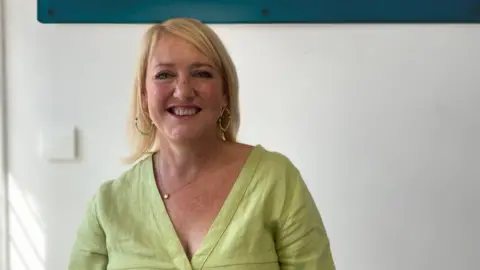 Alongside
Alongside, formerly known as Julian House, which supports homeless people in Somerset, Gloucestershire and Wiltshire, said it was leaving some vacant roles unfilled to reduce costs.
The charity has seven stores across the West of England including in Bath, Bradford-on-Avon, Frome and Devizes.
It relies on its shops to help fund services, meaning any drop in income can have a direct impact on the support it provides.
Turner, head of retail at the charity, said their business rates had increased by 176% since 2024 and staff costs were up by 27%.
"It's absolutely terrifying," she told the BBC. "It sounds like a small impact, but if you multiply that across a chain of shops it has a massive impact on income."
The British Heart Foundation recently said it plans to close around 150 shops across the UK, citing mounting financial pressures.
Cancer Research UK, which has 17 shops in the West including in Bristol, Swindon, Taunton and Gloucester, announced in October it would be closing 90 shops across the UK.
It said retail had been "critical" in raising £225m over the past decade, but recognised consumer behaviour was changing.
"Like many high street retailers, we're faced with rising costs, inflationary pressures, and changing consumer habits - including reduced footfall, higher national insurance contributions, and growing competition from online resale platforms," the charity said.
Changing shopping habits
Meanwhile Oxfam, which has more than 500 stores across the UK, said it was also adapting to a "changing climate" as consumer habits shift.
"Footfall has declined in recent years as people make more considered, conscious purchases," said Rachel Cosgrove-Pearce, retail director at Oxfam GB.
"We are not immune to rising costs, but we have a robust retail strategy in place and are adapting to a challenging climate."
Streeter, chief investment strategist at Wealth Club, based in Clifton, Bristol, said there had been a "cultural shift" among younger consumers who were seeking out pre-loved items.
"Higher wage costs and energy bills are hitting [charity shops] hard and the headwinds from resale fashion sites are becoming stronger," she said.
"Vinted, Depop, eBay and Facebook Marketplace are increasingly popular.
"They offer the convenience of browsing and buying online from the comfort of a sofa while many charity shops have largely missed that digital transition."
 The Spotted Leopard
Second-hand seller Som Musleh, aka The Spotted Leopard on Vinted, said while such resale platforms had created competition, they were not the main reason shops were closing.
"We've over-consumed on pretty much any measure," she said. "Pre-loved clothing only makes up about 10% of clothing sold."
She argued the deeper issue was inequality, not competition and said there were enough pre-loved clothes to last for the next six generations.
Musleh, who splits her time between Weymouth and Bristol, added: "No doubt, Vinted has created some competition. But the thing that's driving shop closures is inequality.
"We're about to have our first trillionaire but the use of food banks is going up."
Some charities say they are trying to adapt by cutting waste and finding new ways to generate income.
Turner said Alongside was looking at ways to save money, including introducing a clearance rail in some shops to minimise waste.
"We are looking to recruit volunteers who can mend and up-cycle garments that we would otherwise have to waste," she added.
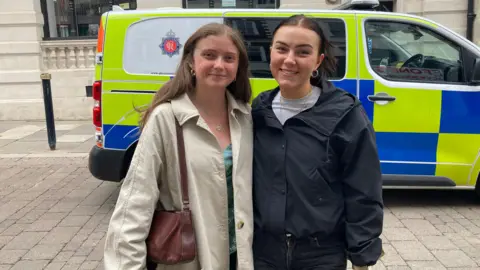
In Gloucester, shoppers Romana Protsyscyn and Milly Robinson say charity shops offer something that online resale platforms cannot easily replicate.
"I sometimes use Vinted but it takes a lot of effort sometimes," Robinson said.
Protsyscyn said charity shops had been essential during her student years.
"I learnt when I was a student to go to charity shops to buy all your outfits, all your plates and stuff, your pots and pans," she said.
Both women said they would feel the loss if more shops were forced to close.
"I'd be gutted if they went, they're so helpful," Protsyscyn added.
Follow BBC Bristol on Facebook, X and Instagram. Send your story ideas to us on email or via WhatsApp on 0800 313 4630.
