The West is in drought - what does that really mean?
Swathes of the West Country are now officially in drought, as the hot, dry weather continues.
The Environment Agency (EA) has confirmed more than half of England - including Somerset, Bristol, South Gloucestershire, Gloucestershire and Wiltshire - had met drought conditions.
With the fourth heatwave of the year now under way, impacts of the weather are being felt across the region including increased wildfires, low river levels and early harvests.
But what is a drought, exactly? And what does it mean for how we should all use water?
What is a drought?
There is no single definition of drought, but it normally refers to a period of unusually dry weather that impacts people, nature and the wider environment - all factors the EA takes into consideration when deciding whether to declare one.
Its decision to announce the drought indicates the EA is stepping up its response to the conditions, including controlling how much water can be taken from rivers and groundwater.
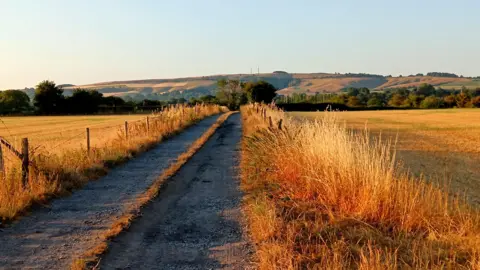
With a few days left to go, this month could end up as the driest July on record, with England having just 7% of expected rainfall, and southern England seeing just 1%.

 Chully/Weather Watchers
Helen Wakeham, director of water at the EA and chairwoman of the National Drought Group, explained: "The hot and dry weather means we are currently using water faster than nature can replenish it."
The conditions in 2026 have been unusual as January and February were very wet for much of the UK, helping to replenish reservoirs and groundwater.
But the exceptionally hot recent conditions mean this drought has been referred to as a "flash drought", with the rapid change in weather sometimes called "climate whiplash".
Will there be a hosepipe ban?
Of the four water companies serving the West Country, only Thames Water has announced a hosepipe ban for its 10 million customers.
The restrictions mean hosepipes should not be used for watering gardens, cleaning cars, filling paddling pools or swimming pools, or cleaning windows.
The drought declaration does not automatically mean customers elsewhere will suddenly face a hosepipe ban.
Bristol Water, Wessex Water and Severn Trent Water are all without restrictions, but they are still urging residents to use water carefully.
Both Bristol Water and Wessex Water have said there are no plans to introduce a hosepipe ban this summer.
A spokesperson for Wessex Water added that prolonged hot weather combined with high demand for water means there is a limit to how quickly water can be moved through the network, particularly during the busiest times of day, which can affect water pressure in homes.
What should customers do?
All the water companies the BBC contacted issued advice for customers, urging them to make small changes to their water usage to help with supply.
These include:
- Swapping out a garden hose for a watering can
- Reusing paddling pool water for plants
- Avoiding sprinklers
- Taking shorter showers
- Only run washing machines and dishwashers with full loads
- Put a jug of tap water in the fridge, rather than running the tap to get a cold glass of water
Follow BBC Bristol on Facebook, X and Instagram. Send your story ideas to us on email or via WhatsApp on 0800 313 4630.
