Soldiers not seeking immunity over Troubles cases, says veterans commissioner

 BBC
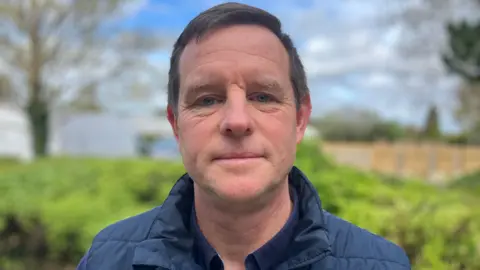
BBCFormer soldiers are not calling for immunity from Troubles-related prosecutions but want "fairness and balance", Northern Ireland's veterans commissioner has said.
David Johnstone said veterans wanted a process that understands context and said a coroner's inquest was not the best route to examine legacy cases.
He was speaking after an inquest into the shooting of five people in west Belfast in 1972 found that the Army "lost control" in a number of cases and "overreacted to a perceived threat".
West Belfast MP Paul Maskey has called for a legacy act that does not offer amnesty to British soldiers.
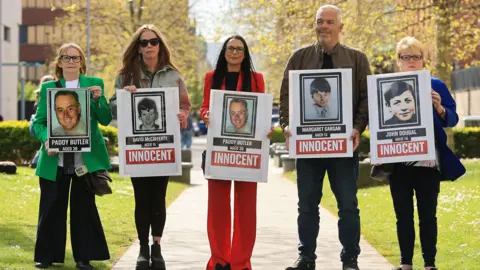
Fr Noel Fitzpatrick, 42, father-of-six Patrick Butler, 37, 15-year-old David McCafferty, 16-year-old John Dougal and Margaret Gargan,13, were shot dead in the Springhill estate in west Belfast.
On Thursday, Coroner Mr Justice Scoffield concluded that the force used in all five shootings was "not reasonable".
'Soldiers families also deserve truth'
Speaking about the inquest on Good Morning Ulster on Friday, Johnstone said no veteran is "afraid of truth" and added that the young soldiers actions at Springhill should be seen in the wider context of violence in 1972.
"I think the findings in this case again highlight the coroner's inquest is not the best route to examine legacy cases," he said.
"About 472 people lost their lives in 1972. There was 109 soldiers killed, many of them in Belfast. And those families also deserve truth."
A new framework aimed at addressing Northern Ireland Troubles' legacy cases was agreed by the UK and Irish governments last September.
The new deal reforms the controversial Legacy Act, which had included a conditional amnesty and was strongly opposed by victims' groups and all political parties in Northern Ireland.
The government has faced pressure from veterans and some MPs who have said the legislation does not go far enough when it comes to protections for veterans.
"The veterans that I speak to and represent are not looking for some type of immunity," Johnstone told BBC News NI.
"What veterans want and what we've been lobbying for is a process that makes sure that there isn't vexatious prosecutions.
"That our legal system is not used simply to bring forward cases where there's no new evidence and where the threshold of evidence has to reach a bar of beyond reasonable doubt.
"That's what we want, fairness and balance."
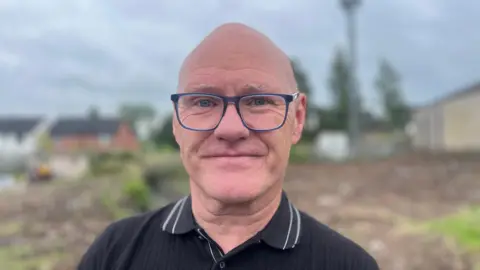
Sinn Féin MP Maskey said the coroner's findings vindicate families who have long maintained their loved ones were innocent and shot without justification.
"Sitting through the court yesterday, it must have been very hard for the family members, but it was something that they already knew," he said.
"Their family members were shot in the back. Soldiers lost control on the streets of Springhill and Whiterock.
"That is something that the family members already knew but to hear it again at the court, to me, that justifies what the family have been saying all along."
He warned against moves to limit future prosecutions adding that victims families would never accept immunity for soldiers.
"There can't be any amnesty for British soldiers because I don't think families will ever, ever accept that."
 PA Media
What is the Legacy Act?
The then Conservative UK government passed the Northern Ireland Troubles (Legacy and Reconciliation) Act in 2023.
It offered conditional immunity from prosecution to anyone involved in Troubles-era crimes, including paramilitaries and members of the security forces in return for cooperation.
The law was widely criticised by victims' families, political parties and the Irish government for effectively shutting down prosecutions.
Parts of the act were later ruled unlawful by the High Court in Belfast increasing pressure on the government to change it.
The current Labour government is moving to repeal and replace the act, removing its immunity provisions.
A new legacy bill is being developed but it has been delayed and remains the subject of political disagreement.
