Prime minister apologises to families of five shot dead by the Army in 1972

 PA
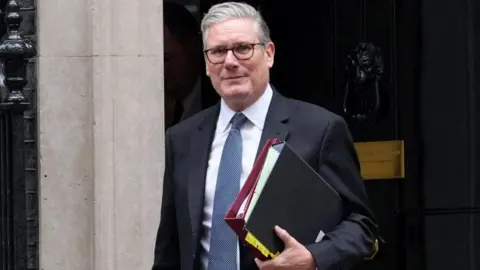
PAPrime Minister Sir Keir Starmer has apologised to the families of five people shot dead by the Army in Belfast in 1972 after an inquest found soldiers "overreacted to a perceived threat".
The move comes after the victims' families accused the government of a "deliberate silence" following the inquest's finding in April.
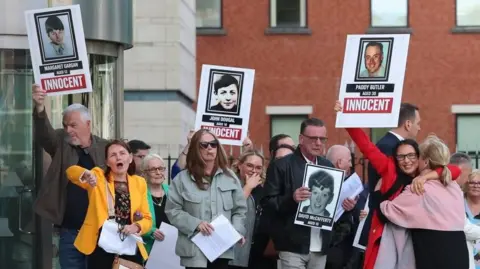
Fr Noel Fitzpatrick, 42; father-of-six Patrick Butler, 37; 16 year-old John Dougal; 15 year-old David McCafferty; and 13 year-old Margaret Gargan were killed on the Springhill estate on 9 July 1972.
In April, a coroner concluded the Army "lost control" in a number of cases.
Speaking in the House of Commons the prime minister said the findings of the inquest were "sobering".
He added: "While the circumstances in which the events occurred were undoubtedly challenging it is the duty of the state to hold itself to the highest standard.
"The government accepts and deeply regrets these findings and recognises their gravity.
"On behalf of the government I want to apologise unreservedly to the families for what happened and for the grief and trauma that they have endured since the tragic deaths of their loved ones."
The prime minister also apologised in a letter to each of the five families.
'Years of long, hard fighting to get to this point'
 PA Media
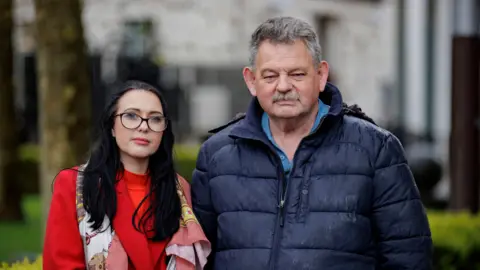
The families of those killed said they welcome Starmer's apology, describing it as a "significant and long-overdue acknowledgement of the truth established by the Springhill inquest".
Margaret Gargan's brother Harry said he thought it was "genuine" and has allowed the families to "conclude" their journey.
Gargan said he doesn't think he will ever get over Margaret's death and he still harbours guilt because of it.
He said his father had initially asked him to go to their home and check on the rest of their siblings but he said no, so Margaret went instead.
"That'll always be with me," he said.
"I'll get on with my life but I'll be more happy with myself now that we've got here because for 54 years you never thought you were going to get anywhere."
Patrick Butler's granddaughter Natasha said she felt quite "overwhelmed and emotional".
"It's taken 54 years of long, hard fighting to get to this point.
"I think very much of my grandmother who is no longer with us who started this fight to find out answers for my granda and now I will be finishing it."
What did the Springhill inquest find?
 PA Media
The inquest received its final submissions in April 2024, just hours before the deadline imposed by the 2023 Legacy Act to end conflict-related inquests.
On 30 April, the coroner Mr Justice Scoffield found the force used in all five shootings was "not reasonable".
The court heard four of the five people killed were shot by the same soldier, and two were killed by the same bullet.
Margaret Gargan was shot "directly in the face" by a different soldier on the same day.
The coroner said the "force used was not reasonable" and that it was "not in compliance with the yellow card" in the Army's rules of engagement.
No warning was given before the shootings.
The coroner said Fr Fitzpatrick, Patrick Butler, and Margaret Gargan were "wholly innocent victims" and David McCafferty was "regarded as an innocent victim".
He said while John Dougal's conduct prior to his death "remains unclear and suspicious", he "should not have been shot, having been shot in the back while retreating".
In a statement following the verdict, the Ministry of Defence (MoD) said they acknowledged the coroner's findings and were "considering them carefully".
"We remain firmly committed to supporting our veterans and to the delivery of truth, recovery, reconciliation, and closure."
As the coroner was delivering his findings on 30 April, secretary of state for Northern Ireland Hilary Benn expressed his "profound condolences to the families".
"We will all need to read the full coroner's report, which I haven't yet and have not had an opportunity to do so," he added.
'Nothing can undo the pain and loss'
First Minister Michelle O'Neill said Starmer's apology is an "important acknowledgement of the suffering endured by these families over many decades".
"Nothing can undo the pain and loss experienced by those who lost loved ones that day. But acknowledgement matters. The Springhill families deserve the truth, and they deserve to have that truth publicly recognised.
"These moments matter not only because they recognise individual loss, but because they affirm and expose the actions of the British army against the Springhill community," O'Neill said.
Social Democratic and Labour Party (SDLP) MP Claire Hanna said while an apology can "never undo the loss and grief of families, we by now know the healing power of information, acknowledgement and apologies for many families".
