Young jobseekers 'discouraged' by ghosting and AI

 Josh McLaughlin/BBC
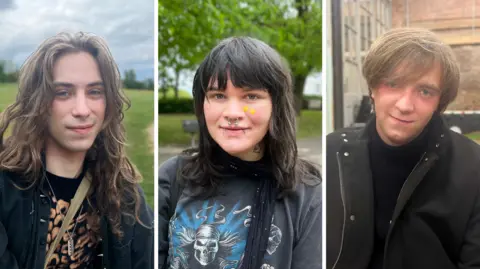
Young people in the South East have said being "ghosted" and rejected by employers has made them feel "lost" while seeking their first full-time jobs.
UK job vacancies fell by 28,000 (3.9%) to 705,000 between February and April, the lowest in five years, latest Office for National Statistics (ONS) estimates show.
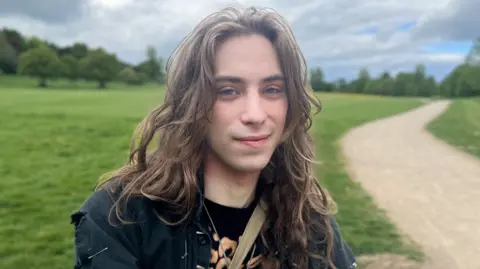
Fergus Chamberlain, 22, from Hastings, in East Sussex, said "radio silence" from employers during his final year studying computer science at the University of Brighton left him "completely discouraged".
Dan Hawes, co-founder of the Graduate Recruitment Bureau (GRB), said graduate roles were attracting about 140 applications each, as AI tools allow people to apply "at speed, at scale".
"It makes my degree feel worthless in the sense that there's not a lot of jobs in it and they're very competitive," Chamberlain added.
 Josh McLaughlin/BBC
He said he has applied for over 100 minimum wage retail jobs and 40 local computer science roles while wrapping up his studies.
"Most of them are in London or further north and I don't want to move out of Brighton," he told BBC News.
Chamberlain is currently working a seasonal zero hour contract which he said is "not sustainable" and he believes a lack of job security in senior roles and the prevalence of AI is causing a squeeze to entry-level ones.
"It feels like people aren't willing to pay someone to be bad at something when AI can do it for way cheaper," he added.
 Josh McLaughlin/BBC
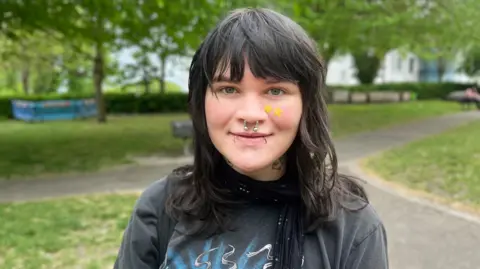
As a first-year song writing student, Lucian Clover, 20, in Brighton, has also been applying for full-time roles.
"There have been times when [me and my partner] haven't really been able to afford food and that's really hard," they told BBC News.
While Clover works as a freelance social media manager at MyPocketSkill, they said the hardest part about applying for permanent jobs is "ghosting" from employers.
"When you don't hear anything back you have no idea how to improve, so it feels a bit unfair and gets in the way," they added.
ONS estimates show 729,000 people aged 16 to 24 were unemployed between January and March, up from 620,000 a year earlier, while the youth unemployment rate rose from 14.2% to 16.2%.
The ONS said there were 2.5 unemployed people per vacancy across the UK between January to March.
Claimant count figures from ONS/Nomis show the rates of young people claiming unemployment-related benefits in April.
In Hastings, 625 people aged 18 to 24 were claiming unemployment-related benefits, equivalent to 10.7% of residents in that age group – the highest rate in East Sussex.
Thanet had the highest rate in Kent at 11.7%, Crawley was highest in West Sussex at 7.5%, and Spelthorne was highest in Surrey at 5.9%.
The overall South East rate (4.9%) was below the UK average at 5.7%.
The claimant count is not the same as unemployment. It only includes people claiming unemployment-related benefits, but can indicate local job market pressures.
A 2025 youth jobs gap report by Impetus identified Brighton & Hove and East Sussex as areas in the South East where some young people face a high risk of becoming NEET (not in education, employment or training).
In Hastings, the charity Spear supports 16 to 24-year-olds facing barriers to work and education through coaching, confidence-building and employability programmes.
 Josh McLaughlin/BBC
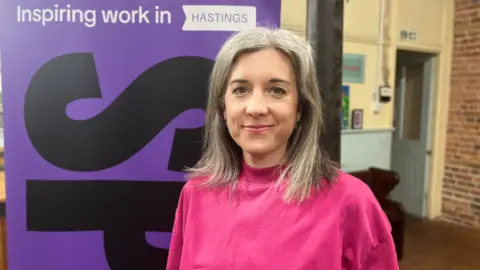
Ness Morse, its centre manager, said: "About 60% of our young people have left school without five GCSEs and they often don't have their English and maths."
She said "mental health struggles" and "social isolation" can compound and make finding a job much harder for NEETs.
Hastings' "seasonal economy" and fewer medium and large companies makes the search for local jobs harder, she told BBC News.
"I understand it is a complicated picture for employers too," Morse added.
"But we need to take a chance on young people – to believe in them."
 Josh McLaughlin/BBC
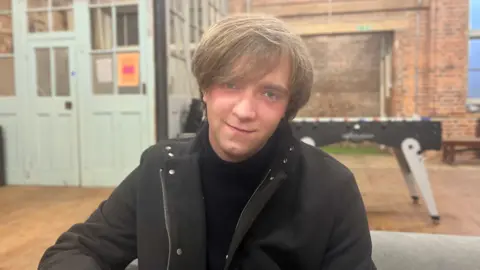
Matthew Bothwell, 24, from St Leonards-on-Sea, said he was "in the bowels of Universal Credit applying constantly for jobs" before being signposted to Spear.
"Where it's just you on your own in your house, on a computer searching for jobs, it doesn't feel like you can see where you're going with your life," he told BBC News.
He described studying at college when the Covid-19 pandemic hit as a "train going through" him and his prospects.
With newfound interview skills and networking from the programme, he now has a job cleaning caravans.
"If you don't think you can do it, just go out and talk to people because you never know how much you can gain," he added.
How can young jobseekers stand out?
Hawes from GRB – a national graduate recruitment service based in Brighton – said that the UK economy in 2026 is "affecting business confidence and appetite for hiring".
The rise in minimum wage and national insurance contributions also "haven't helped", he told BBC News.
Sending "speculative applications" and ones to small and medium businesses could open a "huge hidden market, especially in Sussex", Hawes said.
He also suggested that successful candidates have often roleplayed interviews, followed up with recruiters and have been open to relocating.
 Josh McLaughlin/BBC
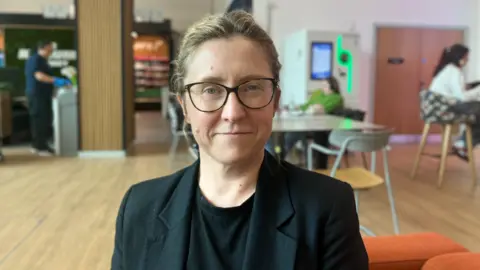
Emily Huns, head of careers and entrepreneurship at the University of Sussex, advised young people to submit "fewer high-quality, authentic applications" rather than "identical, poorly researched" ones.
"[Employers] don't want an AI-generated version of job applicants," she told the BBC.
"Human-centric skills are in demand in the workplace," Huns said.
She said she had also noticed "household name employers" getting more applications than small and medium-sized ones who "struggle to find talent," with the university creating a "menu of programmes" to connect students and graduates to them.
'Locked out of opportunity'
A Department for Work and Pensions spokesperson told the BBC too many young people were "locked out of opportunity".
"Our youth hubs are bringing employment support to every local area of Great Britain, with three already open in Sussex alone," they added.
"Backed by £2.5bn, our Youth Guarantee will deliver a million opportunities across the country, while Alan Milburn's independent review is investigating the deeper barriers holding young people back."
On looking to his own future, Chamberlain feels "resilient".
To other young people, he said: "Have something that shows what you're capable of, what you're doing and find the people you can show that to."
Follow BBC Sussex on Facebook, X, and on Instagram and listen to BBC Radio Sussex on Sounds. Send your story ideas to southeasttoday@bbc.co.uk or WhatsApp us on 08081 002250.
