Pulling back the curtain on Hull's theatre history

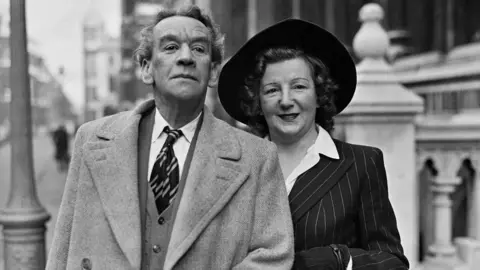 Evening Standard/Getty Images
Hull is full of the buildings of theatre's past, just waiting for the curtain to be pulled back to explore their history. The Hidden East Yorkshire podcast takes a look at some of them.
"It's me, Mother Riley, just flown in for a breath of fresh air," were words that once bounced around the walls of the Tivoli Theatre.
The theatre was situated just about opposite Waterstones on Paragon Street. It was built in 1871 and is now known as Tivoli House.
Drag performer Arthur Lucan, who played Irish washerwoman Old Mother Riley in the 1930s, notoriously died of a heart attack in the theatre's wings before going on stage in 1954.
He is buried in Hull's Eastern Cemetery, one of the many nods to the city's theatrical past.
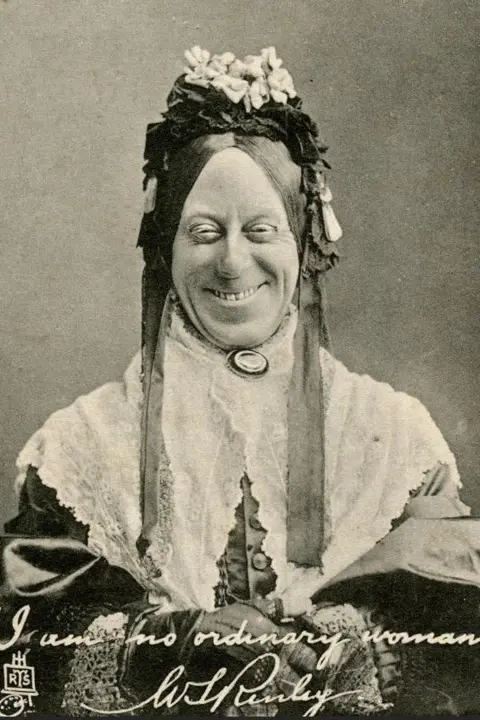 Print Collector/Getty Images
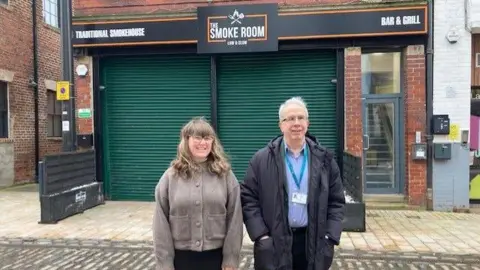
Wandering from Arthur's grave to Humber Street, a blue plaque can be spotted behind the Smokehouse Bar and Restaurant, which was once home to the Theatre Royal.
The Georgian theatre opened on the site in 1769, but burnt down in 1859, and again in 1869.
Martin Taylor, a city archivist from the Hull History Centre, said Georgian theatres "all burnt down at one time or another because of all the naked flames you needed to illuminate the stage and auditorium".
The Theatre Royal was run by a touring company led by Tate Wilkinson, who granted a Royal patent to perform legitimate theatre in Yorkshire, Martin told the Hidden East Yorkshire podcast.
After entering the Hull History Centre, Martin shows us some of the posters advertising the shows that were staged in the theatres.
The posters would have been put up outside the theatres and on other boards in the city, with one showing a double bill, meaning two main plays would have been performed.
Martin said they often "began with something serious, after which a farce for a bit of a light relief" with the lower middle classes, such as wealthy artisans and tradesmen, attending perhaps "once or twice a year".
The prices showed a box ticket would cost four shillings, a pit two shillings, and a ticket in the first gallery sixpence.
Referring to a poster from 1799, Martin said: "It's clear that the theatre was very active, very popular, very good.
"I mean, they're attracting some high quality actresses like Sarah Siddons, and it was clearly very, very popular in the area and at the time."
 Sally Fairfax
However, towards the end of the 18th Century, Martin said the world was beginning to change and "Wilkinson starts complaining about the rising influence of Methodists."
"The God-fearing Protestant people of Hull are turning against the theatre," he added.
When Tate died, his son John took over the theatre that was built in 1810, but ended up going bankrupt, Martin added.
More than 200 years later, the curtain continues to rise in the city with a new 80-seat performance space that has just opened on Humber Street, the Middle Child Theatre.
Beth Murrell, heritage engagement producer for Middle Child Theatre, said: "Hopefully Middle Child can continue a bit of that legacy of theatre on Humber Street now as well."
Listen to highlights fromHull and East Yorkshire on BBC Sounds, watch the latest episode of Look North.
Download the BBC News app from the App Storefor iPhone and iPad orGoogle Play for Android devices
