Family's 'disgust' after carer's sex offences

 Getty Images
The family of a vulnerable woman have shared their "abhorrence and disgust" at her care worker's "abuse of trust", after he was jailed for sexual offences.
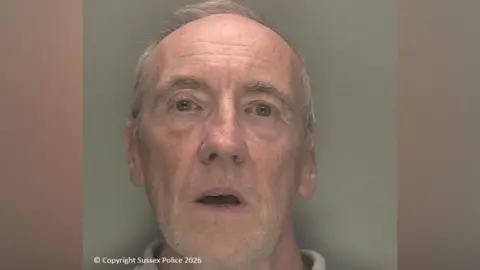
Raymond Seaborne, 66, was jailed for 12 months in April after he engaged in sexual activity with a woman who he was caring for in Sussex in 2024.
Now, the woman's family are urging people to "trust their gut" about anything which does not feel right, after discovering the incident on CCTV cameras they had set up.
Speaking anonymously, the woman's daughter-in-law said: "I was utterly shocked, particularly this is a person who you have put your whole trust in to care for someone who is exceedingly vulnerable."
She added: "It felt like a complete abuse of trust, I felt abhorrence and disgust.
"We want to get [Seaborne's] name out there and let people know this does go on.
"I hope it is rare, but people need to take care and take steps to protect their loved ones if they can."
The daughter-in-law of the vulnerable woman told BBC South East she had been checking footage CCTV cameras which had been placed in her mother-in-law's own home when she found the footage which suggested she had been sexually assaulted.
 Sussex Police
After reporting the incident to Sussex Police, Seaborne was arrested and charged with engaging in sexual activity with a mentally disordered female while acting as her care worker, and engaging in sexual activity in the presence of a mentally disordered person while caring for her.
As well as a prison sentence, Seaborne was also given a Sexual Harm Prevention Order.
Sussex Police's Det Ch Supt Richard McDonagh said such crimes were "thankfully not especially common, but they do happen".
He added: "If you are suspicious, make sure you report it, but this should be evidence-based.
"With that information police can piece together a bigger picture and understand what the underlying issues might be."
CQC: Using surveillance
Care Quality Commission (CQC) guidance on using cameras neither encourages nor discourages the use of surveillance equipment.
The guidance urges anyone considering doing so to "do it in a way that protects people's privacy and human rights" and "put the interests of the person first".
The health watchdog says covert surveillance using hidden cameras or microphones "is only likely to be appropriate in rare circumstances, if you have a pressing reason and only plan to use it for a short time".
"For example, you might decide to use it to identify a specific incident or allegation."
If you have been affected by any of the issues in this story, help and support is available at BBC Action Line.
Follow BBC Sussex on Facebook, X, and on Instagram and listen to BBC Radio Sussex on Sounds. Send your story ideas to southeasttoday@bbc.co.uk or WhatsApp us on 08081 002250.
