Drumcree parade decision to be challenged in High Court

 Getty Images
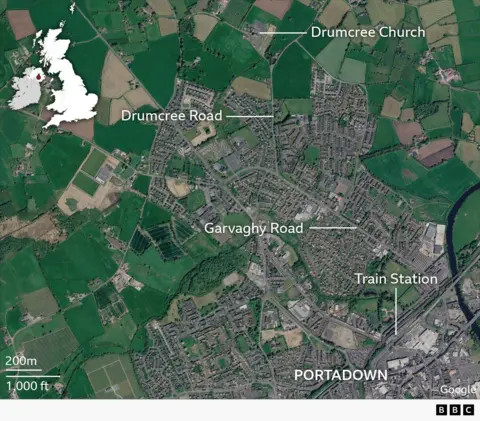
A legal challenge to the Parades Commission's decision to allow the Orange Order to march on the mainly-nationalist Garvaghy Road in Portadown is take place on Saturday morning.
The commission announced that a the parade can go ahead on Sunday, for the first time in almost 30 years, with restrictions in place.
Rather than start at 13:00 BST on Sunday as intended, the commission has said the march can depart no later than 08:00 and with 35 participants rather than the 60 the Orange Order requested. No bands or supporters are allowed.
The decision is facing the legal challenge from the Garvaghy Road Residents' Coalition, which opposes the march.
A detailed document known as a determination, which was published on the commission's website on Friday afternoon said: "This decision is not, and should not be perceived, as a victory for one side or a loss for another."
The five-person commission, led by Prof Evelyn Collins, held face-to-face talks with the Orange Order earlier this week, and held a separate meeting with the Garvaghy Road Residents' Coalition.
Senior police officers were also consulted about the planned parade.
Within the 31-paragraph determination by the Parades Commission, details were revealed of conversations held with the PSNI.
The document stated: "The police made both written and oral submissions, indicating that they, at the time of making them, had no information indicating that the parade would result in disorder or violence."
The Police Service of Northern Ireland (PSNI) said it had activated "mutual aid arrangements to support contingency planning for a policing operation" in Portadown on Sunday.
It is understood about 200 officers are coming from Scotland.
 Pacemaker
On Friday, a residents' group on the Garvaghy Road said they were ''furious'' over the decision, adding that the community were "fearful about what will happen over the weekend".
Breandán Mac Cionnaith, from the Garvaghy Road Residents' Coalition, said: "The feelings of people in the local community here, you can describe them as shock, and you can also describe them as anger.
"After 28 years of this community being able to avoid confrontation, the parades commission by their decision is creating the grounds for a confrontation."
DUP MLA Carla Lockhart said residents have "nothing to fear" and asked them not to get "caught up in hysteria".
"Thirty-five men walking down a road silently with no bands in an orderly fashion.
"These men work, live and do business in this community," she added.
She said Sinn Féin should "show political leadership and ensure calm remains across the community".
However Sinn Féin President Mary-Lou McDonald said the decision to allow the parade was "utterly reckless" adding that it shows a "complete disregard" for the rights of the community of the Garvaghy road.
"This is a grave situation, recklessness of this scale of course has implications and consequences."
She called for anyone that can intervene, including the prime minister and taoiseach, to "put this right".
When did the Drumcree dispute begin?
 Getty Images
The Parades Commission has been in the political spotlight since its previous Drumcree determination was quashed in the High Court in August.
A review of the commission has since been ordered by the Northern Ireland Office.
The Drumcree parade dispute began in the mid-1990s and it almost derailed the peace process at the time.
Violence related to the dispute resulted in riots, roadblocks and murders.
When the Orange Order was prevented by police from walking down the route in July 1995 there was a tense stand-off. It was the same for the next three years.
The Parades Commission began operating in 1998 to regulate parades and try to defuse tension around marches.
Its decision not to allow a march down the Garvaghy Road that summer has been challenged by the order over the past three decades.
