Rare wet woodland given protected status

 BBC
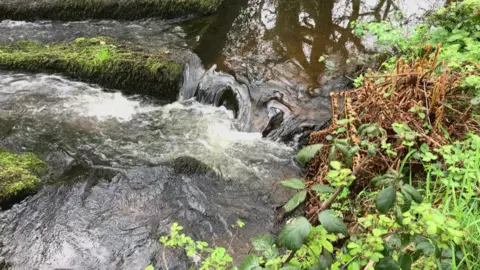
BBCA rare wet woodland has been given protected status after being recognised for its ecological importance.
The area in the Wray Valley, near Lustleigh, Devon, was found to contain rare "wet woodland" and "lowland deciduous habitats", which are considered important at county level.
Six of the 10 acres at Wray Valley campsite have been designated as a County Wildlife Site (CWS) following survey work supported by Dartmoor National Park Authority through Defra's Farming in Protected Landscapes programme.
The designation, awarded by the Devon Biodiversity Records Centre, means planners must now consider the site's environmental value when assessing development proposals.
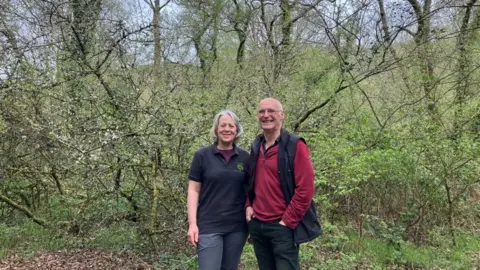
The site is co-owned by Michelle Grist and Kevin Chamberlain, who opened it as a camping and bed and breakfast site shortly after the Covid pandemic.
Grist, an environmental and sustainability consultant by background, said the woodland was of international significance.
"It is a globally important habitat," she said. "People know all about the Amazon and the equatorial rainforest, but the Atlantic temperate rainforest is much rarer.
"It's a temperate rainforest. The UK is extremely poor when it comes to nature and biodiversity, so sites like this act as an oasis.
"This particular site connects ancient woodlands within the National Park on both sides, providing a corridor for wildlife to move between different woodland areas."
Kevin Chamberlain said many visitors were drawn to the site to escape high-pressure jobs.
"We get a lot of people from high-stress roles, including medical professions," he said. "It's how it all started after Covid, when we first opened.
"We had a lot of people saying they just wanted to get away from it all, to be on their own, and to have peace and quiet.
"It's just to be out here enjoying the sights, sounds, and woodland scents, as well and just being able to relax."
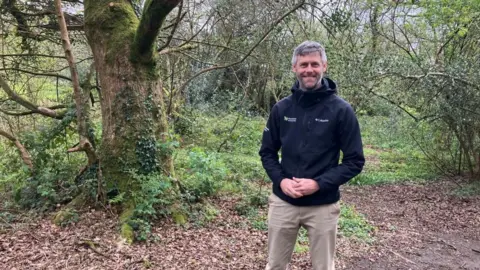
James Wright, from Dartmoor National Park Authority, said the CWS designation helped formally recognise what had long been understood about the site.
"It's provided the evidence to highlight what we already knew was a special place," he said. "It also helps define exactly what's here and how it can be looked after."
There are about 2,000 CWS areas in Devon, representing some of the county's most significant wildlife areas outside nationally protected Sites of Special Scientific Interest.
CWS is a non‑statutory designation and does not offer direct legal protection, but it is considered in the planning process.
Follow BBC Devon on X, Facebook and Instagram. Send your story ideas to spotlight@bbc.co.uk.
