Mum says boy's condition means family cannot go out

 BBC
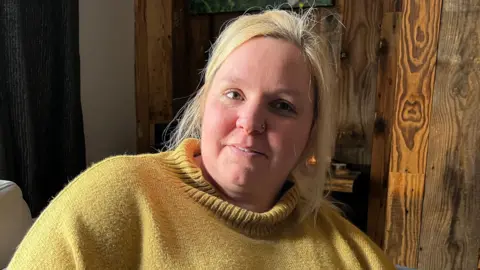
BBCThe mother of an 11-year-old boy who has not left his home in two years says she needs extra help.
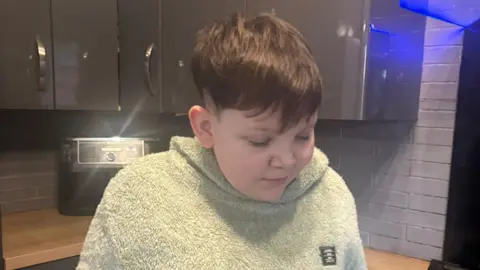
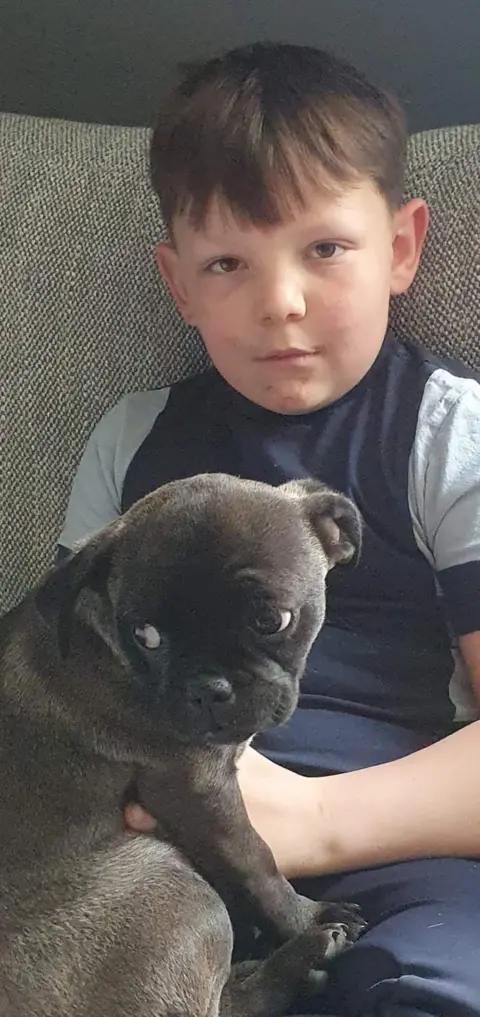
Rory, from Exmouth, Devon, has been diagnosed with agoraphobia, autism and dyslexia, and his mother Lucy said the whole family was now essentially housebound because of his needs, including irregular sleep patterns and currently being unable to attend school.
She said requests for respite care had been turned down by Devon County Council.
A spokesperson for the council said it could not comment on individual cases, but it was "in the process of developing better help for families".
 Family handout
Rory goes to bed in the morning and gets up again in the late afternoon despite taking prescribed melatonin to help regulate his sleep.
It means Lucy also has to stay up all night, on top of looking after her younger child Mya, eight, through the day.
Lucy has a camera in Rory's bedroom so she can monitor him.
She said: "This house never sleeps. Overnight, he's texting me, he's coming up to me, he's running off and down the stairs, banging doors - it keeps us all awake."
 Family handout
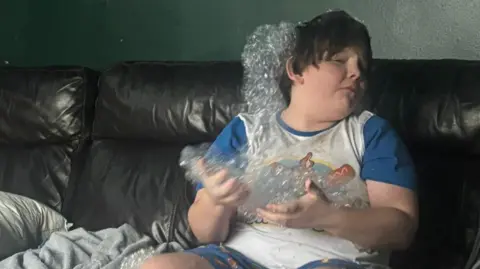
Lucy described the effect of this sleep pattern as "crippling", and also one of the reasons Rory could not cope at school.
He went to a local primary school until two years ago but, eventually, it became too much.
The local authority has since arranged alternative provision for Rory under Section 19 of the Education Act 1996, which aims to provide alternative education provision for children who cannot attend school for various reasons.
Lucy said it was working out as five hours of sessions a week.
She said: "We've got two different teams involved, and they're both really good with Rory, and he is engaging enough with them. But it's no education."
 Family handout
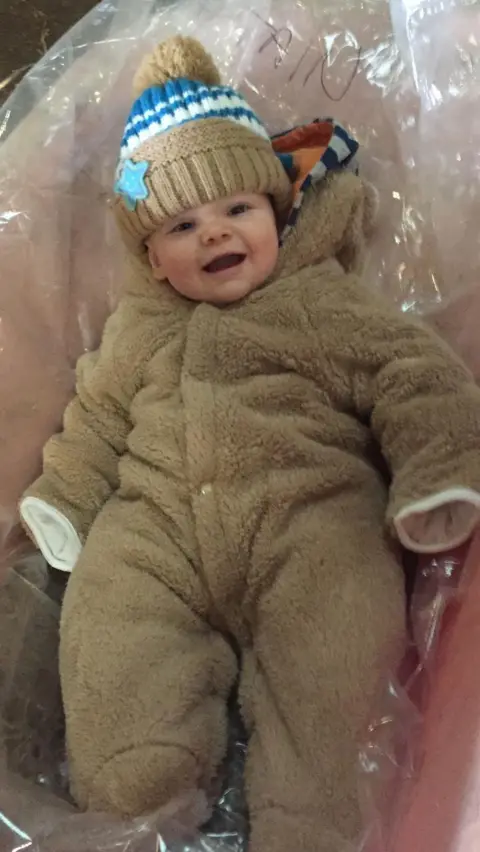
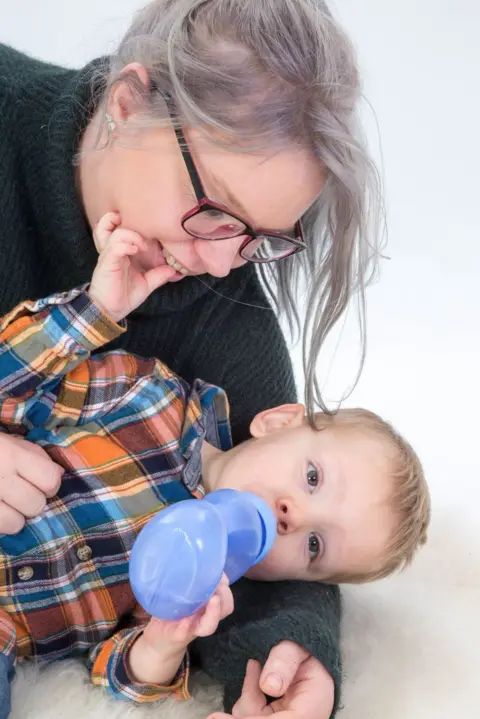
Rory was a much-wanted baby, who Lucy described as a happy, funny little boy who liked to laugh.
"He is my miracle baby, the child I had longed for after a long and difficult journey to become a mother," she said.
But, as Rory got older and he started at a local nursery, Lucy and others started to notice he was not developing in the same way as his peers.
She said: "From the very beginning, he meant everything to me. But, from around three years old, we started to notice he was different."
 Family handout
Rory's most recent diagnosis is for agoraphobia - a complex condition that causes Rory distress and anxiety if he faces unfamiliar situations.
The NHS describes it as a "fear of being in situations where escape might be difficult or that help wouldn't be available if things go wrong".
As a result, Rory currently did not leave the house, and rarely even his bedroom, Lucy said.
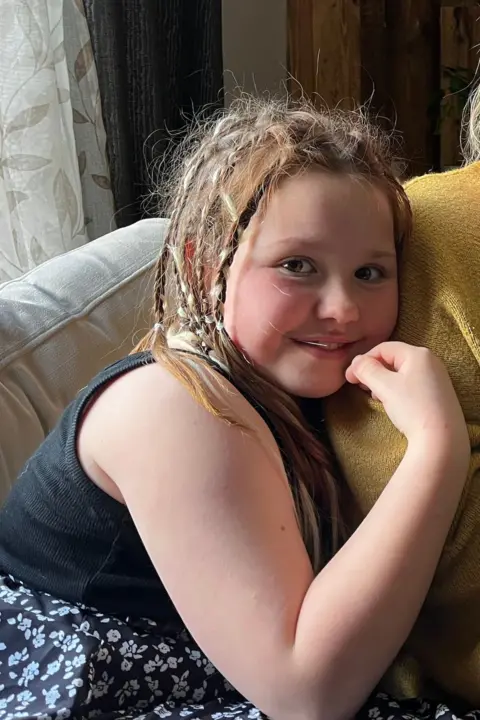
Aside from dropping daughter Mya at school, Lucy and Mya were essentially housebound as Rory could not be left unattended, she said.
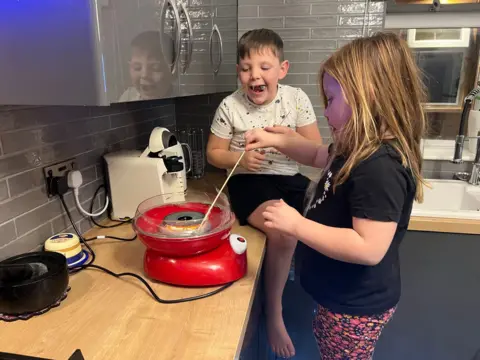
Lucy said: "We never do anything. We can't go on holidays, we can't go on day trips; Mya's really missing out.
"She can't even go to clubs because we can't leave Rory for that long."
 Family handout.
Rory is under the care of the CAMHS - child and adolescent mental health services.
Lucy is also in regular contact with Rory's GP, and a paediatrician monitors Rory as his limited diet of chicken nuggets and ice cream has caused health problems.
The local authority also provides a family intervention team, which offers targeted support for families with complex needs.
But, while this sounds like reassuring support, Lucy said the help in reality was sporadic and exhausting to navigate, and she needed someone trained to support Rory at home.
 Family handout
She said: "I've been told many times that we can have respite care, or we should be in some sort of support, but it gets declined [by Devon County Council] every time.
"They say Rory is behavioural. But it's not behavioural - this is Rory."
The National Autistic Society said it believed Rory's autism diagnosis should mean he was classed as disabled and, therefore, qualified for support.
The charity also said his case was far from unique.
Policy and public affairs manager Joey Nettleton Burrows: "One in six autistic children have not attended school since September in this current school year.
"That's due to a lack of support, mental health conditions such as anxiety, and unsuitable school environments."
Nettleton Burrows said Lucy's desperation was a story that the charity also frequently heard.
He said: "Too many autistic people and their families having to constantly fight to access basic support, due to broken certain social care systems that fail to recognise and support autistic people's needs."
 Family handout
Devon County Council was asked why it would not provide respite care for Rory and told the BBC it could not comment on individual cases.
It did say: "We are in the process of developing better help for families to provide the right support in the right place and at the right time.
"We look forward to the government's national SEND [special educational needs and disabilities] reform, enabling us to strengthen the support we give to families."
Lucy said she hoped Rory would return to school one day and she could begin living and working again, but, right now, she said she felt very much alone.
She said: "I just wish that people would understand that there's people behind all of these phone calls and these referrals; and it's not just me that's suffering, it's Rory. He's obviously the main priority".
"But, underneath it all, Mya is the one that's losing out on her childhood, because she hasn't got a childhood."
Follow BBC Devon on X, Facebook and Instagram. Send your story ideas to spotlight@bbc.co.uk.
