Care recruitment an 'ongoing challenge' in Jersey

 Getty Images
There are concerns Jersey will not have the workforce to meet demand in the care sector due to an ageing population and difficulties recruiting.
The dependency ratio, which is the economic burden on those in work to support those who are of non-working-age, increased from 48.5% in 2014 to 52.5% in 2024.
Beth Gicquel, director at Cambrette Care, said it was harder than ever to fill care roles forcing those in the sector "to look elsewhere to recruit into Jersey".
The cost is also a concern, with some saying care packages can be "more expensive than a five-star hotel for a week", according to Carl Walker, chairman of Jersey Consumer Council.
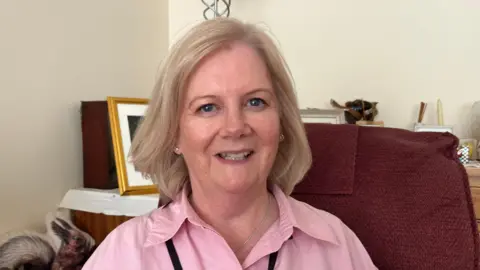
Gicquel said supply of care is struggling to meet the increasing demand.
"Recruitment is an ongoing challenge and has been for many years now in Jersey.
"There's a limit to how many carers are actually available on the island. And then of course you have to look elsewhere to recruit into Jersey.
"We increasingly need more carers and there are more care provider companies on the island than there's ever been before."

Increasingly, technology is being used in the care sector to monitor daily routines and inform care plans.
Adam Chamberlain, director at Orchid Connect said: "In somebody's day, you can have our technology service making sure that they're fundamentally okay, that they've got up, that they've done the first thing that's normal in their routine like making a drink, going to the bathroom.
"And at the right time, in the right place, the valuable professional carers can be there as well bringing real support to people so it's about harnessing the benefits of both and it's about using the technology to reach as many people as possible."

Percy, 86, has carers visit him four times a day, and outside of that, has sensors on his doors, kettle, and fridge to monitor his movements, hydration and eating habits.
The technology alongside the care visits has allowed him to continue living in his own home: "I can do what I like when I want and please myself. I don't like being dictated to."
Experts say that technology can supplement one-on-one care but should not replace it, and Percy's experience echoes that.
About his carers, he said: "I like the chatty ones. We talk about going out, gardening, where I used to go and things like that. If it's raining, I'll get the carer to take me for a drive somewhere."
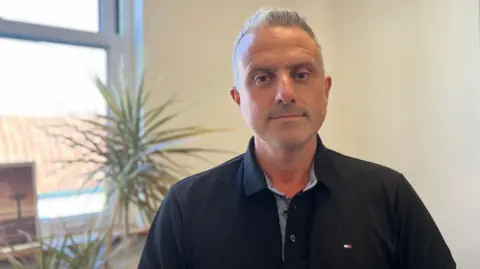
Beyond the pressures of recruitment and time, there are also concerns about how to manage the overall cost of care.
Carl Walker, chairman of Jersey Consumer Council, said: "Whether that's visiting your GP, whether that's potentially paying for some services within health care, but also for long-term care, it's a real expense for people.
"We've had people come to us who are saying that the cost of care for their loved ones sometimes is more expensive than a five-star hotel for a week.
"We want to try to extend our price comparison service to cover care homes.
"We're going to work with the Jersey Care Commission to at least give a starting point for families to then make a deeper dive into where they want to put their loved ones because when people are trying to put a loved one into care, that decision at a time of great stress, might not necessarily always be the best value."
The long-term care scheme provides means-tested financial support to islanders who need care for the rest of their lives.
With a potential contribution increase of 1% in 2027, Walker said: "Some people might think this is something that they're not going to have to worry about for many years to come but if the cost of care is going up that's going to keep pushing up the amount of money we all pay into the long-term care fund each year.
"We can't expect though to drive costs right down to basic because then you're talking about people's lives and people's care here. There has to be a cost for that."
The Government of Jersey has been approached for comment.
Follow BBC Jersey on X and Facebook. Send your story ideas to channel.islands@bbc.co.uk.
